Can You Use a Stand Mixer to Make Cookies?
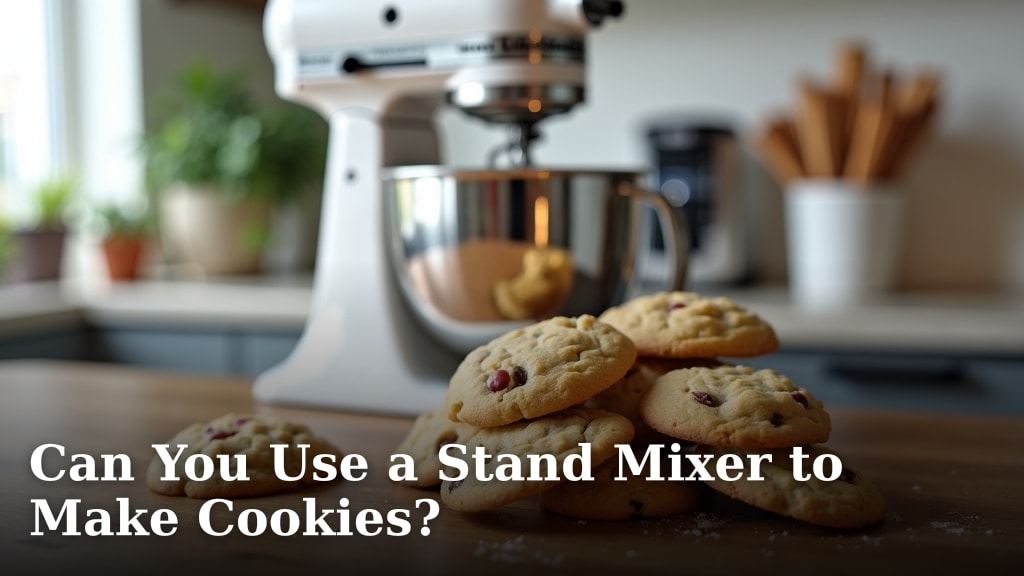
Yes, you absolutely can use a stand mixer to make cookies, and it will make your baking much easier. A stand mixer is actually perfect for cookie dough, handling thick ingredients with power and ease. This kitchen tool saves your arms a lot of work.
Many home bakers find a stand mixer a game-changer for cookies. It helps cream butter and sugar together beautifully, making your cookies lighter. Plus, it ensures all your ingredients are mixed evenly and thoroughly every time.
- Stand mixers are great for making cookies.
- They handle thick dough better than hand mixers.
- You get nicely creamed butter and sugar.
- Ingredients mix well for perfect cookies.
Let’s dive into all the ways a stand mixer makes cookie baking simple and even more enjoyable.
Why a Stand Mixer is Your Cookie-Making Best Friend
Using a stand mixer for cookies isn’t just possible, it’s often preferred. This powerful kitchen appliance streamlines the baking process. It takes the hard work out of mixing, leaving you with more energy to enjoy baking. Many home bakers find it indispensable for consistent, delicious results.
Its consistent speed and hands-free operation are major advantages. You can focus on gathering your other ingredients while the mixer does its job. Think of it as a helpful baking assistant in your kitchen.
Stand Mixers vs. Hand Mixers: A Cookie Showdown
When it comes to making cookies, stand mixers and hand mixers both have their place. However, they aren’t created equal for every task. Understanding their differences helps you choose the right tool.
A stand mixer offers power and stability. It sits on your countertop and needs little supervision. Hand mixers are versatile but require you to hold them throughout the mixing process. We found that for thicker cookie doughs, a stand mixer truly shines.
The Power Difference
Stand mixers typically have more powerful motors. This extra power is essential for thick, dense cookie dough. Imagine trying to stir stiff dough by hand – it’s a workout! A stand mixer handles this with ease.
Hand mixers, while good for lighter batters, can struggle with firm doughs. They might overheat or become difficult to control. You want a tool that can handle the job without strain. The National Institute of Standards and Technology (NIST) often highlights how tool design impacts efficiency for similar tasks.
Hands-Free Convenience
This is a big one for many bakers. With a stand mixer, you place your ingredients in the bowl, attach the appropriate paddle, and turn it on. You can then do other things, like measure flour or preheat your oven. Your hands are free to perform other baking tasks.
A hand mixer needs constant holding. You’re actively involved from start to finish. This can get tiring if you’re making a large batch of cookies. Many professional bakers emphasize the value of hands-free operation for multitasking (Baking Industry News).
| Feature | Stand Mixer | Hand Mixer |
|---|---|---|
| Power | High, for thick doughs | Medium, for lighter batters |
| Control | Hands-free, consistent | Manual, requires holding |
| Capacity | Large batches easily | Smaller batches more practical |
| Attachments | Many specialized types | Basic beaters, whisk |
| Cost | Higher initial investment | More budget-friendly |
Essential Attachments for Perfect Cookie Dough
A stand mixer comes with various attachments. For cookies, one attachment, in particular, will be your go-to. Knowing which one to use makes a big difference in your results.
The right attachment ensures your ingredients are mixed properly. It helps create the perfect texture for your cookies. Don’t worry, it’s not complicated!
The Paddle Attachment: Your Cookie MVP
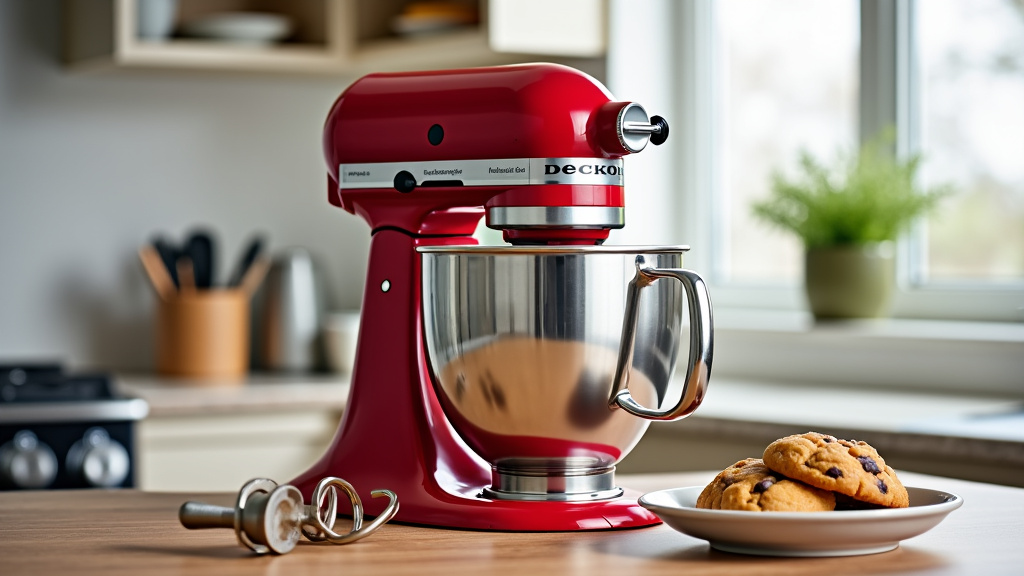
Also known as the flat beater, the paddle attachment is the MVP for cookie dough. Its design is perfect for creaming butter and sugar. It also mixes in flour and other dry ingredients without overworking the dough. This is crucial for tender cookies.
You’ll notice it has a flat, blade-like shape. We found that this shape efficiently scrapes the sides of the bowl as it mixes. This helps ensure all ingredients are incorporated evenly. It’s like having a little spatula working constantly for you.
When to Use Other Attachments (or Not)
What about the whisk or the dough hook? For most standard cookie recipes, you won’t need these. The whisk attachment is best for aerating, like whipping egg whites or cream. Cookie dough doesn’t usually need that much air.
The dough hook is for kneading bread dough. Cookie dough doesn’t require kneading; in fact, too much kneading can make cookies tough. Stick with the paddle for your delicious cookie creations.
Mastering the Art of Mixing Cookie Dough with Your Stand Mixer
Using a stand mixer for cookies isn’t just about throwing ingredients in. There’s a method to the magic. Following a few simple steps will give you consistently amazing cookies. You’ll feel like a pro baker in no time.
Start with Softened Butter
This is perhaps the most critical step. Cold butter won’t cream properly with sugar. It will lead to dense cookies. Softened butter should be pliable but still cool to the touch. It shouldn’t be melted or greasy.
Why is this important? Softened butter creates tiny air pockets when creamed with sugar. These air pockets expand in the oven, making your cookies light and airy. Many culinary schools emphasize precise butter temperature (Culinary Institute of America).
The Creaming Process: Butter and Sugar First
Attach the paddle to your stand mixer. Add your softened butter and sugar to the bowl. Start on low speed, then gradually increase to medium. Let it mix until the mixture is light, fluffy, and pale in color. This usually takes 2-5 minutes. You’ll see a noticeable change in texture.
This creaming process is called “aeration.” It’s where those lovely air bubbles that give cookies their texture are formed. Don’t rush this step; it’s foundational for great cookies.
Adding Eggs and Vanilla
Once your butter and sugar are beautifully creamed, add your eggs one at a time. Mix each egg fully into the mixture before adding the next. This ensures even incorporation. Then, add your vanilla extract. Mix until just combined.
Scrape down the sides of the bowl occasionally. Ingredients can cling to the sides. This ensures everything gets mixed properly. You want a homogeneous mixture. It sets up the rest of the recipe for success.
Slowly Incorporating Dry Ingredients
Now it’s time for the flour mixture. With the mixer on low speed, add your dry ingredients gradually. You don’t want a cloud of flour dusting your kitchen! Add a third of the flour mixture, let it incorporate, then add the next third. Repeat until all flour is just combined.
Be careful not to overmix at this stage. Overmixing develops the gluten in the flour too much. This can lead to tough, chewy cookies instead of tender ones. When you see no streaks of flour, stop the mixer. It’s truly that simple.
Troubleshooting Common Cookie Mixer Issues
Even with a stand mixer, you might encounter a little hiccup now and then. Don’t fret! Most common issues are easy to fix. We’ve got simple solutions for you.
My Dough is Too Stiff!
If your dough seems incredibly stiff, first check your recipe. Did you measure accurately? Sometimes too much flour can be the culprit. Also, ensure your butter was softened properly. Cold butter makes everything stiffer.
If the dough is just very firm, your stand mixer should be able to handle it. If it’s struggling, try increasing the speed slightly. Sometimes, adding a tiny splash of milk (a teaspoon at a time) can help loosen it, but be very cautious not to add too much.
Ingredients Sticking to the Sides
This is a common occurrence. As mentioned, ingredients will naturally stick to the bowl’s sides. Simply pause your mixer and use a rubber spatula to scrape down the sides. Do this once or twice during the mixing process, especially after adding eggs and during the flour incorporation.
Some stand mixers come with flex-edge beaters. These attachments have a silicone edge that scrapes the bowl as it mixes. They are fantastic for ensuring everything is combined without needing to stop and scrape manually.
A Quick Checklist for Stand Mixer Cookie Success
Want a quick reminder of how to get the most out of your stand mixer for cookies? Here’s a handy list to keep you on track. You’ll be baking perfect cookies in no time.
- Use softened (not melted) butter.
- Cream butter and sugar until light and fluffy.
- Add eggs one at a time, mixing well.
- Scrape the bowl sides often with a spatula.
- Add dry ingredients slowly on low speed.
- Stop mixing as soon as flour is just combined.
Conclusion
Using a stand mixer for making cookies is a smart choice that offers significant advantages over manual mixing or even using a hand mixer. You’ll find it makes the process smoother, more efficient, and incredibly consistent. From perfectly creamed butter and sugar to evenly incorporated dry ingredients, your stand mixer ensures a superior cookie dough every time. So, go ahead, confidently use your stand mixer to bake cookies, and prepare to enjoy tastier, more consistent results with far less effort. It’s time to let your mixer do the hard work for you!
Frequently Asked Questions
Can a stand mixer overmix cookie dough?
Yes, a stand mixer can definitely overmix cookie dough, especially after adding the dry ingredients. Overmixing develops the gluten in the flour too much. This can lead to cookies that are tough and chewy instead of tender.
How do I know what speed to use for cookie dough in my stand mixer?
Generally, start on a low speed to combine ingredients, especially with dry ones, to prevent a flour cloud. For creaming butter and sugar, you’ll typically use a medium speed. Always refer to your specific recipe’s guidance, but a slow and steady approach works best.
Do I need to chill cookie dough made in a stand mixer?
Chilling cookie dough is often recommended, regardless of how it was mixed. It allows the flavors to meld and prevents the cookies from spreading too much in the oven. This step often improves the texture and taste of your final cookies.
What if my stand mixer struggles with very thick cookie dough?
If your mixer struggles, ensure you’re using the paddle attachment, which is designed for thick mixtures. You might need to pause and scrape down the sides more frequently to help it along. For extremely thick doughs, some recipes suggest finishing the mixing by hand.
Can I make small batches of cookies with a stand mixer?
Yes, you can absolutely make small batches of cookies with a stand mixer. While they excel at larger quantities, most stand mixers handle smaller amounts perfectly well. Just be sure your ingredients are correctly proportioned for the reduced yield.