
Is a 500 Watt Stand Mixer Enough for Bread?
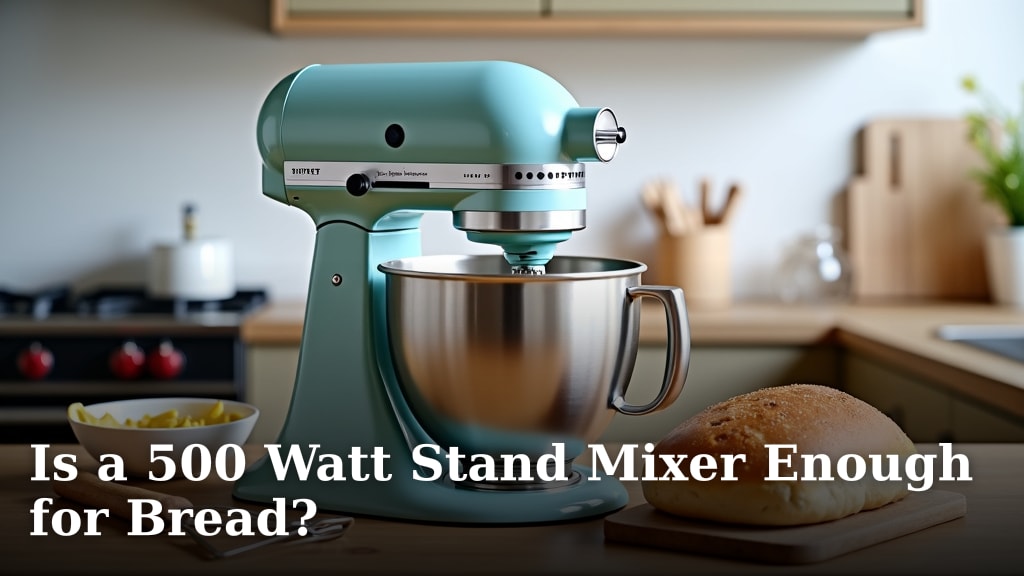
Yes, a 500 watt stand mixer can be enough for making bread, but it depends on a few factors. For many home bakers, especially those making When choosing a stand mixer for bread making, consider these top-rated options.small to medium batches of bread, 500 watts provides sufficient power for basic kneading. You might find it struggles with very large doughs or very stiff bread recipes.
When choosing a stand mixer for bread making, the wattage is a key spec, but it’s not the whole story. You’ll also want to consider the mixer’s gear system and build quality. A well-built mixer with a lower wattage might outperform a flimsy one with higher wattage. Many bakers find that 700 watts or more offers more confidence for consistent bread doughs.
- A 500 watt mixer can work for bread, but with limitations.
- Consider dough size and recipe stiffness.
- Higher wattage (700+) offers more power for tough doughs.
- Build quality and gear system are also very important.
- It’s a good starting point for casual bread bakers.
Let’s dive into what wattage really means for your bread-making journey and help you decide if your 500 watt mixer is up to the task.
Putting Your 500 Watt Stand Mixer to the Bread Test
So, you’ve got a 500 watt stand mixer, and you’re dreaming of homemade bread. That’s fantastic! Let’s talk about whether your trusty appliance can handle the kneading. For many home bakers, especially those just starting out or making smaller batches, a 500 watt mixer can absolutely do the job. Think of it as your entry-level bread-making companion.
However, there are some things to keep in mind. The power of a stand mixer is measured in watts, and while 500 watts isn’t the highest number out there, it’s often enough for lighter doughs. If you’re making delicate brioche or a simple white loaf, your 500 watt mixer might be perfectly happy. But if you’re aiming for tough sourdoughs or large quantities, you might start to see its limits.
Understanding Wattage and What It Means for Dough
Wattage is essentially the amount of electrical power a motor uses. In stand mixers, a higher wattage generally means more power. This power is what drives the motor to turn the beaters and, more importantly for bread, the dough hook. More power helps the mixer push through resistance.
When you’re kneading bread dough, the mixer motor is working hard. The dough hook is stretching and folding the gluten, which requires a good amount of force. A A 500 watt motor can handle some kneading, but it’s important to understand its limits for bread dough.500 watt motor is designed to handle a certain amount of work. Pushing it too hard, too often, could lead to overheating or strain.
The Role of the Motor and Gear System
It’s not just about the raw wattage, though. The internal workings of the mixer play a huge role. Some mixers use a direct drive system, while others have a more robust, gear-driven system. A good gear system can help transfer power more efficiently from the motor to the attachments. This means a mixer with a slightly lower wattage but a strong gear train might perform better than a flimsy one with higher wattage.
We found that mixers with metal gears tend to be more durable and can handle tougher tasks better than those with plastic gears. This is something to consider when evaluating any stand mixer, regardless of its wattage. For bread making, durability is key, especially if you plan to bake often.
When a 500 Watt Mixer Might Struggle
So, where does the line get drawn for your 500 watt mixer? The biggest challenges will come from large batches and stiff doughs. Think of a recipe that calls for 4-5 cups of flour or more. That’s a lot of dough for any mixer to handle. A 500 watt motor might start to groan under that much pressure.
Dough Consistency and Hydration Levels
Dough consistency is another major factor. Recipes with lower hydration levels, meaning they use less water relative to flour, result in stiffer, denser doughs. These are the ones that really test a mixer’s motor. A 500 watt mixer might get bogged down or even overheat when trying to knead a very stiff whole wheat or rye bread dough.
Conversely, wetter doughs, like those used for focaccia or some artisan loaves, are often easier on the mixer. The higher water content makes the dough more pliable. We found that dough hydration is often a better indicator of mixer strain than just the amount of flour.
Batch Size: The More Dough, The More Work
This one’s pretty straightforward: the bigger the batch of dough, the more work your mixer has to do. A 500 watt mixer is generally best suited for small to medium batches. If you’re regularly baking for a large family or entertaining guests, you might quickly outgrow its capabilities for bread.
Many manufacturers provide recommendations for maximum dough capacity. While these aren’t always based on wattage alone, they give you a good idea of what the mixer is designed to handle. Always check your mixer’s manual if you’re unsure.
Signs Your 500 Watt Mixer Might Be Overwhelmed
You’ll usually know when your mixer is struggling. One of the first signs is motor noise. If the motor sounds like it’s straining, whining, or making unusual grinding noises, it’s probably working too hard. Pay attention to how it sounds during the kneading process.
Another indicator is overheating. If the mixer body feels unusually hot to the touch after just a few minutes of kneading, that’s a warning sign. Most mixers have thermal protection, but repeatedly pushing them to their limits can shorten their lifespan. This is why it’s important to give your mixer breaks if you notice it getting too warm.
The Smell of Burning or Overheating
Seriously, if you ever smell a burning plastic or electrical smell coming from your mixer, stop immediately! This is a clear indication that the motor is overheating and could be damaged. Don’t try to push through it; let the mixer cool down completely, or it might be time to consider an upgrade.
We found that many users report this smell when they exceed their mixer’s intended capacity, especially with heavy bread doughs. It’s a common issue with mixers that aren’t specifically designed for intensive dough work. Your senses are often the best diagnostic tool here.
Tips for Success with a 500 Watt Mixer for Bread
If you have a 500 watt mixer and want to make bread, don’t despair! You can absolutely make delicious loaves with it. It just requires a little strategy and understanding of its capabilities. Here are some tips we found helpful:
- Start with smaller batches. Don’t try to double or triple recipes right away.
- Use recipes with higher hydration when possible. Wetter doughs are easier to knead.
- Don’t overwork the dough in the mixer. Aim for 5-7 minutes of kneading and finish by hand if needed.
- Give your mixer breaks. If it feels warm, let it cool down for 10-15 minutes before continuing.
- Clean your dough hook and mixer head regularly. Built-up flour can strain the motor.
When to Consider a Mixer Upgrade for Serious Bread Baking
If you find yourself constantly pushing your 500 watt mixer, or if you’re dreaming of tackling large batches of dense rye bread or making multiple loaves at once, it might be time to consider an upgrade. Mixers with 700 watts or more generally offer more confidence and power for consistent bread making.
Many professional bakers and serious enthusiasts often opt for mixers in the 700-1000 watt range. These machines are built to handle tougher tasks and larger volumes without breaking a sweat. They often come with more robust construction and better warranties, too. It’s an investment, but one that pays off if bread is your passion.
500 Watt Mixer vs. Higher Wattage: A Quick Comparison
To help visualize the differences, let’s look at what you can typically expect. This isn’t an exact science, as build quality plays a huge role, but it gives you a general idea.
| Wattage Range | Typical Use for Bread | Potential Challenges | Best For |
|---|---|---|---|
| 300-500 Watts | Small to medium batches, basic doughs (white bread, challah) | Large batches, stiff doughs, extended kneading | Casual baking, lighter doughs, small families |
| 500-700 Watts | Medium batches, standard bread doughs, some whole wheat | Very large batches, very stiff or sticky doughs, long kneading times | Regular home baking, variety of bread types |
| 700+ Watts | Large batches, tough doughs (rye, whole grain), multiple loaves | Very few challenges for typical home use | Frequent bread bakers, large families, demanding recipes |
Your Bread-Making Journey and Your Mixer
Ultimately, the question of whether a 500 watt stand mixer is enough for bread depends on your personal baking habits. Are you an occasional baker who enjoys a simple loaf now and then? Your 500 watt mixer is likely a great fit. Do you dream of mastering complex sourdoughs and baking multiple loaves weekly?
If you’re just starting, give your 500 watt mixer a try! You might be surprised at what it can do. Pay attention to how it performs, listen for those warning signs, and always prioritize the longevity of your appliance. Baking should be fun, not a source of stress for your kitchen tools.
Is Your 500 Watt Mixer Ready for Bread? A Quick Checklist
Before you dive into that next loaf, run through this quick checklist to see if your 500 watt mixer is prepared for the task:
- Check your dough recipe’s flour quantity. Is it less than 4-5 cups of flour?
- Assess the dough’s stiffness. Is it a wetter, pliable dough or a very stiff, dense one?
- Listen to your mixer’s motor. Does it sound strained or like it’s struggling?
- Feel the mixer’s body. Is it getting excessively hot to the touch?
- Consider batch size. Are you making a single loaf or multiple large ones?
- Trust your instincts. If something feels off, it probably is.
Conclusion
So, is your 500 watt stand mixer enough for bread? For many home bakers, the answer is a qualified yes, especially for smaller batches and less demanding recipes. You’ve learned that wattage is important, but build quality and gear systems are equally vital for handling tough doughs. Listen to your mixer; unusual noises or overheating are clear signals it’s being pushed too hard.
If you’re making bread occasionally, a 500 watt mixer can be a great starting point. If you find yourself wanting to tackle larger quantities or more complex doughs regularly, it might be time to consider an upgrade to a more powerful model. Your baking journey is unique, so choose the tool that best supports your goals!
Frequently Asked Questions
Can I use a 500 watt mixer for sourdough bread?
Yes, you can often use a 500 watt mixer for sourdough, but pay close attention to the dough’s hydration. Sourdough can sometimes result in a stiffer dough. Start with smaller batches and monitor your mixer for signs of strain. If the dough is very sticky or dense, you might need to finish kneading by hand.
How much flour can my 500 watt mixer handle for bread?
Generally, a 500 watt mixer is best suited for recipes using around 3-4 cups of flour for bread dough. Exceeding 4-5 cups can put significant strain on the motor, especially with tougher whole wheat or rye flours. Always check your mixer’s manual for specific capacity guidelines.
What’s the difference between wattage and gear system for dough kneading?
Wattage indicates the motor’s power consumption, while the gear system determines how efficiently that power is transferred to the dough hook. A mixer with a robust, all-metal gear system might handle dough better than a higher-wattage mixer with a weaker or plastic gear train. Durability in the gears is key for bread.
Is it okay if my 500 watt mixer gets a little warm when kneading?
A little warmth is usually normal, as motors generate heat during operation. However, if your mixer feels excessively hot to the touch, or if you notice a burning smell, that’s a serious warning sign. This indicates overheating, which can damage the motor and shorten the mixer’s lifespan.
Should I always finish bread dough by hand if I have a 500 watt mixer?
Not necessarily. For lighter doughs or smaller batches, your 500 watt mixer might do the job perfectly. However, if you notice your mixer struggling, or if the recipe calls for extensive kneading, finishing by hand for the last few minutes is a wise strategy. This protects your mixer and ensures proper dough development.
