
Is It Cheaper to Buy a Stand Mixer or a Hand Mixer?
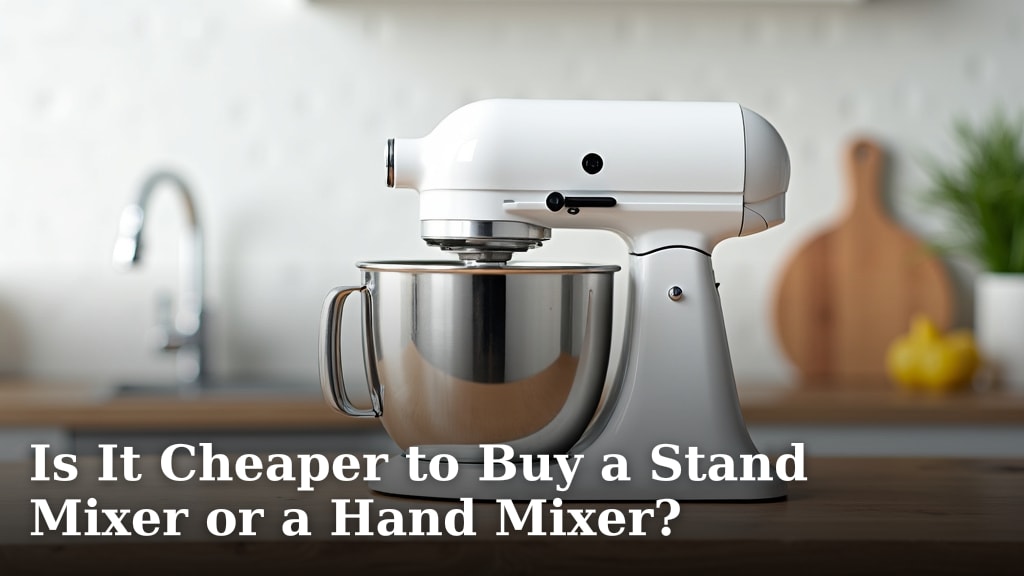
Generally, it’s cheaper to buy a hand mixer than a stand mixer. While you might find a basic hand mixer for under $30, a quality stand mixer can easily cost $200 or more. Think of it like this: a hand mixer is your trusty sidekick, and a stand mixer is your sous chef. You can accomplish many baking tasks with either, but your budget will thank you for choosing the hand mixer if cost is your main concern.
Your choice depends heavily on how often you bake and the types of recipes you tackle. If you’re just starting out or make cookies once a month, a hand mixer is a fantastic starting point. But if you dream of making sourdough bread or multiple batches of frosting, you might find a stand mixer a worthwhile investment for the power and convenience it offers. We found many home bakers feel a hand mixer is sufficient for most everyday tasks.
TL;DR:
- Hand mixers are much cheaper than stand mixers.
- Basic hand mixers cost under $30.
- Stand mixers can cost $200+.
- Choose based on baking frequency and recipe type.
- Hand mixers are great for occasional bakers.
Let’s break down the costs and benefits of each so you can make the best decision for your kitchen.
Considering the Price: Stand Mixer vs. Hand Mixer Cost Breakdown
When you’re looking at the sticker price, it’s clear that hand mixers are the budget-friendly option. You can find a decent hand mixer for less than the cost of a single nice dinner out. This makes them a very accessible tool for any home cook.
Stand mixers, on the other hand, represent a larger investment. Their price tags often start where a good hand mixer leaves off. You’re paying for more power, larger capacity, and hands-free operation. We found that most quality stand mixers begin in the $150-$200 range and can go much higher.
The Price Tag of a Hand Mixer
For most people, a basic hand mixer will do the trick. You can find them at almost any store that sells kitchen gadgets. Many reliable models can be purchased for under $50. Even some higher-end hand mixers with extra attachments rarely exceed $100.
We’ve seen that brands often offer different tiers of hand mixers. A simple two-speed model might cost around $20. If you want more speed settings, a more comfortable grip, or a storage case, you might spend $40 to $70. It’s rare to spend more than $100 on a hand mixer, even for specialized models.
The Investment in a Stand Mixer
Stand mixers are a different category of kitchen appliance. Think of them as a workhorse for serious bakers. Their price reflects the robust construction and powerful motors needed for tasks like kneading dough or whipping large batches of meringue.
A good starter stand mixer typically begins around $150. Mid-range models with more features and durability often fall between $250 and $400. Professional-grade models, built for heavy-duty, frequent use, can easily cost $500 or more. You’re making a long-term investment with a stand mixer.
What Your Money Buys: Features and Benefits
The price difference is directly tied to what each appliance can do. A hand mixer is designed for quick tasks. You hold it, and you guide it. This means you’re actively involved in the mixing process.
A stand mixer, however, does the work for you. You load the ingredients, select the speed, and walk away. This hands-free capability is a major selling point. It frees up your time to prepare other parts of your recipe. The motor power is also significantly greater in a stand mixer.
Hand Mixer Features
What do you get with a hand mixer? Usually, it includes a set of beaters for general mixing and sometimes dough hooks. Some models come with a whisk attachment for lighter tasks. They are lightweight and easy to store.
You’ll find variable speed controls, but usually not a huge range. They are perfect for whipping cream, mixing pancake batter, or creaming butter and sugar. For most recipes that don’t require extended kneading, a hand mixer performs admirably.
Stand Mixer Features
With a stand mixer, you get a bowl and a motor base. This base powers various attachments. The standard attachments include a flat beater (for general mixing), a dough hook (for kneading), and a wire whisk (for whipping). Many brands also offer optional attachments like pasta makers or grinders.
The power and capacity are key. Stand mixers can handle stiff doughs and large volumes of ingredients without overheating. Their sturdy construction means they stay put on your counter, even when working hard. This stability is a huge advantage for demanding tasks.
Usage Frequency: How Often Do You Bake?
Your baking habits play a massive role in deciding which mixer is right for you. If you bake as a casual hobby, a hand mixer is likely all you need. If baking is your passion and you do it multiple times a week, you might lean towards a stand mixer.
Consider your typical recipes. Do you whip up a batch of cookies every few weekends? Or do you regularly make sourdough bread or elaborate cakes with multiple frostings? The answer guides your purchase decision. We found many home bakers use their hand mixers for 90% of their tasks.
Occasional Baking: The Hand Mixer’s Domain
If your baking is infrequent, perhaps for holidays or special occasions, a hand mixer is an excellent and cost-effective choice. You can easily make cakes, cookies, brownies, and other treats with a hand mixer. Tasks like creaming butter and sugar, mixing batters, and whipping cream are simple.
You won’t feel limited by a hand mixer if your baking schedule is light. It gets the job done without a large upfront cost or taking up significant counter space. For most beginners, it’s the perfect entry point into home baking.
Frequent Baking: When a Stand Mixer Shines
For those who bake often, a stand mixer can be a game-changer. Imagine making a large batch of bread dough. With a stand mixer, you can let it knead for 10-15 minutes hands-free. Trying to do that with a hand mixer would be exhausting and inefficient.
Similarly, if you’re whipping up meringue or frosting for a multi-layer cake, a stand mixer is invaluable. It handles these tasks with ease and consistency. Many dedicated bakers say a stand mixer saves them considerable time and effort. It also consistently produces better results for demanding recipes.
Comparing Performance and Convenience
Beyond the initial cost, think about how each mixer performs and how convenient it is to use. While a hand mixer is cheaper, a stand mixer offers unparalleled ease of use for certain tasks.
We’ve found that the convenience factor is often what drives people to purchase a stand mixer. The ability to multitask while your stand mixer works is a huge draw for busy cooks.
Hand Mixer Convenience: Simplicity and Storage
Hand mixers are incredibly easy to store. They can fit into a drawer or a small cabinet space. Cleanup is usually straightforward, with most beaters being dishwasher safe. Their lightweight design makes them easy to maneuver.
However, you are tethered to holding the mixer. This means your arm can get tired during longer mixing sessions. You also need to be mindful of splattering, especially when starting the mixer on high speed.
Stand Mixer Convenience: Power and Hands-Free Operation
The convenience of a stand mixer is its hands-free capability. You can add ingredients while it’s running, measure out other components, or clean up your workspace. This is a massive advantage for complex recipes.
Stand mixers are also generally more powerful. They can tackle heavier, denser mixtures that might strain or even break a hand mixer. The stable base ensures it stays put, providing consistent mixing. Many experts agree that for bread making, a stand mixer is almost essential (King Arthur Baking).
The ‘Workhorse’ Factor
A stand mixer is built for demanding jobs. It’s the appliance you reach for when you need serious mixing power. Its robust motor and sturdy design mean it can handle continuous use without overheating. This makes it a true workhorse in the kitchen.
When a Hand Mixer Falls Short
While great for many things, a hand mixer struggles with very stiff doughs. Trying to knead bread with a hand mixer can lead to overheating the motor or simply not achieving the right gluten development. Similarly, large quantities of thick batter can be challenging.
Making Your Choice: A Quick Checklist
To help you decide, ask yourself these questions. Your answers will point you towards the right mixer for your kitchen and your wallet.
- Do you bake more than twice a month?
- Do you often make bread or other yeasted doughs?
- Do you frequently prepare large batches of batter or frosting?
- Are you looking for a long-term kitchen investment?
- Is your budget primarily under $50 for a mixer?
If you answered “yes” to most of the first three questions, a stand mixer might be a good investment. If you answered “yes” to the last two, or mostly “no” to the first three, a hand mixer is likely your best bet. Ultimately, both can help you create delicious baked goods. Your choice hinges on how often you bake and what kinds of recipes you love to make.
| Feature | Hand Mixer | Stand Mixer |
|---|---|---|
| Average Price Range | $20 – $100 | $150 – $600+ |
| Power Level | Moderate | High |
| Ideal for Doughs | Light Pastry Doughs | Yeasted Breads, Stiff Doughs |
| Convenience | Requires Active Holding | Hands-Free Operation |
| Counter Space | Minimal | Significant |
| Storage | Drawer or Small Cabinet | Countertop or Large Cabinet |
Conclusion
Ultimately, the decision between a stand mixer and a hand mixer comes down to your baking habits and budget. If you’re just dabbling in baking or only need a mixer for occasional treats, a hand mixer is your most affordable and practical choice. It excels at everyday tasks without breaking the bank. For the dedicated baker who frequently tackles doughs, large batches, or complex recipes, a stand mixer is a worthwhile investment in time and effort. Consider your kitchen’s needs and your baking frequency, and you’ll find the perfect mixer to bring your delicious creations to life.
Frequently Asked Questions
Can a hand mixer handle all types of baking?
A hand mixer can handle many baking tasks like creaming butter and sugar, mixing batters, and whipping cream. However, it may struggle with very stiff doughs or large quantities, which are better suited for a stand mixer.
Is it possible to find a stand mixer for under $100?
It’s very unlikely to find a quality, durable stand mixer for under $100. Most entry-level models start around $150-$200, with prices increasing significantly for more powerful and feature-rich options.
How much counter space does a stand mixer take up?
Stand mixers are quite large and take up a good amount of counter space. They are best left out on the counter or stored in a large cabinet due to their size and weight.
Are hand mixers good for making bread dough?
For light pastry doughs, a hand mixer might suffice. However, for yeasted bread doughs that require significant kneading, a stand mixer is much more effective and less taxing.
Which type of mixer is easier to clean?
Both mixers have parts that are typically dishwasher safe, making cleaning relatively easy. Hand mixers are generally lighter and easier to maneuver for a quick rinse, but stand mixer bowls and attachments are also designed for straightforward cleanup.
