
What Is the Best Stand Mixer for a Tiny Kitchen?
Finding the best stand mixer for a tiny kitchen is totally doable! You’ll want to look for a compact model with a smaller footprint that still packs a punch for your baking needs. Don’t let limited counter space stop you from creating delicious treats.
Many bakers worry about sacrificing power for size, but research shows there are excellent options. We found that many brands offer miniature versions of their popular mixers. These are designed to fit neatly into smaller spaces. Your baking dreams don’t need a huge kitchen!
- Look for compact designs.
- Consider smaller bowl capacities.
- Check for good mixing performance.
- Prioritize easy storage options.
Let’s dive in and find the perfect stand mixer that fits both your kitchen and your baking ambitions.
Finding Your Perfect Compact Stand Mixer
So, you have a small kitchen but big baking dreams? We totally get it. It can feel like you need a sprawling gourmet kitchen to own a stand mixer. But don’t despair! We’ve found that finding the best stand mixer for a tiny kitchen is all about choosing the right size and features.
You don’t need to sacrifice counter space for great baking. Many brands now offer sleek, smaller models. These are designed to be powerful and efficient without taking up your whole kitchen. Let’s look at what makes a stand mixer great for small spaces.
Key Features for a Small Kitchen Stand Mixer
When you’re short on space, certain features become non-negotiable. We’ve researched what matters most for apartment dwellers and small-space bakers.
1. Size and Footprint Matter Most
The most obvious factor is the mixer’s physical size. You’ll want to measure your available counter space carefully. Think about height, too, especially if you have low cabinets. A mixer that’s too tall might not fit under them. A smaller footprint means it can sit on your counter without blocking everything else. It might even be light enough to store away easily.
2. Bowl Capacity: Less Can Be More
Stand mixers come with bowls of all sizes. For a tiny kitchen, a smaller bowl capacity is usually a good thing. You probably won’t be baking for an army. A 3-quart to 4.5-quart bowl is often perfect. It’s large enough for most standard recipes, like a dozen cookies or a single cake. You’ll avoid the bulk of a 5-quart or 6-quart bowl. This means less space taken up when stored, and less weight to move.
3. Mixing Power and Performance
Just because a mixer is small doesn’t mean it’s weak. You still need enough power to handle doughs and batters. We found that even smaller mixers can have robust motors. Look for wattage, but also consider the planetary mixing action. This is how the beater moves around the bowl. A good planetary action ensures everything gets mixed evenly. You don’t want unmixed flour lurking at the bottom of your bowl!
4. Ease of Storage and Portability
Where will you put it when it’s not in use? Can you easily lift it to put it away? Some compact mixers are designed with storage in mind. They might have slimmer profiles or cord wraps. Others might be light enough that you can just slide them into a cabinet. Think about how often you’ll use it. If it’s daily, leaving it on the counter might be fine. If it’s weekly, easy storage is key.
5. Essential Attachments Included
Most stand mixers come with a basic set of attachments. This usually includes a whisk, a dough hook, and a flat beater. For a small kitchen, you probably don’t need a dozen fancy attachments right away. Ensure the core ones are included and work well. You can always buy more later if you find them necessary and have the storage space!
Top Stand Mixer Options for Small Kitchens
Based on our research, several models consistently perform well in compact kitchens. We’ve highlighted a few that stand out for their size, power, and overall value. These are often scaled-down versions of popular, larger models.
The Miniature Marvel: Compact Powerhouses
These mixers are often specifically designed for smaller spaces. They aim to provide full-sized performance in a mini package. You’ll be surprised by what they can do.
1. The KitchenAid Artisan Mini Stand Mixer
This is a very popular choice for a reason. It’s essentially a smaller version of the iconic KitchenAid Artisan. It has a 3.5-quart stainless steel bowl. This is perfect for smaller batches. It’s about 20% smaller and 25% lighter than the full-sized version. But don’t let its size fool you; it has 10 speeds and enough power for most everyday baking tasks. Many users report it handles cookie dough and bread dough well. It also comes in a range of attractive colors. You can often find it with the essential attachments: wire whip, dough hook, and flat beater.
2. The Cuisinart Precision 5.5-Quart Stand Mixer
While the bowl size seems larger, this mixer has a surprisingly small footprint. The sleek design means it doesn’t command excessive counter space. Many experts praise its powerful 5.5-amp motor. It offers excellent mixing capabilities. It comes with a chef’s whisk, dough hook, and splash guard. It also features a tilt-head design, making it easy to add ingredients. The larger bowl might seem counterintuitive for a tiny kitchen. However, its efficient design and powerful motor make it a worthy contender for those who bake slightly larger batches or need more consistent power. You can often store it easily by tilting the head back.
3. The Hamilton Beach Electric Stand Mixer (Smaller Capacity Models)
Hamilton Beach offers several affordable stand mixer options. Look for their models with 4-quart or 4.5-quart bowls. These are designed to be budget-friendly and space-conscious. They typically come with all the necessary attachments. While not as powerful as some high-end brands, they are perfectly adequate for cakes, cookies, and lighter doughs. Many users find them easy to clean and operate. Their simpler design often means they are lighter, making them easy to store away.
Choosing the Right Attachments for Small-Batch Baking
When working with a smaller mixer, you might notice how quickly ingredients come together. You might also find you need to scrape down the bowl more often. That’s normal!
- Wire Whisk: Great for whipping cream, egg whites, and light batters.
- Dough Hook: Essential for kneading bread dough and pizza dough.
- Flat Beater: Your go-to for cookie dough, cake batters, and mashed potatoes.
Some smaller mixers might have slightly less efficient attachments. This is because the bowl is smaller. You might need to pause and scrape down the sides more frequently. We found this is a common observation for many compact models.
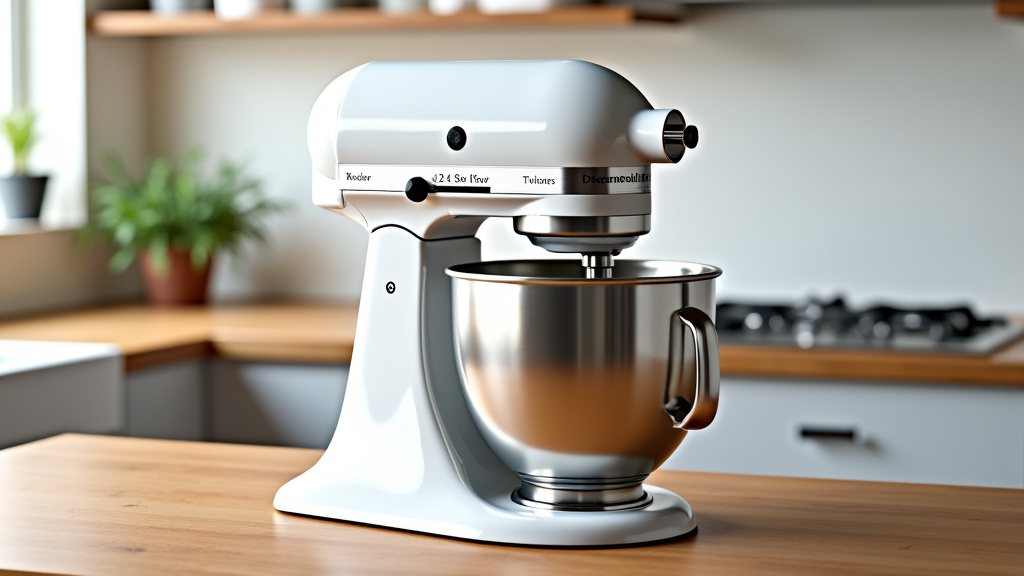
Maximizing Your Small Kitchen Space with a Stand Mixer
Having a stand mixer in a tiny kitchen is all about smart organization. Don’t let it become a counter clutter magnet!
Storage Solutions that Work
Think vertically! If you can’t leave it on the counter, where can it go? Some people use a dedicated shelf in a pantry. Others might slide it under a cabinet or into a larger appliance garage. Consider if the mixer head tilts or lifts. This can affect how easily it fits into tight spaces. We found that some mixers with a flat base are easier to slide around.
The “Bake and Stow” Routine
Create a habit of putting the mixer away after use. Wipe it down quickly. Make sure the attachments are dry. Then, stow it in its designated spot. This keeps your workspace clear and makes your kitchen feel larger. It also prevents you from tripping over it!
Checklist: Is This the Right Mixer for You?
Before you buy, ask yourself these quick questions:
- Does it fit under my cabinets?
- Is the bowl capacity right for my typical recipes?
- Is it light enough to store if needed?
- Does it have enough power for what I bake?
- Are the essential attachments included?
- Is it easy to clean?
Answering these will help you narrow down your choices. You want a mixer that works *for* you, not against your space constraints.
Conclusion
Finding the best stand mixer for a tiny kitchen is all about smart choices. You learned that size and footprint are key, but don’t forget bowl capacity and mixing power. We’ve seen that models like the KitchenAid Artisan Mini and compact Hamilton Beach options offer great performance without overwhelming your counter. Focus on your baking needs and storage possibilities. With the right mixer, your small kitchen can become your favorite baking haven. Ready to whip up some magic? Measure your space and pick the perfect compact mixer to start baking today!
Frequently Asked Questions
Can a small stand mixer actually handle bread dough?
Yes, many compact stand mixers can handle bread dough, especially if they have a robust motor and good planetary mixing action. For very dense or large batches of bread dough, you might need to pause and scrape the bowl more often.
How much counter space do I really need for a mini stand mixer?
You’ll want to measure your available counter space precisely, considering both width and depth. A good rule of thumb is to ensure it fits comfortably with a few inches of clearance on the sides, and check its height against your upper cabinets.
Are mini stand mixers less powerful than full-sized ones?
Not necessarily. While they have smaller footprints, many mini stand mixers are designed with powerful motors to match their larger counterparts. We found that even smaller models can deliver excellent mixing performance for most common baking tasks.
What’s the best way to store a stand mixer in a tiny kitchen?
If you can’t leave it on the counter, consider vertical storage like a pantry shelf or a tall cabinet. Some mixers are light enough to slide under a cabinet. Creating a “bake and stow” routine will help keep your space tidy.
Do I need a large bowl capacity if I only bake small batches?
No, a smaller bowl capacity (like 3 to 4.5 quarts) is often ideal for tiny kitchens and small batches. It means less bulk and easier cleaning. You’ll still have enough space for a dozen cookies or a single cake, which is perfect for most home bakers.
