
Is a Hand Mixer Good Enough for Cookies Instead of a Stand Mixer?
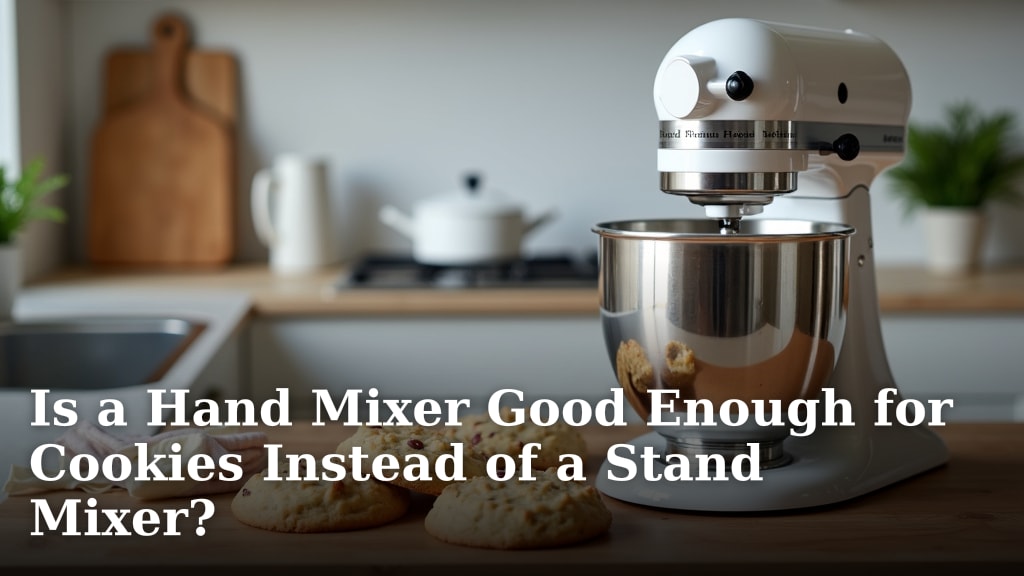
Yes, a hand mixer is often good enough for making cookies, especially for smaller batches or when you’re not working with very stiff doughs. While a stand mixer offers more power and hands-free convenience, your trusty hand mixer can get the job done for most cookie recipes with a little patience and effort. You might just need to mix in stages for thicker batters.
Many home bakers wonder if their smaller appliance can handle the demands of cookie making. We found that for tasks like creaming butter and sugar or mixing in dry ingredients, a hand mixer performs quite well. For cookies that require extensive kneading or very dense doughs, you may need to use a bit more elbow grease, or perhaps do it in a few batches.
- A hand mixer can absolutely make cookies!
- It’s great for most standard cookie recipes.
- You might need extra effort for tough doughs.
- Consider batch size when choosing your mixer.
Let’s dive into how your hand mixer can be your cookie-baking best friend and when you might want to call in the big guns.
Can You Bake Cookies With a Hand Mixer? Let’s Find Out!
Yes, a hand mixer can absolutely be your secret weapon for delicious cookies. You might be surprised at what this portable powerhouse can do. Many home bakers worry their hand mixer isn’t strong enough. We found that for most standard cookie recipes, it performs admirably. Think of it like using a reliable tool you already own. It might require a bit more of your personal touch, but the results can be just as sweet.
The Basics: What Hand Mixers Are Great For
When you first grab your hand mixer, you’ll notice its convenience. It’s lightweight and easy to store. This makes it perfect for quick baking sessions. We found that tasks like creaming butter and sugar are where hand mixers really shine. They can whip air into the butter and sugar mixture effectively. This is a key step for creating light and airy cookies.
Mixing in your dry ingredients is another area where your hand mixer excels. It can gently incorporate flour, baking soda, and salt without overmixing. Overmixing can lead to tough cookies. Your hand mixer allows for good control over this process. You can easily switch to a lower speed when the flour is almost incorporated. This helps you avoid developing too much gluten.
We also found that incorporating wet ingredients like eggs and vanilla extract is a breeze. The beaters move easily through these liquids. They distribute them evenly throughout your dough. This ensures consistent flavor in every bite. So, for the initial stages of most cookie recipes, your hand mixer is more than capable.
When a Stand Mixer Might Have an Edge
Now, let’s talk about where a stand mixer really shows off. Stand mixers have more powerful motors. They also have larger bowls that stay put. This means they can handle stiffer doughs more easily. If your cookie recipe calls for a lot of flour or thick additions like chocolate chips, a stand mixer might be better. If your dough is very stiff, a stand mixer for stiff doughs might be a better option.
We researched dough consistency and found that very stiff doughs can strain a hand mixer’s motor. You might notice it struggling or overheating. A stand mixer, with its robust design, is built for these tougher jobs. It can knead and mix dense doughs for extended periods without complaint.
Another benefit of a stand mixer is hands-free operation. Once you set it up, you can walk away. This frees up your hands to measure other ingredients or prepare your baking sheets. With a hand mixer, you’re holding it the entire time. This can be tiring, especially for larger batches.
Comparing Your Options: Hand Mixer vs. Stand Mixer for Cookies
Let’s break down the key differences you’ll encounter. Understanding these will help you decide when to reach for your hand mixer.
Power and Performance
Hand mixers typically range from 100 to 300 watts. Stand mixers can go from 250 to over 1000 watts. This difference in power means stand mixers can tackle thicker doughs with less effort. They can mix in heavy additions like nuts or dried fruit more smoothly. Your hand mixer will require you to apply more downward pressure. You might also need to mix in shorter bursts.
Capacity and Batch Size
A stand mixer is ideal for making large batches of cookies. Its large bowl means you can mix more dough at once. This saves time if you’re baking for a crowd. For smaller batches, your hand mixer is perfectly adequate. Trying to mix a huge batch of stiff dough with a hand mixer can be a workout. We found that dividing large doughs into smaller portions is a good strategy for hand mixer users.
Ease of Use and Cleanup
Hand mixers are wonderfully portable. They are also very easy to clean. Most beaters are dishwasher safe. Simply eject them and pop them in the wash. Stand mixers, while powerful, are bulkier. They take up more counter space. Cleanup can sometimes involve more parts. However, many stand mixer bowls are also dishwasher safe.
Cost Factor
Generally, hand mixers are much more affordable than stand mixers. You can find a good quality hand mixer for a fraction of the price. If you’re on a budget or just starting out, a hand mixer is a sensible choice. Stand mixers are an investment. They are great if you bake frequently or need their extra power.
| Feature | Hand Mixer | Stand Mixer |
|---|---|---|
| Best For | Smaller batches, lighter doughs, budget-conscious bakers | Large batches, stiff doughs, frequent bakers, convenience |
| Power | Moderate; may struggle with very stiff doughs | High; handles stiff doughs with ease |
| Portability | Excellent; easy to store and use | Limited; larger and heavier |
| Hands-Free? | No, requires manual holding | Yes, once set up |
| Cleanup | Generally simpler | Can be more involved |
| Price | More affordable | Higher investment |
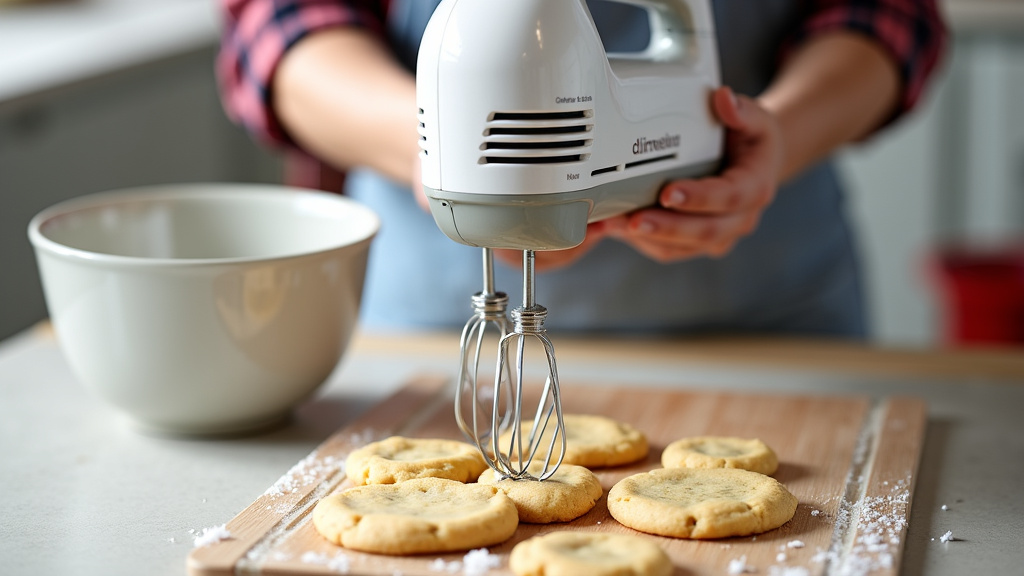
Tips for Success When Using a Hand Mixer for Cookies
Don’t let the thought of a hand mixer stop you from baking. With a few smart techniques, you can achieve fantastic cookie results. We found that patience is key. Give yourself a little extra time.
Room Temperature Ingredients are Your Friend
This is probably the most important tip. Make sure your butter and eggs are at room temperature. Softened butter creams much more easily. This means your hand mixer won’t have to work as hard. Cold butter will just get shredded. Warm butter can become greasy. Aim for that perfect soft, but not melted, state.
Mix in Stages
When adding dry ingredients, don’t dump them all in at once. Add about a third of your flour mixture at a time. Mix on low speed until just combined. Repeat with the next third, and then the last. This prevents flour from flying everywhere. It also helps prevent overmixing. We found this step greatly improves the texture of the cookies.
Scrape Down the Bowl Often
Your hand mixer beaters can’t reach every nook and cranny. Stop mixing periodically. Use a spatula to scrape down the sides and bottom of the bowl. Make sure all ingredients are incorporated. This ensures consistent dough texture and flavor. You don’t want pockets of unmixed flour or sugar.
Be Mindful of Dough Consistency
As we discussed, very stiff doughs can be challenging for hand mixers. If your dough feels incredibly dense, consider your approach. You might need to do some of the final mixing by hand. Or, as mentioned, divide your dough into smaller batches. Listen to your mixer; if it sounds strained, give it a break.
Don’t Overmix Once Flour is Added
Once you start adding flour, it’s crucial to mix only until just combined. Overmixing develops gluten, making cookies tough and flat. Stop as soon as you no longer see streaks of flour. A few small lumps are usually fine. Many recipes will even say “do not overmix.”
Consider Your Cookie Type
For delicate cookies like shortbread, a hand mixer is often perfect. For cookies that require creaming a lot of butter or sugar, it also works well. Recipes that call for extensive kneading, like some types of biscotti, might be better suited for a stand mixer or hand kneading. We found that most drop cookies and simple slice-and-bake cookies are ideal for hand mixers.
Here’s a quick checklist to ensure your hand mixer baking goes smoothly:
- Ensure all ingredients, especially butter and eggs, are at room temperature.
- Add dry ingredients in stages, mixing on low speed until just combined.
- Scrape down the mixing bowl frequently to incorporate all ingredients.
- Listen to your mixer; give it a break if it sounds strained.
- Avoid overmixing the dough once the flour has been added.
- Know when to switch to hand mixing for very stiff doughs.
Conclusion
So, can your trusty hand mixer whip up delicious cookies? Absolutely! We found that for most standard recipes, especially smaller batches and lighter doughs, a hand mixer is more than capable. You’ll get great results by focusing on room temperature ingredients and mixing in stages. While a stand mixer offers more power for those very stiff doughs, your hand mixer is a budget-friendly, space-saving champ. Go ahead, preheat your oven, and bake those cookies with confidence!
Frequently Asked Questions
What kind of cookies are easiest to make with a hand mixer?
You’ll find drop cookies and simple slice-and-bake cookies are perfect for a hand mixer. Recipes requiring just creaming butter and sugar, or incorporating simple additions like chocolate chips, work wonderfully. These types of cookies generally don’t have super stiff doughs.
How do I prevent my hand mixer from struggling with cookie dough?
Always start with softened, room temperature butter. Adding dry ingredients in stages on a low speed also helps tremendously. If your dough feels very thick, consider dividing it into smaller batches for your hand mixer.
Can a hand mixer overmix cookie dough?
Yes, it’s possible. Be especially careful once you add the flour. We found that mixing only until the streaks of flour disappear is key. Overmixing develops gluten, leading to tough cookies, so stop mixing as soon as the dough is just combined.
Is it worth buying a stand mixer just for cookies?
A stand mixer is a great investment if you bake large batches frequently or regularly make recipes with very stiff doughs. For casual or occasional cookie baking, your hand mixer is likely sufficient and a much more affordable choice.
How long can I expect my hand mixer to last when making cookies?
With proper care and by avoiding tasks that strain its motor (like very stiff doughs), your hand mixer can last for many years. Listen for any signs of struggling or overheating, and give it a break if needed to extend its lifespan.
