
Do You Need a Stand Mixer for Meringue Cookies?
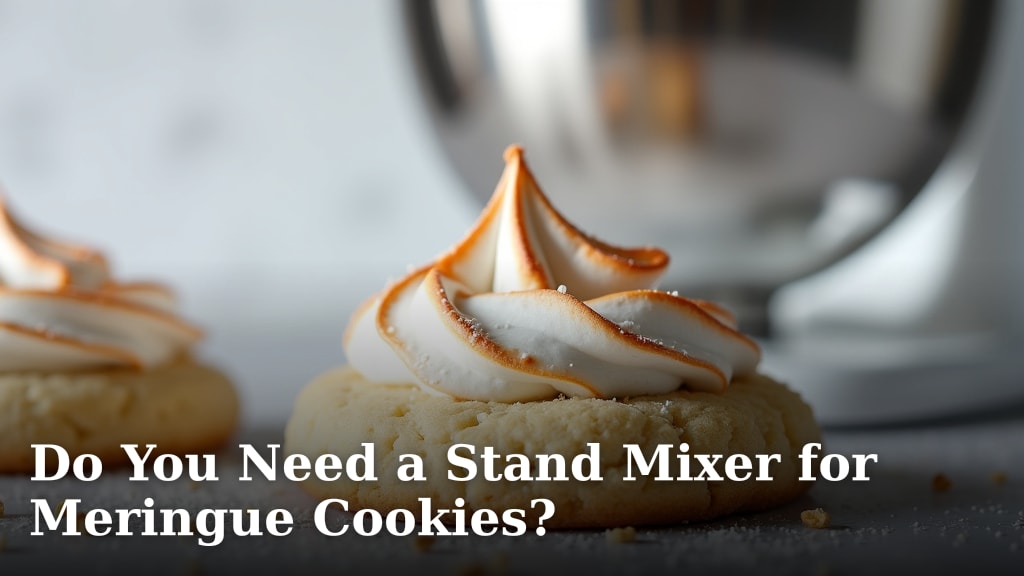
You do not absolutely need a stand mixer to make meringue cookies, but it will make the process significantly easier and produce more consistent results. While a hand mixer can work, it requires more effort and careful attention to achieve stiff peaks for your meringue. Our guide on how to make meringue in a stand mixer offers detailed steps for success.
Making meringue cookies involves whipping egg whites until they form stiff, glossy peaks. This can be a challenging task, especially for beginners. A stand mixer offers hands-free operation and consistent speed, which are key for developing the proper meringue structure without overbeating or underbeating.
- Stand mixers are great for meringue cookies.
- Hand mixers can work but are more tiring.
- Consistent whipping is key for good meringue.
- A stand mixer offers ease and better results.
Let’s break down why a stand mixer is often recommended and how you can still achieve delightful meringue cookies, even if you’re using a hand mixer.
Making Meringue Cookies: Does a Stand Mixer Steal the Show?
So, you’re dreaming of light, airy meringue cookies. Wonderful choice! They’re delicate, sweet, and just melt in your mouth. You’re probably wondering if you need a fancy stand mixer to pull off this baking magic. The short answer? Not necessarily. But let’s dive into what makes a stand mixer so helpful and how you can still achieve meringue perfection with other tools.
You can absolutely make meringue cookies without a stand mixer. Many bakers have been whipping up meringues for ages with just their own two hands and a whisk. The key is understanding the process and being prepared for a bit more physical effort if you’re not using a stand mixer. It’s all about getting those egg whites to the right consistency.
The Science Behind Meringue Peaks
Meringue is essentially a foam created by whipping egg whites. Tiny air bubbles are incorporated into the proteins of the egg whites. Sugar is then added, which stabilizes these bubbles. When you whip egg whites, you’re stretching these proteins until they become denatured. This allows them to trap air more effectively.
The goal is to reach what bakers call “stiff peaks.” This means when you lift your whisk or beater out of the mixture, the meringue should stand up straight, holding its shape without curling over. If you underbeat, your meringue will be too runny. Overbeating can cause the egg whites to break down, resulting in a dry, lumpy, or even oily texture. You want that perfect balance.
Why Stand Mixers Excel at Meringue
A stand mixer has a powerful motor and a whisk attachment specifically designed for incorporating air. It spins at a consistent speed, which is fantastic for developing that stable meringue structure. You can set it and walk away for a few minutes. This frees you up to measure out other ingredients or just admire your progress. If you’re having trouble, our guide on why your stand mixer is not mixing evenly can help.
The consistent motion of a stand mixer is a huge advantage. It beats the egg whites evenly, reducing the risk of overbeating in some spots and underbeating in others. This uniformity leads to a much more predictable and reliable meringue. Many found that the results were consistently smoother and glossier.
Hands-Free Operation is a Game Changer
Let’s be honest, whipping egg whites can be a workout! If you’ve ever tried to whip them by hand for an extended period, you know what we mean. Your arm gets tired, and it’s hard to maintain a steady pace. A stand mixer takes all that physical effort out of the equation. You simply turn it on, and it does the hard work for you.
Consistent Speed for Stable Meringue
The ability to control and maintain a specific speed is where stand mixers truly shine. You can start on a lower speed to break up the egg whites, then gradually increase it as you add sugar. This methodical approach helps create a strong, stable foam. Research in food science often points to controlled aeration as key for foam stability (National Center for Biotechnology Information).
Can You Make Meringue Cookies with a Hand Mixer?
Yes, you absolutely can! Many home bakers successfully make meringue cookies with a hand mixer. It’s a perfectly viable option if you don’t have a stand mixer or prefer something more portable. You just need to be prepared to put in a bit more effort and pay close attention.
The Pros of Using a Hand Mixer
Hand mixers are more affordable than stand mixers. They are also smaller and easier to store. If you only bake meringue cookies occasionally, a hand mixer might be all you need. It’s a tool many of us already have in our kitchen drawers.
The main pro is that they still get the job done. You can achieve stiff peaks with a hand mixer. It just requires more active participation from you. You’ll be holding the mixer for the entire whipping process, which can take 5-10 minutes or even longer depending on your mixer’s power.
The Cons and What to Watch For
The biggest challenge with a hand mixer is the physical stamina required. Keeping a consistent speed and motion can be difficult. It’s easy to get distracted or to switch speeds unintentionally. This can lead to inconsistent results.
You also need to be vigilant about watching the meringue. Because it’s harder to maintain a steady pace, you might be more prone to overbeating. Overbeaten meringue can look dry and clumpy. It might even start to weep or look oily. If you see this happening, stop immediately.
Here’s a tip: try to hold the mixer at a consistent angle and move it around the bowl. This helps ensure even aeration. It’s a bit like giving your arm a good workout while you bake!
Tips for Meringue Success, Mixer or Not
Regardless of the mixer you use, a few key practices will set you up for meringue success. These tips apply whether you’re using a powerful stand mixer or a trusty hand mixer.
Room Temperature Eggs are Key
Using room temperature egg whites is critically important. Cold egg whites simply don’t whip up as well. They don’t trap air as efficiently. Many baking resources recommend letting your eggs sit out for about 30 minutes before you plan to use them (King Arthur Baking Company).
Why is this? The proteins in egg whites are more relaxed at room temperature. This allows them to stretch more easily. They can then capture more air bubbles, leading to a lighter, more voluminous meringue. You’ll find they become foamy much faster.
Cleanliness is Next to Meringue-ness
This might sound strange, but your bowl and beaters need to be absolutely spotless. Even a tiny trace of fat or grease can prevent your egg whites from whipping properly. Fat breaks down the proteins that create the foam. This means no soap residue, no oily fingerprints, and definitely no egg yolk.
If you’re unsure, wipe down your bowl and beaters with a little bit of vinegar or lemon juice on a clean cloth. Then rinse them thoroughly. This helps ensure there’s no hidden grease. It’s a small step that makes a big difference.
Add Sugar Gradually
Don’t dump all the sugar in at once! This is a common mistake. Adding sugar too quickly can weigh down the egg whites. It might even cause them to deflate. Instead, add it a tablespoon or two at a time. Wait for each addition to dissolve before adding more.
This gradual addition allows the sugar to be incorporated smoothly. It helps stabilize the meringue without collapsing the structure you’ve worked so hard to build. You’ll notice the meringue becoming glossier and thicker as you go.
Monitor for Stiff Peaks
As mentioned, stiff peaks are your goal. They should stand straight up when you lift the beater. Another test is to invert the bowl. If your meringue stays put, you’re golden. If it starts to slide or drip, you need to beat it a bit longer.
Be careful not to overbeat! If the meringue looks dry, grainy, or starts to weep liquid, you’ve gone too far. This is where a stand mixer’s consistent speed can be helpful, but with a hand mixer, you just need to be extra observant.
Stand Mixer vs. Hand Mixer: A Quick Comparison
Let’s sum up the key differences when it comes to making meringue cookies.
| Feature | Stand Mixer | Hand Mixer |
|---|---|---|
| Effort Required | Minimal (hands-free) | Significant (manual holding) |
| Consistency | Very High (even mixing) | Moderate (can be inconsistent) |
| Speed Control | Precise and steady | Can be harder to maintain |
| Risk of Overbeating | Lower | Higher (if not careful) |
| Cost | Higher investment | Lower investment |
| Storage | Takes up counter/cabinet space | Easy to store in a drawer |
Your Meringue Cookie Checklist
Ready to get baking? Here’s a quick checklist to ensure you’re on the right track for fabulous meringue cookies:
- Use room temperature egg whites.
- Ensure your bowl and beaters are perfectly clean and grease-free.
- Add sugar gradually, a little at a time.
- Whip until stiff, glossy peaks form.
- Be patient and don’t rush the process!
- Watch for signs of overbeating (dry, grainy texture).
Conclusion
So, do you absolutely need a stand mixer for perfect meringue cookies? The short answer is no. While a stand mixer offers unparalleled ease and consistency, your trusty hand mixer can also get the job done with a bit more effort. You’ve learned how whipping technique, room temperature eggs, a clean workspace, gradual sugar addition, and careful monitoring for stiff peaks are your allies. No matter your equipment, these principles pave the way to those delightful, melt-in-your-mouth meringues. Go ahead and whip up a batch – your kitchen awaits your sweet success!
Frequently Asked Questions
How long does it take to whip egg whites for meringue cookies?
Whipping egg whites typically takes between 5 to 10 minutes. This timeframe can vary depending on the power of your mixer and whether you’re using a stand mixer or a hand mixer. With a hand mixer, it might take a bit longer due to the manual effort involved.
Can I use cold egg whites for meringue?
It’s best to avoid cold egg whites. Room temperature egg whites whip up much more easily and incorporate more air. Cold egg whites are more difficult to break down and don’t form stable foam as readily, which can lead to a less voluminous meringue.
What happens if I overbeat my meringue?
Overbeaten meringue can become dry, grainy, and may even start to weep liquid. This indicates that the proteins in the egg whites have broken down too much. If you notice this, stop mixing immediately to prevent the meringue from becoming unusable.
Is it okay if my meringue bowl has a tiny bit of grease?
No, your bowl and beaters must be completely free of grease or fat. Even a tiny trace of oil can prevent your egg whites from whipping properly. Fat interferes with the protein structure that creates the airy foam.
What is the best way to add sugar to meringue?
Always add sugar gradually, a tablespoon or two at a time, while the egg whites are whipping. Wait for each addition to mostly dissolve before adding more. This slow incorporation helps stabilize the meringue and prevents it from deflating.
