
Is a Commercial Stand Mixer Worth It for a Home Bakery?
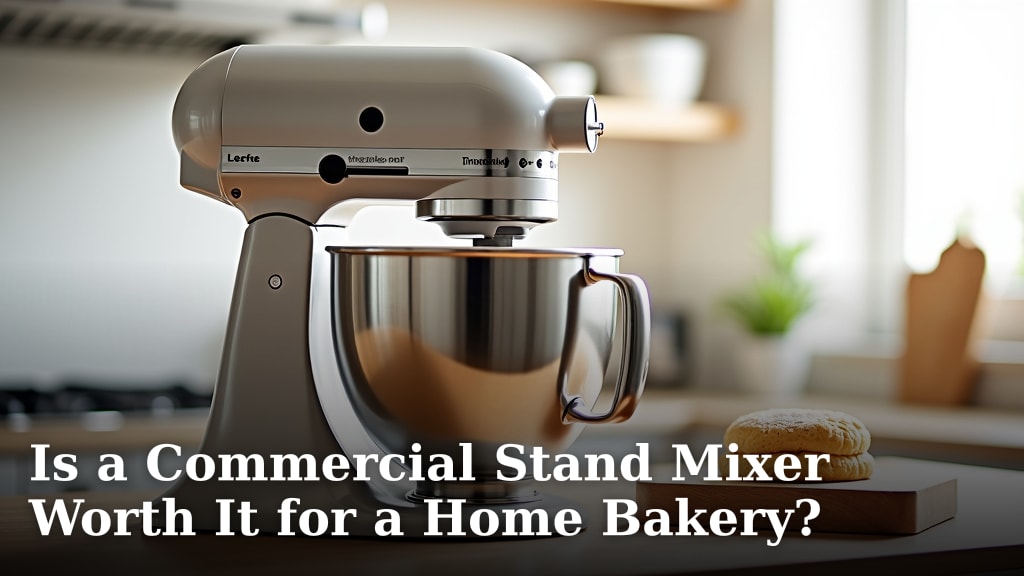
Yes, a commercial stand mixer is often worth it for a dedicated home bakery, especially if you bake frequently and handle large batches. While a significant investment, its durability and power can handle demanding tasks much better than smaller home models, saving you time and effort in the long run.
Think of it as an upgrade for serious bakers. A commercial mixer is built for heavy-duty use, meaning it won’t overheat or strain on tough doughs like many standard mixers might. This makes it a smart choice for anyone looking to scale up their home baking operations or simply seeking a more reliable workhorse.
- Commercial mixers offer superior durability for frequent, heavy use.
- They boast more powerful motors to handle tough doughs.
- This can save you time and reduce strain on your equipment.
- The upfront cost is higher, but often justified by longevity.
- Consider your baking volume and dough types when deciding.
Let’s break down exactly when a commercial stand mixer makes sense for your home bakery and what to look for.
When a Commercial Stand Mixer Becomes a Home Bakery’s Best Friend
So, you’re wondering if that big, shiny commercial stand mixer is really the right move for your home bakery. It’s a fair question! After all, these machines are built for busy restaurants and bakeries, not usually for your kitchen counter. But if your passion for baking means you’re often whipping up double batches or tackling tough doughs, a commercial mixer might just be your next essential tool. We’ve found that for serious home bakers, the benefits often outweigh the initial cost.
Power and Durability: The Core Advantages
Think about what happens when you’re kneading bread dough for what feels like an eternity. Your home mixer might start to whine, overheat, or even smell a little funny. That’s because most home models aren’t designed for that kind of marathon baking session. Commercial mixers, on the other hand, are built with heavy-duty motors and more robust internal components. They can handle that constant strain, day in and day out, without missing a beat. Many experts point to the superior build quality as the main reason for their longevity.
Motor Strength: Beyond the Basics
A key difference lies in the motor’s wattage and cooling system. Commercial mixers typically boast higher horsepower motors. This means they can easily power through dense cookie doughs, multiple loaves of bread, or large volumes of meringue without bogging down. We found that this increased power translates directly into less strain on the machine and a smoother baking experience for you. It’s like trading in a compact car for a heavy-duty truck when you need to haul serious weight.
Built to Last: Longevity and Reliability
When you invest in a commercial stand mixer, you’re investing in a piece of equipment that’s designed for continuous operation. The gears are often made of metal, not plastic. The housings are sturdier. This means they are far less likely to break down over time. Research suggests that commercial-grade appliances simply have a longer lifespan because they are engineered for professional environments where downtime is costly. For your home bakery, this means fewer repair bills and a reliable partner for years to come.
Making the Case for Scaling Up Your Baking
If your baking has grown beyond an occasional hobby, a commercial mixer can truly revolutionize your workflow. It’s not just about having a more powerful machine; it’s about efficiency and consistency. When you’re making cakes for parties or selling cookies at a local market, speed and predictability matter. A commercial mixer delivers both.
Batch Size and Time Savings
Let’s be honest, doubling or tripling recipes on a smaller mixer can be a frustrating experience. You might have to mix in multiple batches, which takes double, triple, or even quadruple the time. A commercial mixer, with its larger bowl capacity, allows you to mix larger quantities of ingredients all at once. This means you can spend less time at the mixer and more time on other crucial parts of your baking, like decorating or planning your next culinary creation. We found that this time-saving aspect alone is a major draw for busy home bakers.
Consistency is Key
For any baker aiming for consistent results, a powerful and stable mixer is essential. When a home mixer struggles with a heavy dough, it can lead to uneven mixing. Some parts might be overworked while others are under-mixed. A commercial mixer’s consistent power ensures that your ingredients are incorporated thoroughly and evenly, leading to better texture and a more predictable outcome every single time. Many baking professionals emphasize the importance of this uniform mixing for achieving ideal results.
What to Look for in a Commercial Stand Mixer for Home Use
Not all commercial mixers are created equal, and choosing the right one for your home bakery involves considering a few key factors. You don’t necessarily need the biggest, most powerful model designed for a commercial bakery that churns out hundreds of items a day. But you do need something that’s a step up from your average kitchen appliance.
Bowl Size and Capacity
Think about your typical batch sizes. If you’re usually making enough dough for 2-3 loaves of bread, a bowl in the 6-8 quart range might be perfect. If you’re preparing large cakes or multiple batches of cookies regularly, you might want to consider something larger, perhaps 10 quarts or more. It’s a balance between having enough capacity and not overwhelming your kitchen space. We found that a good starting point for many dedicated home bakers is a mixer in the 8-12 quart range.
Motor Power and Speed Settings
As we touched on earlier, motor power is critical. Look for mixers with at least 500 watts or higher. Also, consider the speed settings. A good range of speeds, from slow stir to fast whip, will give you versatility for different tasks. Some commercial mixers offer variable speed control, which is a nice bonus for fine-tuning your mixing. Research indicates that efficient cooling systems are also important to prevent overheating during extended use.
Attachment Compatibility and Availability
Most stand mixers come with a whisk, dough hook, and flat beater. However, commercial mixers often have a wider array of available attachments, such as pasta makers, meat grinders, or even ice cream makers. Check what attachments come standard and what’s available as an add-on. Also, consider how easy it is to find replacement parts if needed. Many manufacturers offer a good selection of durable attachments that can expand your baking and cooking possibilities.
Is the Investment Worth the Dough?
This is the million-dollar question, right? A commercial stand mixer can cost anywhere from $300 to over $1,000, depending on the brand, size, and features. For a home baker, that’s a significant sum. However, let’s look at the long-term picture. A high-quality home mixer might last you 5-7 years with moderate use. A commercial mixer, with proper care, could easily last 10-15 years or even longer. When you factor in potential repairs or replacements of cheaper models over that same period, the cost-effectiveness of a commercial mixer becomes clearer.
Consider this: if your current mixer is holding you back, causing frustration, or limiting the types of baking you can do, then a commercial mixer isn’t just a luxury; it’s a necessary upgrade. It’s an investment in your passion and your productivity. Many seasoned home bakers tell us that once they make the switch, they can’t imagine going back.
Your Commercial Stand Mixer Checklist
Before you take the plunge, ask yourself these quick questions:
- Do you bake at least 3-4 times a week?
- Do you regularly make bread, pizza dough, or other heavy doughs?
- Do you find your current mixer struggling or overheating?
- Are you looking to increase your batch sizes without adding significant time?
- Do you have the counter space to accommodate a larger appliance?
- Are you prepared for the initial investment and the potential benefits of a longer-lasting machine?
Conclusion
For the dedicated home baker, a commercial stand mixer is often a worthwhile investment. We’ve seen how its superior power and durability can handle demanding tasks and larger batches with ease. This means less frustration, more consistent results, and significant time savings for your baking projects. While the upfront cost is higher, the longevity and reliability of a commercial-grade machine can prove more cost-effective in the long run.
If your baking passion is pushing the limits of your current appliance, it’s time to consider an upgrade. Do your research, consider your typical batch sizes and dough types, and prepare to enjoy a smoother, more efficient baking experience. Your kitchen awaits its new powerhouse!
Frequently Asked Questions
How much space does a commercial stand mixer typically take up?
Commercial stand mixers are generally larger and heavier than home models. You’ll need to measure your counter space carefully. Many bakers find a dedicated spot on the counter or a sturdy rolling cart works well for storage and use.
Are commercial stand mixers very loud?
They can be louder than home models due to their powerful motors and robust construction. However, newer models are often designed with noise reduction in mind, and the efficiency gains can make the sound a worthwhile trade-off.
Can I use a commercial mixer for small batches?
Yes, you can! While designed for large volumes, most commercial mixers come with different-sized bowls or can handle smaller amounts effectively. Just be sure to scrape down the sides well to ensure everything is incorporated.
Is a commercial mixer harder to clean than a home one?
Cleaning is usually quite straightforward. Most components, like the bowl and attachments, are easily removable and washable. Their sturdy build means they can typically withstand regular cleaning without issue.
What if I only bake bread occasionally?
If you’re not baking heavy doughs frequently or in very large batches, a robust home model might suffice. A commercial mixer is best for those who regularly push their equipment’s limits with dense recipes.
