
Do You Need a Stand Mixer for Cookies?
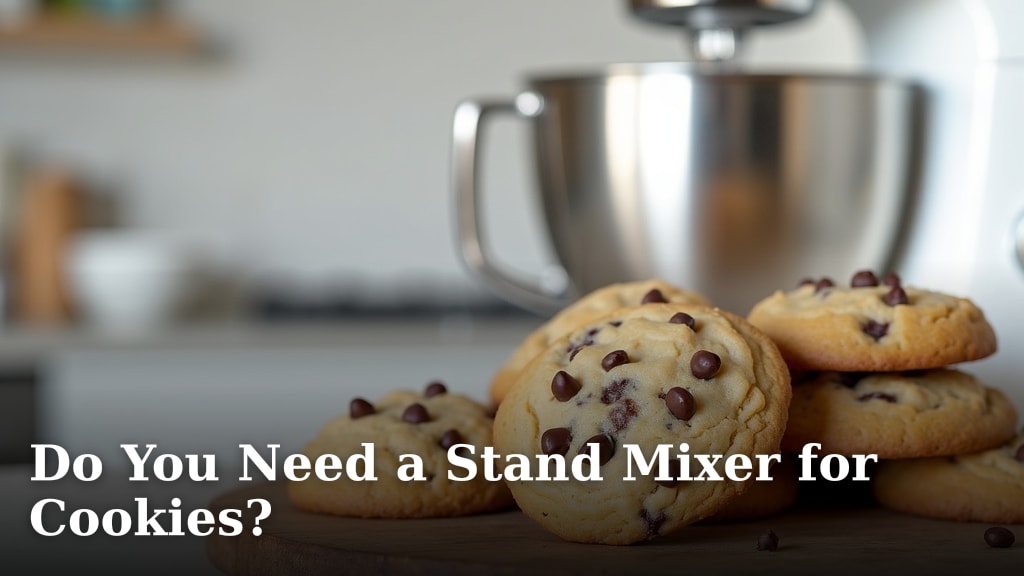
No, you do not absolutely need a stand mixer to make delicious cookies, but it can certainly make the process easier and faster. While a good old-fashioned spatula or hand mixer can get the job done, a stand mixer offers hands-free mixing and consistent results, especially for larger batches or recipes requiring extensive creaming.
Many home bakers wonder if investing in a stand mixer is worth it just for cookies. We found that while it’s not a strict requirement, it can be a game-changer for cookie enthusiasts. It reduces physical effort and helps achieve the perfect dough consistency, leading to better cookie texture and taste. Think of it as a helpful kitchen assistant, not a mandatory one.
- Stand mixers aren’t strictly required for cookies.
- They make baking easier and faster.
- Hand mixers and spatulas work too.
- Stand mixers offer hands-free mixing.
- They are great for large batches.
Let’s break down whether a stand mixer is the right choice for your cookie-baking adventures and explore the pros and cons.
Is a Stand Mixer a Must-Have for Baking Cookies?
Let’s be upfront: you don’t strictly need a stand mixer to bake fantastic cookies. Many home bakers have been whipping up batches of deliciousness for years with just a bowl and a spoon. It’s totally possible to get that perfect cookie dough without the fancy machinery. You can absolutely achieve amazing cookie results with simpler tools.
However, for those who find themselves baking cookies often, or tackling recipes that demand a lot of mixing, a stand mixer can be a real sanity saver. It takes a lot of the manual labor out of the equation. We’ve found that it can make your baking experience smoother and more enjoyable, especially when you’re making a big batch.
The Case for Using Your Hands (and a Spoon!)
Baking cookies by hand is a classic for a reason. It connects you to the process. You can feel the dough changing texture. This hands-on approach is often the first method many people learn. It requires minimal equipment, usually just a mixing bowl, a whisk or spatula, and your own two hands.
Pros of Hand Mixing Cookies
- Cost-effective: You likely already own the necessary tools. No need for an extra purchase.
- Tactile experience: You can feel the dough come together. This can help you judge consistency.
- Space-saving: Bowls and spatulas don’t take up much counter or cabinet space.
- Simplicity: The process is straightforward and easy to learn.
Cons of Hand Mixing Cookies
- Physical effort: Creaming butter and sugar can be quite tiring.
- Time-consuming: It takes longer to achieve the right consistency.
- Inconsistent results: It can be harder to perfectly cream ingredients by hand.
- Limited batch size: It becomes difficult to mix large quantities.
Enter the Hand Mixer: A Step Up in Ease
If you’re looking for something a bit more efficient than hand mixing but not ready for a stand mixer, a hand mixer is a great middle ground. These electric mixers are portable and easy to store. They do most of the heavy lifting for you.
Hand Mixer Benefits
- Less effort: It significantly reduces the arm strain of mixing.
- Faster mixing: You can achieve creamed butter and sugar much quicker.
- More control: You can easily adjust speed and move the mixer around the bowl.
- Affordable: Hand mixers are generally less expensive than stand mixers.
Hand Mixer Limitations
- Still requires holding: You need to actively hold and maneuver the mixer.
- Can be noisy: Some hand mixers can be quite loud during operation.
- Less power: They might struggle with very stiff doughs or large batches.
The Stand Mixer: Your Cookie Baking Sidekick
Now, let’s talk about the stand mixer. This appliance is designed to do the work for you. It has a bowl that locks into place, and the mixer head oscillates to combine ingredients thoroughly. Many bakers find it a transformative tool for their kitchen.
Why a Stand Mixer Shines for Cookies
The primary advantage of a stand mixer is its hands-free operation. You can add ingredients and then walk away. The mixer does all the churning and blending. This is especially helpful when a recipe calls for extended mixing times. For example, creaming butter and sugar until light and fluffy. Many recipes suggest this step for optimal cookie texture (King Arthur Baking).
Stand mixers also offer consistent and powerful mixing. The motor is typically stronger than in a hand mixer. This means it can handle thicker doughs with ease. It ensures ingredients are incorporated evenly throughout the bowl. This uniformity leads to a better, more predictable cookie outcome.
The Power of Proper Creaming
Creaming butter and sugar is a foundational step in many cookie recipes. It involves beating the two together until the mixture is light in color and fluffy in texture. This process incorporates air into the dough. That air expands during baking, creating a tender cookie with a good rise. A stand mixer excels at this. It can achieve the ideal creamy consistency more efficiently than manual methods. Research in food science often points to the importance of this step for cake and cookie structure (Journal of Food Science).
Handling Large Batches with Grace
If you love to bake for parties, holidays, or just because, you probably make large batches. Trying to mix ten dozen cookies by hand can be an exhausting marathon. A stand mixer with its larger bowl capacity can handle these big jobs. You can mix multiple recipes or double batches without breaking a sweat. This convenience is a major selling point for busy bakers.
Stand Mixer Features to Consider
Stand mixers come with various attachments. The most common for cookies are the flat beater (for creaming), the dough hook (for bread, less so for cookies), and the whisk attachment (for whipping cream or egg whites). Most recipes will use the flat beater for cookie dough. Some models offer additional attachments, like pasta makers or grinders, though these are less relevant if your main goal is cookies.
When choosing a stand mixer, consider its wattage. Higher wattage generally means more power, which is good for stiff doughs. Also, think about the bowl size. A 5-quart bowl is common and suitable for most home bakers. If you bake very large quantities regularly, you might consider a 6-quart or larger model.
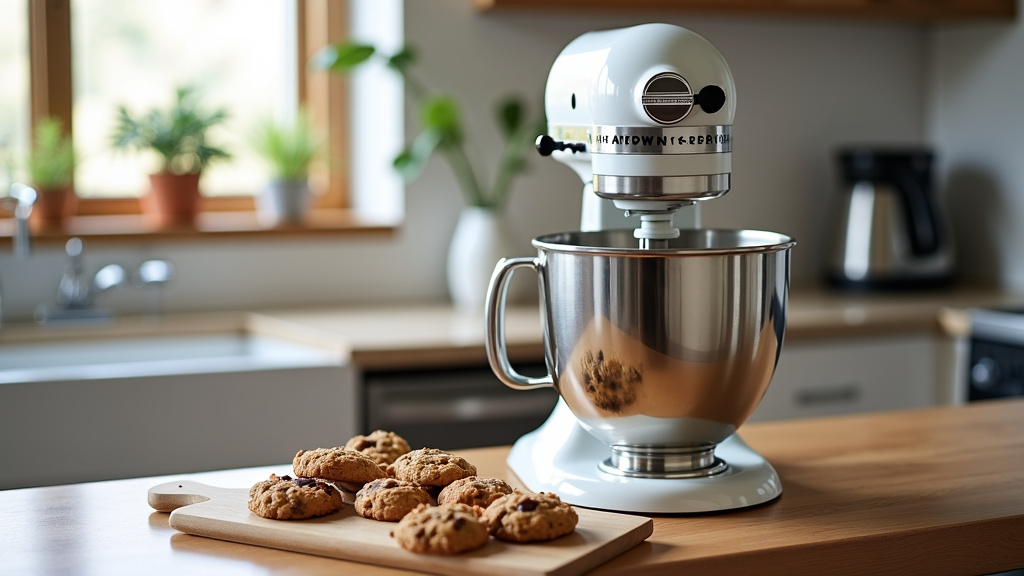
When is a Stand Mixer Justified for Cookies?
So, who truly benefits from a stand mixer just for cookie baking? We found several key scenarios:
- The Frequent Baker: If you bake cookies weekly or bi-weekly, the time and effort saved really add up.
- The Recipe Explorer: If you love trying complex cookie recipes that require precise creaming or long mixing times.
- The Batch Baker: If you often bake for large groups or need to make many cookies at once.
- The Comfort Seeker: If you have any physical limitations that make manual mixing difficult or painful.
It’s about matching the tool to your baking habits and needs. If your cookie baking is sporadic and simple, a hand mixer or even just a good spatula might be perfectly adequate. But if baking is a regular, passionate hobby, a stand mixer can truly enhance your experience.
Comparing Mixing Methods: A Quick Glance
To help you visualize the differences, here’s a simple comparison:
| Method | Effort Level | Time Commitment | Batch Size Suitability | Consistency of Results |
|---|---|---|---|---|
| Hand Mixing (Spatula/Whisk) | High | Longest | Small | Variable |
| Hand Mixer | Medium | Medium | Medium | Good |
| Stand Mixer | Low | Shortest | Large | Excellent |
Your Cookie Baking Checklist
Before you decide, ask yourself these questions:
- How often do you bake cookies?
- Do your favorite recipes involve extensive creaming?
- Do you typically make large batches of cookies?
- Is your current mixing method causing fatigue or frustration?
- What is your budget for kitchen appliances?
Answering these can help guide you toward the best choice for your kitchen and your cookie cravings!
Conclusion
So, do you need a stand mixer for perfect cookies? The short answer is no, but it can make your baking life significantly easier and more enjoyable. You can achieve delicious results with your hands and a spatula, or with the help of a hand mixer. We found that a stand mixer truly shines for those who bake cookies frequently, tackle challenging recipes, or often make large batches. Consider your baking habits and budget. If a stand mixer aligns with your needs, it’s an investment that can transform your cookie-making experience.
Frequently Asked Questions
Can I still make good cookies without a stand mixer?
Absolutely! Many bakers swear by their hands and a trusty spatula or whisk. You can achieve great cookie textures and flavors by hand or with a hand mixer. It just requires a bit more physical effort and attention to detail.
What’s the biggest benefit of using a stand mixer for cookies?
The biggest benefit is hands-free convenience. It frees you up to measure other ingredients or prep your baking sheets while the mixer does the heavy lifting. We found this saves a lot of time and effort, especially for recipes requiring long creaming times.
Are stand mixers really that much better for creaming butter and sugar?
Yes, stand mixers excel at creaming. Their consistent power and speed effectively incorporate air into the butter and sugar mixture. This process is key to tender cookies, and a stand mixer does it more efficiently than manual methods.
How do I know if I bake cookies often enough to justify a stand mixer?
If you find yourself baking cookies at least once or twice a month, or for special occasions and gatherings, the time and energy saved by a stand mixer can be substantial. It becomes a worthwhile tool if baking is a regular hobby for you.
Can a hand mixer do everything a stand mixer can for cookies?
A hand mixer can handle most cookie doughs, especially for medium batches. However, it still requires you to hold it, and it may struggle with very stiff doughs or extremely large quantities. A stand mixer offers more power and convenience for those demanding tasks.
