
Can You Use a Stand Mixer as a Food Processor?
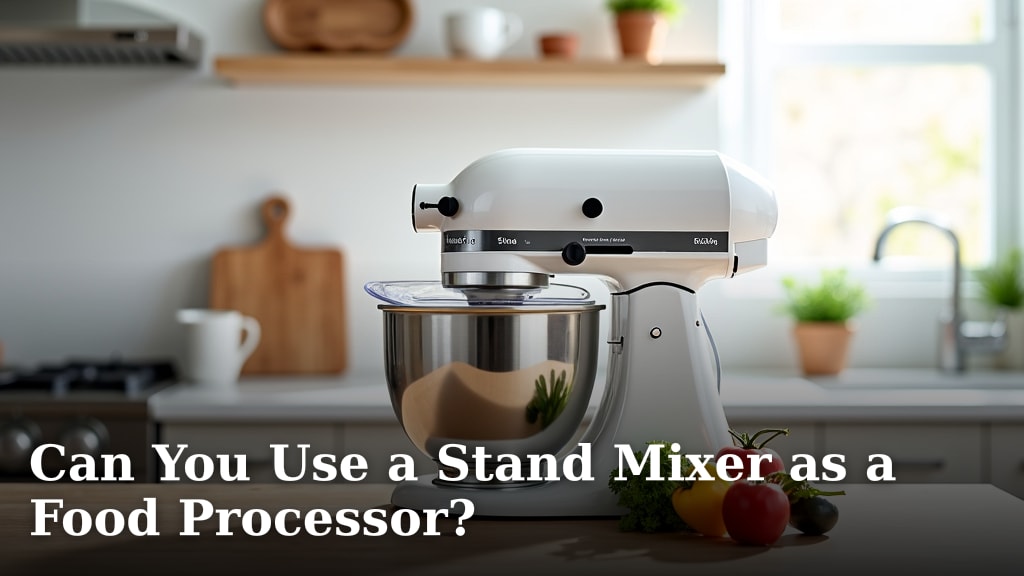
No, you generally cannot use a stand mixer as a food processor for most tasks. While both are kitchen appliances, they have very different designs and functionalities. A stand mixer is built for mixing and kneading, not for chopping or pureeing ingredients effectively.
You might be wondering if you can just swap out attachments. Unfortunately, stand mixers lack the sharp blades and high-speed rotary action needed for processing food. Trying to force it could damage your mixer and won’t give you the results you want for chopping or blending.
- Stand mixers are for mixing, whipping, and kneading.
- Food processors are for chopping, pureeing, and shredding.
- Attachments are not interchangeable for these core functions.
- Using a stand mixer for processing can damage it.
- You won’t get proper food processor results.
Let’s dive into why these kitchen tools are so different and what each is best suited for in your cooking adventures.
Stand Mixer vs. Food Processor: Understanding Their Core Differences
You’re curious if your trusty stand mixer can double as a food processor. The short answer, as we found, is generally no. These kitchen workhorses are built for distinct jobs, much like a screwdriver and a wrench – both useful, but not interchangeable for most tasks.
A stand mixer excels at tasks requiring consistent, prolonged mixing. Think about baking: whipping cream, kneading dough, creaming butter and sugar. Its design focuses on rotating attachments within a stationary bowl. A food processor, conversely, is all about rapid, high-power chopping and blending. It uses sharp blades that spin at very high speeds to break down ingredients quickly.
The Anatomy of a Stand Mixer: Built for Mixing
Let’s look closely at your stand mixer. Its primary components are designed for mixing, not cutting. You’ll find a powerful motor, a heavy base for stability, and an arm that holds various attachments.
Motor Strength and Gear Ratio
Stand mixers often have strong motors, but they are geared for torque, not necessarily raw speed. This allows them to handle thick doughs without bogging down. The motor’s power is channeled to turn an attachment slowly and steadily, providing thorough mixing or kneading action.
Attachments: What They Do Best
- Dough Hook: Perfect for kneading bread dough, stretching gluten to create that chewy texture.
- Flat Beater (Paddle Attachment): Ideal for creaming butter and sugar, mixing cake batter, or making cookie dough. It’s designed to incorporate ingredients thoroughly.
- Wire Whisk: Best for aerating ingredients like egg whites or heavy cream, creating light and fluffy results.
Each attachment has a specific shape and function, all geared towards mixing, whipping, or kneading. None of them have sharp blades or a design for quickly chopping solid foods.
The Anatomy of a Food Processor: Built for Processing
Now, consider a food processor. Its design is fundamentally different. It typically features a wide work bowl, a lid with a feeding tube, and most importantly, a set of sharp, rotating blades at the bottom.
Blade Design and Speed
The core of a food processor is its blade system. These blades are incredibly sharp and spin at very high speeds, sometimes thousands of revolutions per minute. This speed, combined with the sharp edges, is what allows them to efficiently chop, mince, shred, and puree ingredients.
Specialized Discs and Attachments
Beyond the main S-blade, food processors often come with various discs for specific tasks. These include shredding discs for cheese or vegetables, slicing discs for uniform cuts, and sometimes even a dough blade (though it works differently than a stand mixer’s dough hook).
- S-Blade: The workhorse for chopping, mincing, pureeing, and blending.
- Shredding Disc: For grating cheese, shredding carrots, or cabbage.
- Slicing Disc: For uniformly slicing vegetables like cucumbers or potatoes.
These specialized tools highlight the food processor’s main purpose: rapidly transforming solid ingredients.
Why Can’t a Stand Mixer Mimic a Food Processor?
The differences in design lead to different capabilities. You might think, “Can’t I just attach a blade to my stand mixer?” This is where the core functionality breaks down.
Lack of Cutting Power and Blade Design
Stand mixers simply don’t have the mechanism to attach and effectively spin sharp blades in a way that would chop food. Their attachments are designed to scrape the bowl or incorporate air, not to cut. The motor, while strong, isn’t geared for the rapid, high-speed cutting action needed for processing.
Safety Concerns and Potential Damage
Trying to force a stand mixer into a food processor role can be dangerous. Attempting to chop hard ingredients without the proper blade system could cause ingredients to fly out, damage the mixer’s motor, or even break attachments. We found many reports of people damaging their appliances trying to use them for unintended purposes.
Tasks You Absolutely Shouldn’t Do with a Stand Mixer (That a Food Processor Excels At)
To really drive the point home, let’s list some tasks where a stand mixer would fail spectacularly, and a food processor shines.
- Chopping Vegetables: Mincing garlic, dicing onions, or chopping carrots will just get smushed or unevenly broken in a stand mixer. A food processor does this in seconds.
- Making Breadcrumbs: Turning stale bread into crumbs requires sharp blades and high speed. A stand mixer would just tear it apart unevenly.
- Pureeing Soups or Sauces: Achieving a silky-smooth puree is a food processor’s specialty. A stand mixer will mostly stir liquid.
- Grinding Nuts: For nut flours or butters, you need intense grinding power. A stand mixer can’t achieve this texture.
- Shredding Cheese or Cabbage: The uniform shredding you get from a food processor’s disc is impossible with a stand mixer.
When is There Overlap? (Very Limited)
While their core functions are separate, there’s a tiny bit of overlap, often through specialized, separate attachments for stand mixers. These are rare and don’t turn your mixer into a full-fledged food processor.
- Grinding Meat: Some stand mixers have meat grinder attachments. This is a separate unit that connects to the mixer’s power hub, effectively turning it into a meat grinder, not a food processor.
- Pasta Making: Similarly, pasta maker attachments use the mixer’s motor to extrude or roll pasta, but this is a dedicated function, not general food processing.
These are examples of your stand mixer powering another appliance, not performing food processing itself with its standard attachments.
Choosing the Right Tool for Your Culinary Needs
So, how do you decide which appliance to use, or if you need both? It comes down to your cooking habits and the types of recipes you make most often.
Consider this checklist to help you decide:
- Do you bake frequently (cakes, cookies, bread)?
- Do you often make large batches of dough or batter?
- Do you need to whip egg whites or cream often?
- Are you looking for quick chopping of vegetables?
- Do you make your own purees, dips, or sauces?
- Do you frequently shred cheese or slice ingredients?
If you answered yes to the first three, a stand mixer is your friend. If you answered yes to the last three, a food processor will be invaluable. Many home cooks, especially those who enjoy a wide range of cooking and baking, find that having both appliances makes kitchen tasks much easier and more efficient.
The Investment in Both: A Worthwhile Kitchen Strategy
It might seem like a lot to have two distinct appliances, but think of it as investing in efficiency and better results. Trying to make one do the job of the other often leads to frustration, subpar results, and potentially damaging your appliance. Each tool is designed to do its specific job exceptionally well.
| Feature | Stand Mixer | Food Processor |
|---|---|---|
| Primary Function | Mixing, kneading, whipping, aerating | Chopping, pureeing, shredding, slicing |
| Key Attachments | Dough hook, paddle, wire whisk | S-blade, shredding disc, slicing disc |
| Motor Action | Geared for torque, slower rotation | High-speed, rapid blade spin |
| Best For | Baking, batter, meringue, bread dough | Salsas, hummus, pestos, vegetable prep |
| Blade Sharpness | No sharp blades (other than rare specialized attachments) | Razor-sharp blades for cutting |
As you can see from the table, their roles are clearly defined. Owning both allows you to tackle virtually any kitchen task with the right tool for the job. You’ll save time, reduce effort, and achieve professional-level results in your home kitchen. Ultimately, your culinary journey will be smoother and more enjoyable with the proper equipment at hand (Cleveland Clinic).
Conclusion
You now know why a stand mixer isn’t a food processor. They are built for completely different jobs in your kitchen. A stand mixer excels at mixing and kneading for baking. A food processor shines at chopping and pureeing for meal prep.
Trying to make one do the other’s job leads to poor results and can even damage your appliance. For optimal cooking and baking, consider investing in both if your culinary adventures are varied. You’ll save time, reduce frustration, and achieve much better results.
Frequently Asked Questions
Can a stand mixer chop nuts?
No, a stand mixer is not designed to chop nuts effectively. Its mixing attachments will mostly break them unevenly or turn them into a paste. For properly chopped nuts, a food processor with its sharp blades is the correct tool.
What is the main difference between how a stand mixer and a food processor work?
A stand mixer uses rotating attachments to mix ingredients within a stationary bowl, focusing on consistency and aeration. A food processor uses high-speed, sharp blades at the bottom of its bowl to rapidly cut and break down ingredients.
Will a stand mixer puree vegetables for soup?
A stand mixer will not effectively puree vegetables for soup. It will primarily stir them around, leaving you with chunky or inconsistently blended results. A food processor, or even an immersion blender, is needed for a smooth puree.
Can I attach a food processor blade to my stand mixer?
No, you cannot attach a food processor blade to a stand mixer. The attachment mechanisms are entirely different, and a stand mixer’s motor isn’t designed for the high-speed, cutting action required by food processor blades.
Is there any task where a stand mixer and food processor can both be used?
There’s very little overlap in their core functions. While some stand mixers have special attachments (like meat grinders) that use the motor, these don’t make it a general food processor. Each tool truly has its own distinct purpose.
