What Is the Difference Between a Stand Mixer and a Food Processor?
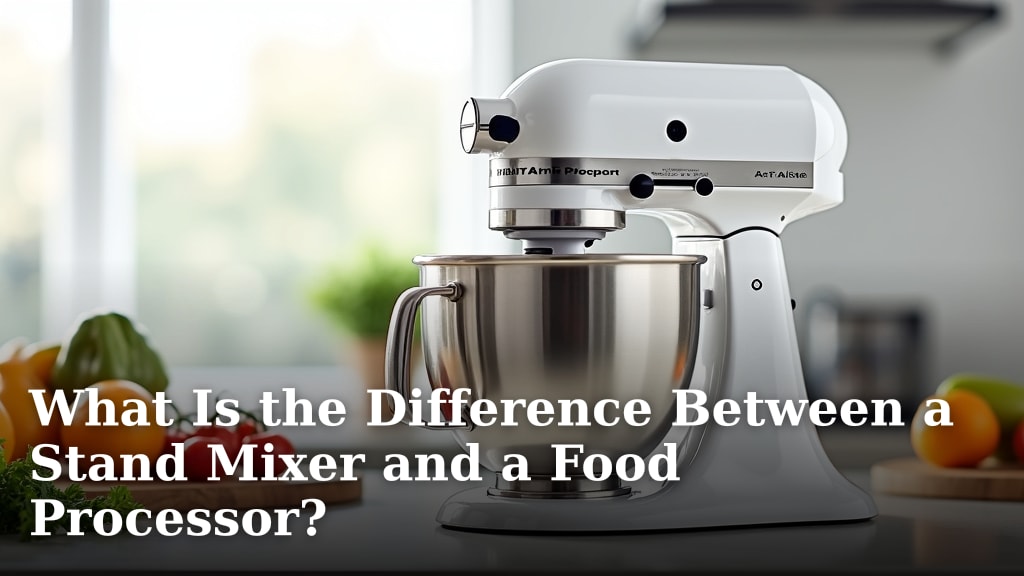
The main difference between a stand mixer and a food processor is their primary function: stand mixers are built for mixing and kneading dough and batters, while food processors excel at chopping and pureeing ingredients. Think of a stand mixer as your baking buddy, perfect for cakes and breads. A food processor is more of a kitchen workhorse, handling tasks like making pesto or shredding cheese.
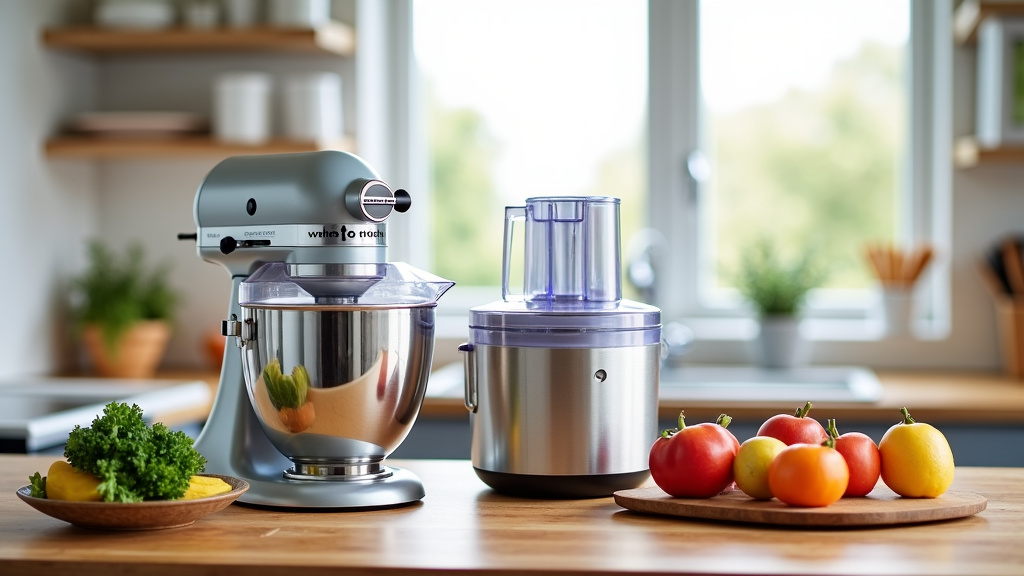
While both appliances use rotating blades or attachments, their designs are optimized for distinct kitchen jobs. Stand mixers have a fixed bowl and a powerful motor with various attachments like whisks and dough hooks. Food processors typically have a removable bowl and interchangeable blades designed for quick chopping, slicing, and grating. Many home cooks find they benefit from having both!
- Stand mixers are best for baking, like cakes, cookies, and bread dough.
- Food processors are ideal for prep work, such as chopping vegetables, making sauces, or shredding cheese.
- Stand mixers use attachments like whisks and dough hooks.
- Food processors use various sharp blades for different cutting tasks.
- You might need both for a fully equipped kitchen.
Let’s break down what each appliance can do for you and help you decide which one, or both, is right for your kitchen.
Understanding the Core Differences: Stand Mixer vs. Food Processor
You’ve seen them in kitchens, maybe even in commercials. They both have motors and spinning parts. But what truly sets a stand mixer apart from a food processor? It all comes down to their intended purpose. Think of it like comparing a screwdriver to a hammer; both are tools, but they do very different jobs.
The Stand Mixer: Your Baking Companion
When you picture a stand mixer, you probably imagine fluffy cakes, chewy cookies, or perfectly kneaded bread dough. That’s exactly what they’re designed for. Their main strength lies in slowly and steadily working with batters and doughs.
Mixing and Kneading Prowess
The power of a stand mixer comes from its robust motor and its attachments. The motor is built to handle dense ingredients. You can slowly incorporate flour into butter or let it work its magic on sticky bread dough for minutes on end without overheating. This consistent power is key for developing gluten in bread, giving it that perfect chew.
Attachments That Make a Difference
What makes a stand mixer so versatile for baking are its specialized attachments. You’ll typically find:
- Dough hook: This is your best friend for bread making. It mimics the kneading action of your hands but with much more power and consistency.
- Whisk attachment: Perfect for whipping cream, beating egg whites into stiff peaks for meringues, or creating light and airy batters for cakes.
- Flat beater (or paddle attachment): This is your go-to for most cookie doughs and cake batters. It scrapes the sides of the bowl as it mixes, ensuring everything is well combined without overworking the dough.
These attachments work within a fixed bowl, meaning the ingredients stay contained and the mixer does all the heavy lifting. You can often walk away and let it do its thing.
The Food Processor: The Kitchen Workhorse
Now, let’s talk about the food processor. If the stand mixer is your baking pal, the food processor is your prep-time hero. It’s all about speed and precision when it comes to chopping, slicing, shredding, and pureeing.
Speed and Precision Chopping
Food processors use a central blade that spins at very high speeds. This is fantastic for quickly breaking down ingredients. Need to chop onions for soup? A food processor can do it in seconds. Want to make a quick salsa? It’s your guy. We found that using a food processor for these tasks can drastically cut down prep time.
Versatile Blades and Discs
Similar to stand mixers, food processors come with various attachments, but their function is entirely different. These are usually sharp blades or discs designed for cutting:
- S-shaped blade: This is the most common blade. It’s used for chopping, mincing, grinding, and pureeing. It’s incredibly effective for making pesto, hummus, or even grinding nuts.
- Slicing disc: This disc sits at the top of the bowl. You feed vegetables through a chute, and it produces perfectly uniform slices for salads or stir-fries.
- Shredding/Grating disc: Another disc that sits at the top. It’s perfect for shredding cheese for tacos or grating carrots for coleslaw.
- Dough blade (sometimes): Some food processors come with a dough blade, but it’s generally not as effective as a stand mixer’s dough hook for large batches of bread dough. It’s better suited for quick pastry doughs.
The key difference here is that the food processor’s bowl is removable, and you typically load ingredients from the top chute. This design makes it ideal for quick, repetitive cutting tasks.
Key Functional Differences at a Glance
To really nail down the distinction, let’s look at their primary jobs. If your goal is to create something from scratch that involves combining and developing ingredients, a stand mixer is likely what you need. If your goal is to break down, cut, or blend existing ingredients quickly, the food processor shines.
What Each Appliance Excels At
We’ve seen many home cooks get confused about which tool to use. Here’s a simple breakdown of tasks:
Stand Mixer Tasks:
- Kneading bread dough (perfectly developed gluten!)
- Whipping cream to stiff peaks
- Making meringue
- Mixing cake batters
- Creaming butter and sugar
- Making cookie dough
Food Processor Tasks:
- Chopping vegetables (onions, garlic, herbs)
- Making smooth purees (soups, baby food)
- Creating sauces and dips (pesto, hummus, mayonnaise)
- Shredding cheese
- Slicing vegetables thinly
- Grinding nuts or breadcrumbs
- Making quick pastry dough
Motor Power and Design Considerations
The motors are designed differently. Stand mixer motors are built for sustained, lower-speed power to handle heavy loads. Food processor motors are built for bursts of high-speed action. Many experts note that food processors can overheat if run for too long, whereas stand mixers are designed for extended use.
The design of the bowl and how the attachments connect also tells a story. A stand mixer’s head tilts or lifts to access a central attachment point. A food processor has a base motor with a bowl that locks on top, and the blade or disc fits into the center of that bowl.
When Do You Need One Over the Other?
This is where you decide what fits your kitchen needs best. Ask yourself what kind of cooking or baking you do most often.
Are You a Dedicated Baker?
If you dream of artisanal bread, decadent cakes, and cookies from scratch, a stand mixer is probably your priority. It will save your arms from endless kneading and whisking. Many baking enthusiasts find that a stand mixer is a game-changer for their hobby.
Are You a Quick Prep Chef?
If you love making fresh sauces, chopping vegetables for weeknight meals, or prepping ingredients for salads and stir-fries in a flash, a food processor will be your constant companion. It’s about efficiency and making the more tedious parts of cooking quick and easy.
The Case for Having Both
It’s not uncommon for serious home cooks to own both appliances. They aren’t interchangeable, and each excels at its specific tasks. You might use your food processor to quickly chop vegetables for a soup, and then use your stand mixer to whip up a crusty bread to serve alongside it. Research from culinary schools often highlights how these tools complement each other in a well-equipped kitchen.
Consider your kitchen space and budget. Stand mixers tend to be larger and more expensive than food processors, though sizes and price points vary greatly for both.
| Feature | Stand Mixer | Food Processor |
|---|---|---|
| Primary Use | Mixing, Kneading, Whipping | Chopping, Slicing, Shredding, Pureeing |
| Key Attachments | Dough Hook, Whisk, Flat Beater | S-Blade, Slicing Disc, Shredding Disc |
| Motor Strength | Sustained Power for Heavy Doughs | High Speed for Quick Cuts |
| Best For | Baking (Bread, Cakes, Cookies) | Food Prep (Vegetables, Sauces, Dips) |
| Typical Kitchen Role | Baking Station | Prep Station |
Making Your Choice: What to Consider
So, which one should you get first? Or maybe you need both? Think about these points to guide your decision.
- Your most frequent kitchen tasks: What do you do more of – bake from scratch or prep vegetables?
- Time savings: Which appliance would save you the most time and effort on your usual cooking projects?
- Space limitations: Do you have counter space for both, or will one need to be stored?
- Budget: What’s your comfortable spending range for a kitchen appliance?
- Recipe goals: Are you looking to expand your baking repertoire or master quicker meal prep?
Conclusion
Ultimately, your kitchen needs will guide your choice between a stand mixer and a food processor. Remember, a stand mixer is your dedicated baking partner, perfect for developing doughs and creating airy batters. A food processor, on the other hand, is your prep work champion, designed for rapid chopping, slicing, and pureeing. We found that understanding these core differences helps a lot. If you bake a lot, prioritize the stand mixer. If you prep many ingredients, the food processor is key. For a truly versatile kitchen, consider how they can work together!
Frequently Asked Questions
Can a food processor replace a stand mixer for baking?
Generally, no. While some food processors have dough blades, they aren’t as effective as a stand mixer’s dough hook for developing gluten in bread dough. They also lack the whisk and paddle attachments essential for cakes and cookies.
Can a stand mixer chop vegetables like a food processor?
No, a stand mixer cannot effectively chop vegetables. Its attachments are designed for mixing and kneading batters and doughs, not for precise cutting or shredding of ingredients.
Which appliance is better for making sauces and dips?
A food processor is much better suited for making sauces and dips. Its high-speed blades can quickly puree ingredients like herbs, nuts, and vegetables into smooth textures.
Is a stand mixer good for whipping cream or egg whites?
Yes, a stand mixer with its whisk attachment excels at whipping cream and egg whites. It can achieve stiff peaks much more efficiently and consistently than manual methods.
Do I really need both a stand mixer and a food processor?
Many enthusiastic home cooks find that having both appliances is ideal. They perform distinct functions, and owning both allows you to tackle a wider range of recipes with greater ease and efficiency.
