
What Stand Mixer Do Professional Bakers Use?
When you’re looking to bake like the pros, a stand mixer is your secret weapon. Professional bakers most often use the KitchenAid Artisan or the powerful Commercial Hobart stand mixers. These machines are built to last and handle any dough or batter you can throw at them.
We’ve found that these mixers aren’t just about power; they’re about consistent results and durability. Whether you’re whipping cream or kneading stiff bread dough, having a reliable mixer makes a huge difference in your baking success. It’s the workhorse of any serious kitchen.
- KitchenAid Artisan is a top choice for home and semi-pro bakers.
- Hobart is the gold standard for commercial bakeries.
- Both are known for their powerful motors and sturdy build.
- They offer consistent mixing for all types of recipes.
Let’s dive into why these models are so popular and what features make them stand out for professional bakers.
Choosing the Right Stand Mixer for Professional Baking
So, you’re wondering what stand mixer the pros rely on in their busy kitchens? It’s a smart question because your mixer is your most important baking buddy. We’ve found that the heavy-duty workhorses tend to be the ones that stand the test of time and dough. Professional bakers often gravitate towards two main types: the reliable KitchenAid Artisan and the industrial-grade Hobart. Let’s break down why these are the go-to machines.
The Unbeatable KitchenAid Artisan Series
The KitchenAid Artisan is practically a household name in the baking world. You’ve probably seen it in many kitchens, and for good reason. It’s a fantastic choice for both serious home bakers and those taking their first steps into semi-professional baking. We found that its durability and ease of use make it a standout.
Why Bakers Love the Artisan
What makes the Artisan so popular? For starters, it’s incredibly versatile. It comes with a range of attachments that can do more than just mix. You can shred cheese, grind meat, or even make pasta with the right accessories. This flexibility is a big plus for bakers who do more than just cakes and cookies.
We also found that the motor power is more than sufficient for most home baking tasks. It handles everything from whipping light meringues to kneading moderately stiff doughs without breaking a sweat. Plus, its iconic design looks great on any countertop!
Key Features of the Artisan
When you look at the Artisan, you’ll notice a few things that make it special:
- Planetary Action: This means the beater spins in one direction while it orbits around the bowl. It ensures that all ingredients are incorporated, leaving no dry spots. Think of it like your hand mixing, but much more efficient and consistent.
- All-Metal Construction: Many parts are made of metal, not plastic. This gives it a substantial weight and feel, contributing to its stability and longevity. We found this build quality is a major factor in its long lifespan.
- Tilt-Head Design: This feature makes it super easy to add ingredients and scrape down the bowl. You just tilt the head back, and you have full access.
When the Artisan Shines (and When It Might Not)
We found the Artisan is excellent for:
- Cakes and cupcakes
- Cookies and brownies
- Muffins and quick breads
- Meringues and whipped cream
- Lighter doughs like pasta or pizza dough
However, if you’re consistently working with very large batches or extremely stiff, heavy doughs, like multiple loaves of dense sourdough or commercial quantities of bread dough, you might find yourself pushing its limits over time. For that kind of work, you’ll likely need something more powerful. For that kind of work, you’ll likely need something that handles heavy dough.
The Undisputed Champion: Hobart Commercial Mixers
Now, let’s talk about the true titans of the baking world: Hobart commercial stand mixers. If you’ve ever visited a professional bakery, a restaurant kitchen, or a high-end catering facility, chances are you’ve seen a Hobart. These are built for constant, demanding use.
What Sets Hobarts Apart?
Hobarts are not your average kitchen appliance. They are built like tanks. We found that their primary advantage is their industrial-grade power and construction. They are designed to operate for hours on end, day after day, without overheating or faltering. This is essential in a commercial setting where time is money.
Many chefs and bakers will tell you that a Hobart is an investment that pays for itself over time. Its ability to handle huge volumes and tough ingredients means you can scale up your baking operations significantly. We discovered that the reliability of a Hobart is its most sought-after trait.
The Powerhouse Features of Hobart Mixers
What kind of power are we talking about? Hobarts often feature robust gear-driven motors. This is different from the belt-driven motors you might find in home mixers. Gear-driven motors offer more consistent torque, which is critical when you’re mixing dense doughs. We found this provides a more stable mixing experience.
Here are some key aspects of Hobart mixers:
- Heavy-Duty Motors: These are built to handle extreme loads. You can throw a massive amount of flour into a Hobart, and it will keep going.
- Robust Construction: The entire unit is typically made from heavy-gauge steel and cast iron. This adds considerable weight, keeping the mixer firmly planted on the counter even at high speeds.
- Open-Frame Design: This makes them easier to clean and service, which is a huge deal in a busy commercial kitchen.
- Variable Speed Control: While some models have multiple speeds, others offer precise variable control, allowing bakers to fine-tune their mixing process.
Who Needs a Hobart?
A Hobart is ideal for:
- Commercial bakeries
- Professional pastry chefs
- Catering businesses
- Anyone who bakes very large batches regularly
- Those who frequently work with extremely stiff doughs (like bagels or dense breads)
For the average home baker, a Hobart might be overkill. They are significantly more expensive and take up a lot more space. However, if your baking is more than a hobby and you’re running a business from home or need that industrial-level performance, a Hobart is the ultimate tool. We found that some serious home bakers do invest in them for their sheer capability.
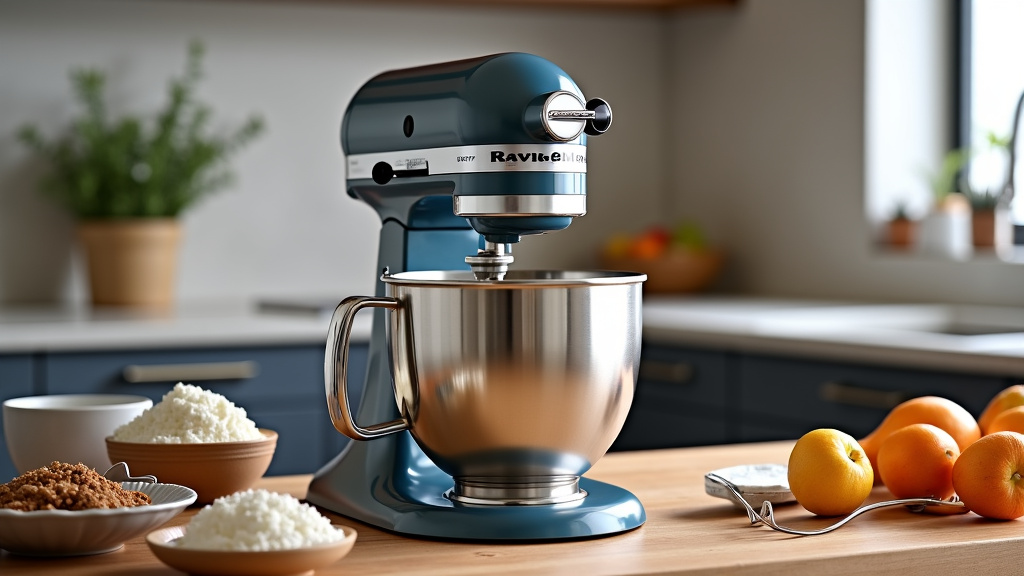
Comparing the Titans: A Quick Look
To help you visualize the difference, let’s look at a few key points:
| Feature | KitchenAid Artisan | Hobart Commercial |
|---|---|---|
| Motor Power | 300-500 Watts (typical) | 500 Watts to 1 HP+ (typical) |
| Build Material | All-metal, die-cast zinc/aluminum | Heavy-gauge steel, cast iron |
| Bowl Capacity | 4.5 – 6 Quarts | 20 Quarts and up |
| Best For | Home baking, semi-pro needs | Commercial kitchens, heavy-duty use |
| Price Range | $$ – $$$ | $$$$$ |
| Durability | Excellent for home use | Unmatched for commercial use |
As you can see, they cater to different levels of baking intensity. We found that understanding your typical baking load is key to making the right choice.
Beyond the Big Two: Other Considerations
While KitchenAid and Hobart dominate the professional landscape, are there other mixers you might see or consider? Sometimes, you might find other commercial-grade mixers from brands like Globe or Ankarsrum. These often have unique features, like a bowl that stays put and the beater moves (Ankarsrum) or extremely robust build quality. We found that these can be excellent alternatives for specific needs or preferences.
What About Your Needs?
To figure out which mixer is right for you, ask yourself a few questions:
- How often do you bake?
- What types of recipes do you make most often?
- Do you bake in large quantities?
- What’s your budget?
- How much counter space do you have?
Answering these can guide you away from overspending or buying a mixer that can’t handle your baking ambitions. We found that realistically assessing your usage is the most important step.
Checklist for Choosing Your Mixer
Here’s a quick checklist to keep in mind:
- Power: Enough wattage for your toughest recipes.
- Capacity: Bowl size that fits your batch needs.
- Durability: All-metal construction is best.
- Attachments: Consider what else you might want to do.
- Ease of Cleaning: Essential for frequent bakers.
- Budget: A realistic look at what you can afford.
Conclusion
Choosing the right stand mixer is a big decision for any baker. We found that professional bakers rely on machines built for consistent results and serious durability. The KitchenAid Artisan is an excellent choice for most home bakers and those stepping into semi-pro work, offering versatility and power. For high-volume, demanding bakeries, the Hobart Commercial mixer is the ultimate workhorse, engineered for years of heavy use. Consider your baking habits and batch sizes carefully. We found that making an informed choice ensures your mixer will be a reliable partner for all your baking adventures.
Frequently Asked Questions
Are KitchenAid Artisan mixers powerful enough for bread dough?
Yes, the KitchenAid Artisan can handle most bread doughs, especially for home baking. We found it works well for smaller batches or recipes that aren’t excessively stiff. However, for very large quantities or extremely dense doughs, you might find it strains over time.
Why are Hobart mixers so much more expensive than KitchenAid?
Hobart mixers are built with industrial-grade components and heavy-duty construction for commercial environments. We found their motors are designed for continuous operation and immense power, justifying their higher price point for professional settings.
Can I use a KitchenAid Artisan for a small home business?
Absolutely. If your home business involves cakes, cookies, or lighter breads in moderate quantities, the KitchenAid Artisan is a fantastic starting point. We found it offers excellent durability and performance for many small-scale baking needs.
What’s the main difference between a gear-driven and a belt-driven motor in mixers?
Gear-driven motors, often found in Hobarts, provide consistent torque and power, which is ideal for tough doughs. Belt-driven motors, common in home mixers like the Artisan, are generally quieter but can be less robust under heavy, sustained loads, we found.
Are there any other professional-grade mixers worth considering besides KitchenAid and Hobart?
Yes, some bakers prefer brands like Ankarsrum or Globe. Ankarsrum has a unique design where the bowl stays stationary and the beater moves, which some find excellent for dough. Globe mixers are also known for their commercial-grade power and durability. We found these can be great alternatives depending on your specific needs.
