Can You Adapt a Smeg Pasta Maker to a KitchenAid Mixer?
Don't assume a Smeg pasta maker can adapt to a KitchenAid mixer. Check the attachment drive, connector, and manufacturer compatibility before buying an adapter or another pasta roller.
On this page (8 sections)
- Can you adapt a Smeg pasta maker to a KitchenAid mixer?
- What compatibility details should you check?
- Which KitchenAid-compatible attachment suits flat pasta and ravioli?
- Is a 3-piece roller better for different noodle widths?
- When should you choose a pasta press instead?
- What are the risks of using an unconfirmed adapter?
- How should you choose between these 3 options?
- What should you do before ordering?
Don't assume you can adapt a Smeg pasta maker to a KitchenAid mixer. The safe buying rule is to confirm the connector, drive system, and exact appliance models before using an adapter, because a part that fits physically may not transfer power correctly.
That power transfer is the part people often overlook. A mixer does more than hold an attachment in place, and the drive connection has to engage cleanly before the rollers or cutters can work as intended.
A KitchenAid-compatible attachment may be simpler than trying to reuse a Smeg attachment. It is made to connect directly, so you avoid the extra step of checking whether an adapter changes the fit, the drive, or the way the attachment runs.
The right choice depends on whether you want flat pasta sheets, cut noodles, ravioli, or shaped pasta pressed through discs. Those pasta styles need different tools, and an adapter will not turn a roller into a press or a press into a ravioli maker.
Think about what you will actually make most often. If your answer is lasagna sheets or filled pasta, a roller setup suits the job.
If it is short shaped pasta, a press is the better starting point.
It also helps to think about daily use in a real kitchen. A direct-fit attachment usually means faster set-up, less fiddling with parts, and cleaning that follows one clear set of instructions.
Before you spend money on an adapter, check the exact models on both appliances and the parts included with each one. That small check can save you from a loose connection, uneven pasta, or a tool you cannot use safely.
If compatibility is not clearly confirmed, choosing an attachment built for your KitchenAid mixer is the practical and safer route.
Can you adapt a Smeg pasta maker to a KitchenAid mixer?
Only use an adapter when compatibility is clearly confirmed for both the Smeg attachment and your KitchenAid mixer. Brand names alone do not prove that the attachment opening, drive connection, or operating requirements match.
Start with the exact model numbers. Check the Smeg pasta maker instructions for its required machine, then compare those requirements with the KitchenAid mixer manual and the adapter's compatibility information.
Avoid forcing the attachment into the mixer hub. A tight fit, loose connection, unusual noise, or slipping drive is a reason to stop using the setup.
If you want a direct KitchenAid option, compare the Best Stand Mixer Attachment For Pasta Making guide before buying an adapter. It keeps the decision focused on the mixer you already own.
What compatibility details should you check?
Check four points: the connector, drive connection, appliance models, and intended pasta function. These details tell you more than a general statement that an attachment is made for stand mixers.
First, confirm the attachment enters the correct hub or opening. On a KitchenAid mixer, that means the attachment should seat properly in the front hub without force, and you should be able to lock it in as the manual describes.
Then check how the mixer transfers movement to the attachment, including any required shaft, gear, or locking part. If that connection is loose or partial, the attachment may slip, wobble, or stop under load, even if the outer shape looks close.
Next, match the exact models. "KitchenAid-compatible" can be useful, but you should still confirm that your own household KitchenAid stand mixer is covered.
Model matters because mixers in the same brand family can still differ in size, hub shape, and power. Write down your mixer model number and compare it with the attachment listing and instructions before you order.
Also check the Smeg side in the same way. Note the exact Smeg pasta maker model, its connector type, and the machines it is designed for, then look for an adapter that names both that model and your KitchenAid model.
Finally, identify the pasta style. A roller makes sheets, while cutters make noodles and a press forms pasta through discs.
That function check matters for set-up and care as well. Rollers need sheet thickness settings and a way to keep cuttings clear, cutters need strands separated after cutting, and presses need discs stored and cleaned so dough does not dry inside small holes.
An adapter does not change what the attachment itself can produce. It can only connect one system to another, and only when the maker confirms that connection will work correctly.
For daily use, the best match is the one where fit, drive, and pasta style all line up. When any one of those points is unclear, a direct KitchenAid-compatible attachment removes the guesswork.
Which KitchenAid-compatible attachment suits flat pasta and ravioli?
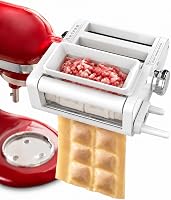
Choose a roller and ravioli attachment if you want sheets, spaghetti, and filled pasta from one setup. The Antree 3-1 Ravioli & Pasta Roller / Cutter Attachment for KitchenAid Mixers combines a pasta roller, spaghetti cutter, and ravioli maker.
It rolls 5.5-inch pasta sheets with 8 adjustable thickness settings. The stated sheet range is 1.5 to 2 millimeters, which suits pasta sheets for lasagna, ravioli, dumpling wrappers, wonton wrappers, and other homemade pasta dishes.
The attachment uses stainless steel rollers and cutters. Its removable protective cover gives you access to leftover dough, and a cleaning brush is included.
This option is not dishwasher safe. Let remaining dough dry if needed, remove the top of the plastic shell, and brush away residue after use.
Choose it when ravioli is central to your plans. Skip it if you mainly want several extruded pasta shapes from discs.
Is a 3-piece roller better for different noodle widths?
A 3-piece roller set suits you if you want separate roller, spaghetti, and fettuccine functions. The GVODE 3Pcs Pasta Attachment for KitchenAid Stand Mixer, 304 Stainless Steel includes a pasta roller, spaghetti cutter, fettuccine cutter, cleaning brush, and manual book.
Its roller has 8 settings and handles pasta sheets from 0.4 to 2 millimeters. The cutters are described for 1.6-millimeter and 6.3-millimeter pasta widths, giving you a choice between thinner noodles and wider fettuccine-style cuts.
The attachment is 9.2 inches long, 3.7 inches wide, and 2 inches high. Those dimensions can help you plan drawer or cabinet storage before you order.
GVODE describes this attachment as fitting all KitchenAid stand mixers, but you should still compare your mixer model and the attachment connection before use. It is not made or sold by KitchenAid.
The stainless steel frame and included cleaning brush suit regular pasta preparation. Choose it when you want both spaghetti and fettuccine, rather than a ravioli maker or pasta press.
For a closer look at sheet-making options, see the Best Pasta Roller Attachment For Kitchenaid Stand Mixer guide.
When should you choose a pasta press instead?
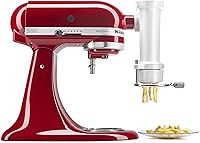
Choose a pasta press when you want shaped pasta made through interchangeable discs instead of rolled sheets. The KitchenAid KSMPEXTA Gourmet Pasta Press Attachment for Kitchenaid Mixers uses 6 quick-change discs for spaghetti, bucatini, rigatoni, fusilli, large macaroni, and small macaroni.
The set includes 1 pasta press, 1 dough pusher, 6 interchangeable pasta discs, and 1 stainless steel cleaning tool. Its built-in wire cutter lets you cut pasta to your preferred length.
The auger, pasta ring, and combination tool are dishwasher safe. The attachment also includes a storage case, which keeps the press parts together between uses.
This is a different tool from a roller. It won't make broad pasta sheets for lasagna or ravioli, but it can give you more shaped-pasta choices from one attachment.
If extruded shapes are your priority, compare the Best Pasta Extruder Attachments for KitchenAid Mixers guide.
What are the risks of using an unconfirmed adapter?
The main risk is a connection that does not transfer the mixer's movement correctly. An adapter may appear to fit while leaving the attachment loose, misaligned, or unable to handle the mixer's drive.
Do not modify the attachment, remove safety parts, or hold a loose attachment in place while the mixer runs. Stop if the attachment wobbles, slips, jams, or produces unusual sounds.
An unconfirmed adapter can also make cleaning harder if dough enters the connector. Follow the appliance and attachment care instructions, and keep flour and dough away from the mixer hub.
If you already own a Smeg pasta maker, record its exact model and connector details before searching. A clear compatibility statement from the adapter maker should cover both the Smeg attachment and your KitchenAid mixer.
How should you choose between these 3 options?
Choose by pasta type first, then by compatibility and cleaning needs. The Antree suits ravioli and rolled sheets, GVODE suits spaghetti and fettuccine, and KitchenAid KSMPEXTA suits shaped pasta made through discs.
Use this decision rule:
- Choose Antree for a roller, spaghetti cutter, and ravioli maker in one attachment.
- Choose GVODE for 8 sheet thickness settings plus spaghetti and fettuccine cutters.
- Choose KitchenAid KSMPEXTA for 6 shaped-pasta discs, a wire cutter, and a storage case.
If ravioli is your main goal, the Best Ravioli Maker Attachment For Kitchenaid Stand Mixer guide can help you compare that attachment type.
Your mixer also matters. If you are still choosing the appliance itself, see Best Stand Mixer For Pasta Dough before selecting an attachment.
What should you do before ordering?
Write down your KitchenAid model, the Smeg attachment model, the pasta style you want, and the storage space available. Then compare those details with the attachment's stated fit and included parts.
Don't buy an adapter just because both products are called pasta makers. If the connection is unclear, choose an attachment specifically described for your KitchenAid mixer.
For storage, a Best Stand Mixer Cover For Kitchenaid Stand Mixer can help protect the mixer between pasta-making sessions, but it won't solve an attachment compatibility problem.
The practical answer is simple: use a Smeg-to-KitchenAid adapter only when both exact models are confirmed compatible. Otherwise, choose Antree for ravioli and rolled sheets, GVODE for spaghetti and fettuccine, or KitchenAid KSMPEXTA for pressed pasta shapes.
Frequently asked questions
Can you adapt a Smeg pasta maker to a KitchenAid mixer?
Don't assume the two systems are compatible. Check whether the Smeg attachment and KitchenAid mixer use the same connector and drive arrangement, then confirm the adapter is made for both exact models.
If compatibility is not clearly confirmed, a KitchenAid-compatible pasta attachment is the safer choice.
Can a KitchenAid pasta attachment fit every KitchenAid stand mixer?
Some attachments are designed for all household KitchenAid stand mixers, but you should still confirm your mixer model before ordering. The GVODE and KitchenAid pasta products here state KitchenAid stand mixer compatibility, while an attachment designed for another brand may not connect or operate correctly.
Is a pasta roller the same as a pasta press?
No. A pasta roller flattens dough into sheets that can be cut into noodles or used for ravioli.
A pasta press pushes dough through interchangeable discs to form shapes such as spaghetti, bucatini, rigatoni, fusilli, and macaroni.
What should you check before buying a pasta attachment?
Check the mixer brand and model, connector shape, drive connection, included parts, pasta style, cleaning method, and any stated thickness settings. Measure your storage space if needed, and avoid an adapter unless its maker clearly confirms compatibility with both appliances.