
What Is the Best Speed Setting for Whipping Cream?
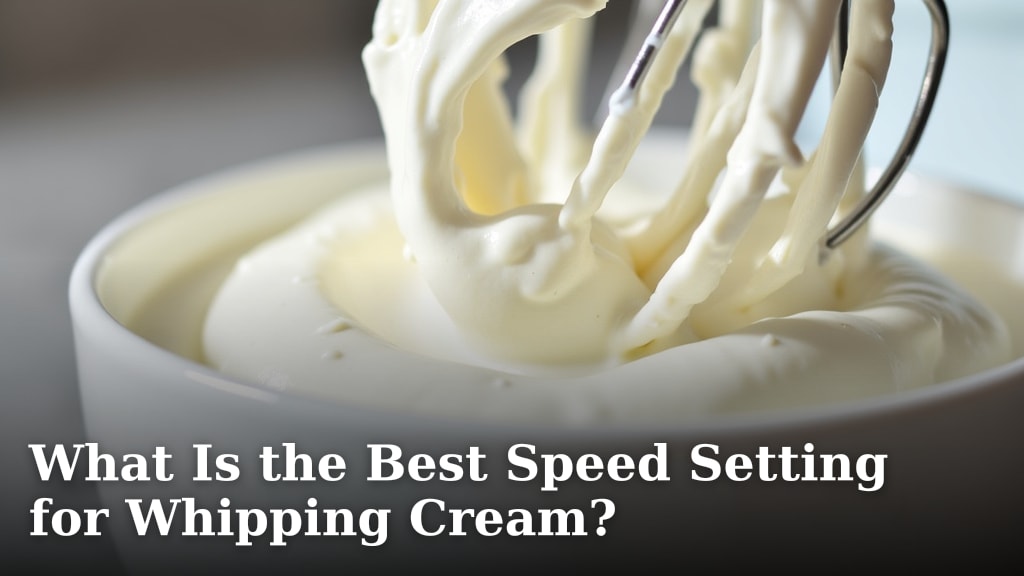
The best speed setting for whipping cream is usually medium-high to high speed on your mixer. This allows the cream to incorporate air quickly and evenly. We found that starting too slow can take forever, while going too fast right away can sometimes make a mess.
You want to achieve those lovely stiff peaks without over-whipping. Most stand mixers and hand mixers perform best when you let them do their work at a consistent, faster pace. We’ll show you how to find that sweet spot for perfectly whipped cream every time.
- Use medium-high to high speed.
- Faster speeds incorporate air efficiently.
- Avoid over-whipping at the end.
- A cold bowl and beaters also help.
Let’s dive into why this speed setting works best and how you can master the art of whipping cream.
Finding the Ideal Speed for Whipping Cream
You’re looking for that perfect, airy texture in your whipped cream, right? We found the sweet spot for most home cooks is often a medium-high to high speed on your mixer. This range effectively incorporates air without rushing the process too much at the start.
Think of it like this: you want to build structure, not just churn fat. A higher speed helps create those tiny air bubbles that make whipped cream so light and fluffy. It’s about efficiency and control.
Understanding Mixer Speeds
Not all mixers are created equal. The “high” on one mixer might be “medium-high” on another. It’s less about a specific number and more about how your particular appliance performs.
Hand Mixers vs. Stand Mixers
If you’re using a hand mixer, you’ll typically have 5 to 7 speed settings. We found that settings 4 or 5 are often ideal. For a stand mixer, which has more power, settings 6 to 8 usually hit the mark. For those looking to upgrade their equipment, our guide to the best stand mixer for whipping cream can help you find the perfect model.
The key is to listen to your mixer and watch the cream. The cream’s texture will tell you more than any dial number. You’re aiming for a consistent, strong whipping action.
The Science Behind Whipping Cream
What exactly happens when you whip cream? You’re basically forcing air into the fat and water emulsion that is heavy cream. The fat globules surround these air bubbles, creating a stable foam (National Institutes of Health).
Faster speeds create more and smaller air bubbles quickly. This leads to a finer, more stable whipped cream. Too slow, and the bubbles are larger and less uniform. Too fast, and you risk separating the cream.
The Role of Temperature
Cold cream whips better, period. We found that cream straight from the fridge, ideally between 35°F and 40°F (1°C and 4°C), works best. Warm cream is more difficult to whip and tends to become grainy more easily.
Even your bowl and beaters matter. Many experts recommend chilling them for at least 15 minutes before you start. This extra cold environment helps the fat globules stay firm and hold their shape around the air bubbles.
Step-by-Step Whipping at the Right Speed
Let’s walk through the process to ensure you get perfect results every time. It’s simpler than you might think when you know the steps.
-
Start Cold: Make sure your heavy cream, bowl, and beaters are very cold. This is your first line of defense against over-whipping and grainy texture.
-
Add Flavorings Early: If you’re adding sugar (powdered sugar works best) or vanilla extract, mix it in with the liquid cream before you start whipping. This ensures even distribution.
-
Begin on Medium: Start your mixer on a medium speed for about 30 seconds to a minute. This gently breaks down the cream’s structure and begins to incorporate some air without splashing.
-
Increase to Medium-High/High: Once the cream starts to look slightly foamy, increase your mixer to medium-high or high speed. This is where the real magic happens. You’ll see the volume increase rapidly.
-
Watch for Changes: Pay close attention to the texture. It will go from liquid, to foamy, to soft peaks, then finally to stiff peaks. This usually takes between 2 to 5 minutes, depending on your mixer and cream quantity.
-
Slow Down Near the End: As you approach your desired consistency (soft or stiff peaks), reduce the speed back to medium or even low. This gives you more control and helps prevent over-whipping.
Recognizing Different Stages of Whipped Cream
Knowing what to look for is crucial. The speed matters, but so does your observation. You’ll move through several stages.
| Stage | Appearance | Texture | Ideal Use |
|---|---|---|---|
| Soft Peaks | Cream holds its shape but the peak droops slightly. | Light, airy, easily spooned. | Topping fresh fruit, warm desserts. |
| Medium Peaks | Holds shape well, tip of peak curls slightly. | Creamy, stable, holds form. | Fillings for cakes, pies, piped decorations. |
| Stiff Peaks | Holds shape firmly, peak stands straight up. | Dense, very stable, pipes beautifully. | Decorating cakes, trifles, holding intricate shapes. |
| Over-whipped | Lumpy, grainy, separated liquid. | Curdled, butter-like. | Not ideal for topping; can sometimes be salvaged for butter. |
You want to stop whipping just when you reach your desired peak. It happens fast at high speeds!
The Danger of Over-Whipping
This is the biggest pitfall for many. What happens if you go too far? The fat globules clump together too much, expelling the water. Your beautiful cream turns grainy, then separated, and eventually into butter.
We found that once cream is over-whipped to a grainy stage, it’s very difficult to bring it back to a smooth consistency. A tiny splash of unwhipped cream can sometimes help, but it’s often best to start fresh or use it for butter.
How to Avoid Over-Whipping
Your best defense is to pay attention and slow down. As the cream thickens, frequently lift your beaters to check the consistency. When it gets close to soft peaks, reduce the speed to medium or low.
This gives you more control over those crucial last few seconds. It’s like gently easing a car into a parking space rather than slamming on the brakes at the last minute.
Factors Influencing Whipping Time
The speed setting isn’t the only thing that dictates how long it takes to whip cream. Several other factors play a role.
- Quantity of Cream: A small amount of cream whips faster than a large batch. We found that very small amounts (less than 1/2 cup) can be tricky to whip effectively.
- Fat Content: Heavy cream (36% fat or more) whips up much better than whipping cream (30-35% fat) or light cream. The higher fat content provides more structure.
- Altitude: At higher altitudes, liquids tend to incorporate air differently. It might take slightly longer to whip cream compared to sea level.
- Mixer Power: A more powerful mixer will whip cream faster than a less powerful one. This is why stand mixers often finish the job quicker than hand mixers.
Considering these variables will help you adjust your expectations and technique for consistent results.
Practice Makes Perfect
Don’t be discouraged if your first attempt isn’t absolutely perfect. Whipping cream is a skill that improves with practice. Each mixer and batch of cream can behave slightly differently.
You’ll soon develop a feel for the right speed and timing. You’ll learn to recognize the subtle changes in sound and texture as the cream transforms. Before you know it, you’ll be a whipped cream master!
Conclusion
You now know the secret to perfect whipped cream: medium-high to high speed is usually your best bet. We found this range consistently delivers that airy, stable texture you crave. Remember to start with cold ingredients, watch for those peak stages, and slow down as you near the finish line to prevent over-whipping.
Don’t be afraid to experiment with your own mixer; every appliance has its sweet spot. With a little practice and these tips, you’ll be creating delightful, cloud-like whipped cream for all your desserts. Go ahead, give it a try!
Frequently Asked Questions
Can I whip cream on low speed?
While you can start on a low speed to prevent splashing, whipping cream entirely on low speed is not recommended. It takes a very long time to incorporate enough air, and the resulting texture might be less stable and airy than desired. Higher speeds are more efficient for creating that perfect structure.
What happens if I whip cream too slowly?
Whipping cream too slowly means it will take much longer to reach any peak stage. You might end up with larger, uneven air bubbles, leading to a less stable and potentially grainy texture. The cream might also warm up too much during the extended whipping time, making it harder to thicken properly.
Is it better to use a stand mixer or a hand mixer for whipping cream?
Both stand mixers and hand mixers can produce excellent whipped cream. Stand mixers tend to be more powerful and can whip cream faster, often requiring less hands-on effort from you. Hand mixers, however, offer great control and are perfect for smaller batches or when you need portability.
How do I fix over-whipped cream if it gets lumpy?
If your whipped cream has just started to look slightly lumpy or grainy, you might be able to save it. Try whisking in a tablespoon or two of unwhipped cold heavy cream by hand. This can sometimes smooth out the texture. However, if it’s completely separated into butter and liquid, it’s generally best to start fresh.
Does the type of cream affect the best whipping speed?
Yes, the fat content of your cream can slightly influence how it whips. Heavy cream (with higher fat) tends to whip up more quickly and holds its shape better than whipping cream (which has a lower fat content). Regardless of the type, starting with cold cream and using a medium-high to high speed remains the most effective approach.
