
Why Is My Stand Mixer Attachment Not Locking into Place?
Your stand mixer attachment not locking into place usually means there’s a simple mechanical issue or a slight misalignment. It’s often caused by dirt, wear, or a minor adjustment needed on either the attachment or the mixer head. Don’t worry, this is a common problem that most home bakers face at some point.
A stand mixer attachment that won’t lock can be frustrating, especially when you’re in the middle of a recipe. We found that this issue can prevent you from using essential tools like the whisk or dough hook effectively. Understanding the common culprits can save you from needing a repair or replacement.
- The attachment isn’t fully seated.
- Debris is blocking the lock mechanism.
- The locking pin or slot is damaged.
- The mixer head needs a slight adjustment.
- Your attachment or mixer is incompatible.
Below, we’ll walk you through the most common reasons why your stand mixer attachment isn’t locking and what you can do about it. Let’s get that mixer back in working order!
Troubleshooting Why Your Stand Mixer Attachment Won’t Lock
It’s incredibly frustrating when your stand mixer attachment refuses to lock into place. You’re ready to whip up some meringue or knead some dough, and suddenly, your mixer is out of commission. Don’t panic! We found that this common issue usually stems from a few simple mechanical hiccups. Let’s figure out what’s going on so you can get back to baking.
Checking the Basics: Seating and Debris
Before we dive into more complex solutions, let’s cover the most frequent culprits. Often, the fix is as simple as ensuring the attachment is properly seated and that nothing is in the way.
Is the Attachment Fully Seated?
This might sound obvious, but sometimes an attachment isn’t pushed up far enough. You need to lift the mixer head and then firmly push the attachment upwards into the hub. You should feel or hear a distinct click when it’s properly engaged. If you’re not getting that solid connection, try lifting the head again and giving the attachment a good, firm push.
Clearing Out the Obstructions
Dirt, dried batter, or food particles can be silent saboteurs of your locking mechanism. We found that even tiny bits of debris can prevent the locking pin from engaging. Take a moment to inspect the attachment shaft and the corresponding slot on your mixer head. A small brush or a damp cloth can help clear away any gunk.
Cleaning the Attachment Shaft
Most attachments have a shaft that slides into the mixer head. This shaft often has a groove or a flat spot where the locking mechanism catches. Make sure this area is perfectly clean. If you see any hardened residue, you might need a toothpick or a gentle scraping tool to dislodge it. Remember to wipe it dry afterward.
Cleaning the Mixer Head’s Locking Mechanism
The mixer head itself has a small pin or lever designed to slide into a groove or hole on the attachment. This part can also get clogged. Use a dry cloth or a soft brush to clean around this area. For stubborn bits, a cotton swab lightly dampened with water can be effective, but be sure to let it dry completely before trying to attach anything.
Inspecting for Wear and Damage
Mechanical parts can wear down over time, especially with frequent use. We’ve seen that visible damage is often a clear indicator of why an attachment isn’t locking.
Examining the Locking Pin or Lever on the Mixer
Look closely at the small metal pin or lever located on the mixer head, usually near where the attachment connects. Is it bent, broken, or stuck in one position? If it looks damaged, it might not be able to engage with the attachment properly. Many manufacturers offer replacement parts for these components, though sometimes it might indicate a need for professional servicing.
Checking the Attachment’s Locking Slot or Groove
Similarly, examine the corresponding part on your attachment. This is typically a slot or a small hole designed to receive the mixer’s locking pin. Is this slot worn down, enlarged, or damaged in any way? If the groove is too wide or misshapen, the pin won’t be able to grip it securely. Research suggests that this kind of wear is more common on older or heavily used attachments.
The Importance of a Snug Fit
The locking mechanism relies on a precise fit between the mixer and the attachment. We found that if either part is significantly worn, the connection simply won’t be secure enough to lock. Think of it like a key and a lock; if the key is bent or the lock tumblers are worn, they won’t work together smoothly.
Mixer Head Alignment and Adjustment
Sometimes, the issue isn’t with the attachment itself, but with how the mixer head is aligned. A slightly out-of-true mixer head can prevent the locking pin from meeting the attachment’s slot correctly.
Why Mixer Head Alignment Matters
The mixer head is designed to pivot and hold the attachment securely. If this head is slightly off-center or tilted, the locking components might be misaligned. Many experts state that proper alignment ensures that all attachments connect and function as intended. A misaligned head can put uneven stress on the locking mechanism.
Performing a Simple Alignment Check
You can often check alignment by observing how the beater or whisk sits in the bowl when the mixer head is down. Does it seem perfectly centered, or is it consistently hitting one side of the bowl? While a precise alignment often requires factory adjustments, you can sometimes spot gross misalignments. Some older models might have adjustment screws, but always consult your manual before attempting this. Some mixers have an adjustment screw to help you properly adjust the beater to bowl height.
Common Causes of Misalignment
Accidents happen! Dropping the mixer or even frequent forceful attachment changes can sometimes lead to slight misalignment. If you’ve recently dropped your mixer or noticed it’s become wobbly, this could be the root cause. We found that for most modern stand mixers, significant alignment issues often require professional repair.
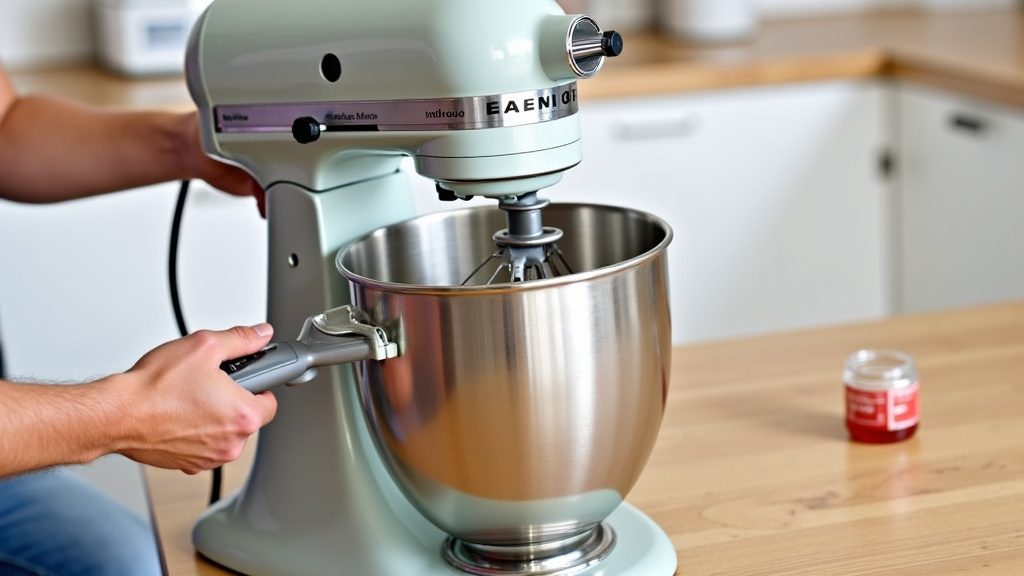
Compatibility: The Unlikely Suspect
While less common, it’s worth confirming that you’re using the correct attachment for your specific mixer model. Manufacturers often have slight variations in their attachment hubs.
Are You Using the Right Attachment?
Stand mixer brands, and even different models within the same brand, can have slightly different attachment connection systems. We’ve seen that using an attachment designed for a different model or brand might not lock correctly, or worse, could damage your mixer. Always double-check your mixer’s manual or the manufacturer’s website to confirm attachment compatibility.
Generations of Mixers
Sometimes, an attachment from an older generation of a mixer might not fit perfectly with a newer model, even if it’s the same brand. Likewise, third-party attachments should be purchased with caution, as their tolerances may vary. If you inherited an attachment or bought it second-hand, verify its origin.
Quick Checklist for a Non-Locking Attachment
Before you decide it’s time for a costly repair, run through this quick checklist. Many problems can be solved with these simple steps:
- Ensure the mixer head is fully lifted.
- Firmly push the attachment upwards until it clicks.
- Thoroughly clean the attachment shaft and mixer head locking area.
- Inspect both the mixer’s pin and the attachment’s slot for visible damage.
- Confirm the attachment is designed for your specific mixer model.
- If all else fails, try a different attachment to see if the problem persists.
Conclusion
It’s frustrating when your stand mixer attachment won’t lock, but as we’ve seen, it’s usually a fixable problem. You’ve learned to check for simple seating issues and to clear away any stubborn debris. We also covered how to spot wear or damage on your mixer or attachment, and the importance of proper alignment. Don’t forget to confirm you’re using the right attachment for your model!
Before calling for service, run through the checklist again. If the attachment still won’t lock after trying these steps, it might be time to consult your owner’s manual or contact the manufacturer. Happy baking!
Frequently Asked Questions
What if my attachment is slightly loose even after it “clicks”?
A secure lock means no wiggle room. If your attachment feels loose or wobbles significantly, it might not be fully engaged or there could be wear on the locking pin or slot. Try pushing it up firmly one more time, ensuring you hear a solid click. If it remains loose, inspect for damage or debris.
Can I force a stubborn attachment into place?
No, never force it. Forcing an attachment can cause damage to both the attachment and your mixer’s locking mechanism. If it’s not locking easily, stop and re-check for obstructions or misalignments. Gentle persuasion is key, but brute force can lead to costly repairs.
My mixer attachment used to lock fine, but now it doesn’t. What changed?
Wear and tear are common causes for this. Over time, the metal components of the locking pin and slot can wear down, making the connection less secure. Regular cleaning and inspection can help prolong their life, but eventually, parts may need replacement.
How often should I clean the locking mechanism area?
It’s best to clean the attachment shaft and the mixer head’s locking area after every few uses, or whenever you notice any buildup. Keeping these areas free of dried ingredients and grease ensures smooth operation and prevents future locking issues.
Is it safe to use an attachment that doesn’t fully lock?
It is not safe to use an attachment that does not fully lock into place. An unsecured attachment could detach during operation, potentially causing damage to your mixer or creating a safety hazard. Always ensure your attachment is securely locked before starting your mixer.
