How to Clean Silicone Baking Mats
The best way to clean silicone baking mats is warm water, mild soap, and a soft sponge after each use, with a baking soda paste for stubborn grease. Rinse well, dry flat, and avoid abrasive scrubbers that can wear the non-stick surface.
On this page (12 sections)
- What is the best way to clean silicone baking mats after each bake?
- How do you remove grease and stubborn residue from a silicone mat?
- Can you put silicone baking mats in the dishwasher?
- How do you clean burnt sugar, cheese, or tomato stains?
- What cleaning tools should you avoid on silicone baking mats?
- How do you remove odours from a silicone baking mat?
- How do you dry and store silicone baking mats so they stay flat?
- How do you clean large silicone pastry mats without damaging the non-slip backing?
- Which products help you clean or replace a worn silicone mat?
- What kitchen cleaning habits keep silicone mats cleaner for longer?
- How do you know when to deep clean or replace a silicone baking mat?
- What is the best way to clean silicone baking mats for good results?
The best way to clean silicone baking mats is warm water, mild soap, and a soft sponge after each use, with a baking soda paste for stubborn grease. Rinse well, dry flat, and avoid abrasive scrubbers that can wear the non-stick surface.
Act while residue is fresh. A quick wash stops cheese, oil, and sugar from setting into the surface.
What is the best way to clean silicone baking mats after each bake?
Wash with warm water and mild soap, then rinse and air dry. This handles most cookies, cakes, and roasted vegetables.
Fill the sink with warm water, add a few drops of mild dish soap, and wipe the mat flat with a soft sponge in small circles. Rinse until clear, shake off water, and dry flat on a towel.
Between batches, wipe with a damp cloth and wash fully in the end.
How do you remove grease and stubborn residue from a silicone mat?
Use warm soapy water first, then a baking soda paste for grease that stays behind. Grease film often follows roasting, cheese, or fatty meats.
Soak the mat in warm water with a little dish soap for 10 to 15 minutes, then wipe with a soft sponge.
Mix baking soda with just enough water to form a soft paste, spread a thin layer on greasy spots, and wait 10 to 15 minutes. Wipe with a damp sponge and rinse well.
Repeat once if needed rather than scrubbing hard.
How do you clean silicone baking mats with baking soda?
Apply a thin baking soda paste, wait 10 to 15 minutes, and wipe gently. This method suits grease, light browning, and faint food stains.
Use about 1 tablespoon of baking soda for a standard rectangular mat. Add water a little at a time until the mix spreads easily.
Coat the dirty areas and leave the mat flat while the paste sits.
Wipe with a soft sponge and rinse under warm water. A second light pass helps more than one heavy scrub.
Can you put silicone baking mats in the dishwasher?
Many silicone mats are dishwasher safe, but hand washing is gentler. Check guidance for your exact mat before using the top rack.
Dishwasher heat and detergent can dull the surface over time, while mild soap hand washing protects the non-stick finish.
If you use a dishwasher, place the mat flat on the top rack, away from heating elements and sharp utensils. Our guide on whether silicone baking mats are dishwasher safe gives more detail.
How do you clean burnt sugar, cheese, or tomato stains?
Soak first, then use a baking soda paste and a soft sponge. Sugar and cheese harden as they cool, so warmth matters more than pressure.
Run warm water over the spot and soak in soapy water. Cheese softens with heat and time, and burnt sugar may need two soaks.
Spread baking soda paste on the stain, wait 10 minutes, wipe gently, and rinse. Repeat if a mark remains.
Tomato and spice stains may fade slowly over several washes without meaning the mat is dirty or unsafe.
What cleaning tools should you avoid on silicone baking mats?
Avoid steel wool, scouring pads, stiff brushes, and sharp scrapers. These tools can scratch silicone and weaken the release surface.
Use a soft sponge or microfibre cloth with light pressure instead. Skip bleach and strong oven cleaners unless the maker allows them.
Do not use a knife to lift stuck food. It usually needs a soak, not a sharp edge.
How do you remove odours from a silicone baking mat?
Wash with warm soapy water, then air dry in fresh air. Silicone can hold food smells, especially after strong spices or fish.
Wash as usual and dry flat near an open window. A baking soda paste can also help with lingering odours.
Spread a thin paste, wait 10 minutes, rinse, and dry fully. Store flat or loosely rolled once dry.
If odour stays after two washes, the mat may be near the end of its useful life.
How do you dry and store silicone baking mats so they stay flat?
Dry flat, then store flat or loosely rolled in a dry place. This keeps edges from curling and leaves the mat ready for the next bake.
Pat water off with a clean towel, lay the mat flat to air dry, and turn it halfway so both sides dry.
Store in a drawer or cupboard away from sharp utensils, heat, and direct sun. If it curls, lay it flat under a heavy book briefly.
Never put it directly on a hot oven rack unless the maker allows it.
How do you clean large silicone pastry mats without damaging the non-slip backing?
Wash large mats in a large sink or bathtub with mild soap and a soft cloth. Size makes a big mat harder to rinse, so plan space before you start.
Fill a wide sink with warm soapy water and lay the mat flat. Wipe the top, then flip it and wash the back gently.
Rinse in sections under the tap and check for soap film.
Dry the mat flat on a clean surface. A large mat needs full airflow or it can stay damp in the middle.
Who should choose the Folksy Super Kitchen mat for counter work?
Choose this large mat if you roll dough on the counter and want extra work space. It measures 36 x 24 inches and has a non-slip back.
Folksy Super Kitchen says the mat is 0.7 mm thick, which helps it stay in place on the table. The maker rates it for temperatures from -30°F to 470°F.
Wash it with mild soap and a soft cloth to protect the surface.
Skip this size if your sink is small or you have little counter space for drying. Measure your work area before you buy.
Which products help you clean or replace a worn silicone mat?
A reusable mat suits repeat baking, while parchment sheets suit one-time jobs. Both options help when a mat needs a rest or when you want zero washing.
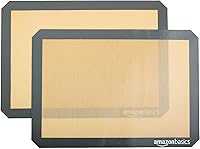
The Amazon Basics mat in a 2-pack measures 16.5 x 11.6 inches per mat. Amazon Basics says it is heat resistant up to 480°F and dishwasher safe.
It is designed to sit on a baking tray for support, not directly on an oven rack.
Use a tray under the mat for support during baking and roasting. Wash it with mild soap and a soft sponge to keep the release surface smooth.
Keep a second mat ready so one can wash and dry while you bake.
Parchment sheets are a useful backup for burnt sugar or very greasy bakes. SMARTAKE sheets measure 12 x 16 inches and come in a pack of 200.
They help when you do not want to clean a mat that day.
SMARTAKE says the sheets resist temperatures up to 450°F. They lie flat on a tray and do not need cutting to size.
Toss each sheet after use, so there is no residue to scrub.
Our best silicone baking mats guide compares sizes and shapes for tray use. Our bakeware sets guide helps if you need a tray and mat that fit together.
How do you clean a silicone mat for macarons without ruining the finish?
Use mild soap, warm water, and a soft sponge, then rinse and dry fully. Macaron batter and sugar can leave a film that affects the next batch.
Wash after the macarons cool and the shells release. Warm soapy water lifts sugar film without rough scrubbing.
Rinse twice if the surface feels slick.
Let the mat dry flat before the next use. Moisture under batter can change how shells bake.
Our best silicone baking mat for macarons guide covers size and shape choices.
What kitchen cleaning habits keep silicone mats cleaner for longer?
Wash after each use, wipe between batches, and store dry and flat. These habits stop most grease before it builds up.
Keep a soft sponge for mats separate from rough pan scrubbers to prevent scratches.
Use the right heat for the mat. Amazon Basics rates its mat to 480°F, while SMARTAKE parchment is rated to 450°F.
Staying below the limit protects the surface.
Our best round silicone baking mat guide lists round sizes for pizza and cake pans. Wash round mats flat and check edges for trapped crumbs.
For mixer clean-up, our guides on how to clean a stand mixer and how to clean stand mixer attachments cover the rest of the kitchen.
How do you know when to deep clean or replace a silicone baking mat?
Deep clean when grease, stains, or odours build up, and replace when food sticks or the surface feels rough. A clean mat should release food easily.
Look for dull patches, sticky film, or stains that do not fade after washing. Check edges for cracks, tears, or warped spots, since edge damage can grow during heating.
Try one deep clean with baking soda paste before replacing it. If food still sticks after washing and full drying, replacement is likely better.
What is the best way to clean silicone baking mats for good results?
Wash after every use with warm water and mild soap, use baking soda paste for grease, and dry flat. That routine is the best way to clean silicone baking mats and keep them non-stick.
Avoid rough scrubbers, sharp tools, and harsh chemicals. Let warmth and a short soak do the work.
Use parchment sheets for one-off messy bakes, and keep a reusable mat for repeat baking. With that plan, your mats stay smooth, release well, and last longer.
Frequently asked questions
What is the best way to clean silicone baking mats after greasy roasting?
Use warm water with a small amount of mild dish soap and a soft sponge, then rinse and dry the mat flat. For grease that remains, make a paste of baking soda and water, let it sit for 10 to 15 minutes, and wipe gently.
Repeat rather than scrubbing hard.
Can I use baking soda on a silicone baking mat?
Yes, a soft baking soda paste is useful for grease and light residue when the surface does not feel gritty. Spread a thin layer, wait a short time, and wipe with a damp soft sponge.
Rinse fully so no powder stays on the surface.
How often should silicone baking mats be deep cleaned?
Wash after every use, and deep clean when grease, colour, or odour builds up or when food starts to stick more than usual. A weekly deep clean suits frequent bakers, while occasional users can wait until residue is visible or the mat feels slippery.
Why does my silicone mat still feel greasy after washing?
Grease film often needs warmth and a little soak time rather than harder scrubbing. Warm soapy water, a short soak, and a baking soda paste usually lift the film.
Rinse twice and dry fully before the next use.