Bakeware: The Complete Buying Guide
The best bakeware set matches the foods you bake most often, your oven space and the care you will provide. Start with a useful mix of sheet pans, cake pans, loaf pans and muffin pans, then add specialty shapes as your recipes require.
On this page (8 sections)
- What should you look for in bakeware sets?
- Which bakeware materials work best?
- Are nonstick bakeware sets worth it?
- Which baking sheets should you buy?
- Which pan types do most kitchens need?
- How do you choose bakeware sizes?
- How should you care for bakeware?
- How do you choose between these bakeware products?
The best bakeware sets give you the pan shapes you use most, heat evenly, fit your oven and match your cleaning habits. If glass bakeware suits your recipes, compare glass bakeware sets.
A good set should work for everyday use before it handles special occasions. Think about cookies on a weeknight, a birthday cake on the weekend and a loaf of bread for sandwiches.
For many kitchens, that means a mix of baking sheets, cake pans, a loaf pan and a muffin pan. Those shapes cover most cakes, breads, cookies and small baked dishes.
A set can save storage space and make pan sizes easier to match. It can also leave you with duplicate shapes, weak coatings or pans that do not fit your recipes, so compare the pieces before choosing.
Storage matters as much as oven space in a small kitchen. Flat sheets, round pans and loaf pans stack in different ways, so check how each piece will sit in a cupboard.
Material affects heating, browning and care in daily use. Heavy steel can hold its shape well, while lighter pans may heat faster and need closer attention near the end of baking.
Coating is another practical choice rather than a simple upgrade. Nonstick surfaces can help with release, but they still need gentle washing and sensible utensils.
Choose the pieces you will reach for first, then let the rest of the set earn its place. That approach keeps the collection useful instead of crowded.
This guide covers the main bakeware materials, pan types, sizes, coatings and care needs. It also points you to the right pan for cakes, bread, cookies, pies and cheesecakes.
You will find guidance on sheet pans, loaf pans, muffin pans, cake pans and specialty shapes. Each section explains what the size or material means when you actually bake.
Use the guide to check your oven, storage and cleaning habits before you buy. A smaller set that fits your routine will usually serve you better than a larger one with extras you rarely use.
Start with monthly recipes rather than a wish list of every shape. If a pan does not match a recipe you bake often, it may not be worth the space it takes.
What should you look for in bakeware sets?
Choose bakeware sets by pan mix first, material second and coating third. A pan that fits your recipes is more useful than a larger set with unfamiliar shapes.
Before you buy, ask:
- Which recipes do you bake every month?
- Do you need pans for cakes, bread, cookies or roasting?
- Will the largest pan fit your oven and storage space?
- Do you prefer hand washing or dishwasher-safe pieces?
- Do you need matching lids for transport or storage?
- Will the coating work with your usual utensils?
Your monthly recipes tell you more than a long product list. If you bake cookies and sheet-pan vegetables often, sheet size and rim height deserve first attention.
If cakes are your main focus, check round pan diameter and depth before you add extras. Layer cakes need matching pans so the layers bake at the same rate.
Bread bakers should think about loaf capacity and whether they want a domed top or a square shape. A covered Pullman pan and an open loaf pan solve different problems.
A small household may need only a baking sheet, loaf pan, round cake pan and muffin pan. Someone who bakes layer cakes, pies and artisan bread may need separate specialty pans.
Oven fit is easy to overlook when a set looks tidy in a photo. Measure the rack space and leave room for air to move around the pan during baking.
Storage needs the same check before purchase. Large flat sheets can be hard to store in narrow cupboards, while round pans may stack more neatly.
Cleaning habits should guide the coating choice from the start. Hand washing takes a little more time, but it can help coated pans last longer in daily use.
Our best nonstick bakeware set guide is useful if easy release is your main concern. If you want a heavier material and fluted surfaces, compare our best USA Pan bakeware guide.
Material also affects browning and how a pan feels in the hand. Steel and carbon steel often give a sturdy feel, while aluminum can heat quickly and evenly.
Do not buy duplicate shapes unless you plan to bake in stages or at the same time. Two matching cake pans are useful for layers, but two similar sheets may sit unused.
Check the care instructions for each piece rather than assuming the whole set behaves the same. Temperature limits, utensil guidance and washing methods can differ by coating.
A thoughtful set should leave room to add specialty pans later. Start with core shapes, use them often and add more only when a recipe makes the need clear.
Which bakeware materials work best?
The best bakeware material depends on how quickly you want the pan to heat, how much browning you prefer and how carefully you want to maintain it. For a ceramic collection, compare ceramic bakeware sets.
Aluminized steel, carbon steel, aluminum and glass each suit a different baking pattern. Compare stainless steel bakeware sets if you want a coating-free steel collection.
Aluminum bakeware
Aluminum heats quickly and is common in baking sheets and cake pans. It can help with even browning, but bare aluminum may react with some acidic foods and can discolor over time.
Compare best aluminum baking pans if you want to focus on aluminum construction. Check the exact care instructions because aluminum pans may not suit every dishwasher or cleaning product.
Steel and carbon steel bakeware
Steel and carbon steel offer a sturdy feel and are common in cookie sheets, loaf pans and sets. Heavier construction can help a pan hold its shape, while a dark finish can change how quickly the surface browns food.
The GoodCook Everyday Nonstick Baking Sheet Set uses carbon steel construction and includes 3 sheet pans in small, medium and large sizes. Its scratch-resistant nonstick coating is designed for release, and GoodCook recommends hand washing for longer-lasting use.
Glass bakeware
Glass baking dishes are useful for casseroles, baked pasta and recipes that move from oven to table. Glass heats differently from metal, so a recipe written for a metal pan may need a timing adjustment.
Use our best glass baking dishes guide when you need a dish for baked meals rather than a set of cake or bread pans. Avoid sudden temperature changes, and follow the dish's oven-use instructions.
Are nonstick bakeware sets worth it?
Nonstick bakeware can make release and cleanup easier, but it still needs gentle care. Choose nonstick when you value quick release, then protect the coating with suitable utensils and hand washing when recommended.
Nonstick coatings vary, so read the temperature and care instructions before use. Do not assume every coated pan has the same oven rating or dishwasher guidance.
The Amazon Basics 6 Piece Nonstick Carbon Steel Bakeware Set includes a 9 x 5 in loaf pan, 2 round 9 in cake pans, a 12-cup muffin pan, a 13 x 9 in roast pan and a 13 x 9 in baking sheet. It uses heavy-weight alloy steel, is oven safe to 428°F and is recommended for hand washing.
This set suits a new kitchen that needs several common shapes at once. It may be less useful if you already own sheet pans or prefer specialty bakeware made from a different material.
For transport and tidy storage, compare the best bakeware sets with lids. Lids can help when you carry baked goods to a gathering, but they also add storage height.
Which baking sheets should you buy?
Choose baking sheets by size, rim height, material and storage space. A set with several dimensions gives you more flexibility, while a single half sheet works well for larger batches if it fits your oven.
The GoodCook 3-piece sheet set includes small 13 x 9 in, medium 15 x 10 in and large 17 x 11 in pans. The different sizes let you match the pan to the batch instead of spreading a small amount of dough across a large surface.
A half sheet is a common choice for cookies, roasted vegetables and sheet-pan meals. See our best half sheet pan guide before choosing one for your oven.
Measure the inside of your oven, not only the outside of the pan. Leave room for air circulation and make sure the door closes without pressing against the pan.
Baking sheets can become awkward to store because their flat shape takes up vertical space. A baking sheet organizer can keep pans upright and easier to reach.
Do you need silicone mats or parchment?
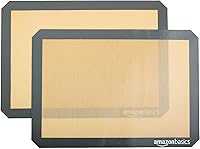
Silicone mats and parchment change how food contacts the pan. **Use a silicone mat for a reusable nonstick surface, or parchment when you want simple lifting and quick cleanup.
For cookie-specific options, see silicone baking mats for cookies.**
Our best silicone baking mats guide covers reusable liners for cookies and other flat-baked foods. Check the mat's temperature rating and place it flat on the pan.
For disposable sheets, compare the best baking paper sheets. Parchment can help with sticky dough, but it should be trimmed so it does not touch heating elements.
Which pan types do most kitchens need?
Most kitchens benefit from one reliable sheet pan, one loaf pan, one muffin pan, one round cake pan and one pie pan. Add Bundt, tart and springform pans when your recipes call for them.
For covered pies, compare pie pans with lids.
The right shape affects baking time, crust area and how easily the finished food releases.
Bundt cake pans
A Bundt pan has a central tube and decorative sides. The tube helps thick cakes bake through the center, while the shape creates a finished cake that usually needs little decoration.
Choose a pan with clear, deep details if you want a defined pattern. Grease every groove carefully, even when the pan has a nonstick coating.
See the best Bundt cake pan guide for options suited to shaped cakes.
Loaf pans
A loaf pan is useful for quick bread, yeast bread, pound cake and meatloaf. A 9 x 5 in loaf pan is a common starting size, but capacity matters as much as the outside measurement.
The USA Pan 1145LF is a 1.25 lb loaf pan measuring 9 x 5 x 2.75 in. It is made from aluminized steel, has a PTFE-, PFOA- and BPA-free Americoat silicone coating, and is designed for hand washing.
Its corrugated surface is intended to support air circulation and release. The pan suits bakers who want a single dedicated loaf shape instead of a mixed set.
Compare best loaf pans for bread if bread is your main use. A Pullman pan is different because its sliding cover shapes the loaf into a square sandwich form.
The USA Pan Pullman Loaf Pan has a cover and measures 9 x 4 x 4 in. It uses heavy-gauge aluminized steel with an Americoat silicone coating that is PTFE, PFOA and BPA free, and it is made in the USA from globally sourced materials.
Use the best Pullman loaf pan guide if you want a covered pan. It is not a direct replacement for a standard open loaf pan because the cover changes the loaf's shape and rising space.
For long, narrow breads, see the best baguette baking pans. A baguette pan supports a different dough shape and baking pattern than a loaf pan.
Muffin pans
Muffin pans create individual portions and can also hold cupcakes, egg bakes and small savory portions. A 12-cup pan is the common full-size choice, while a mini muffin pan is better for bite-size portions.
Compare best muffin pans for baking for standard muffins and cupcakes. Grease the wells or use liners, and leave enough room for batter to rise.
The best mini muffin pan guide is a better starting point for smaller portions. Mini pans need less batter per cavity, so use a recipe that gives mini-muffin timing or adjust carefully.
Muffin liners reduce sticking and can make serving easier. See the best muffin pan liners guide when you want disposable or reusable liners that fit the pan size.
Round cake pans
Round cake pans are the basic choice for layer cakes. Two matching pans make it easier to bake layers at the same time, but one pan can work when you bake and cool in stages.
The Amazon Basics set includes 2 round 9 in cake pans, which suits recipes written for that common diameter. Check batter depth before filling, because a deeper layer can need more time than a shallow one.
Use the best round cake pans guide for standard round layers. For a wider comparison across shapes and materials, see best cake pans for baking.
If you bake cakes often, a stand mixer can help with creaming butter, whipping eggs and mixing batter. Our Best Stand Mixer For Cake Baking guide covers the mixer side of that setup.
Pie pans
Pie pans need enough depth for the filling and enough rim for shaping the crust. Choose the diameter named in your recipe, then compare the material and depth before buying.
Glass can help you see the crust as it browns, while metal may heat differently and give a different crust result. Do not swap a deep-dish pan for a standard pie pan without checking the filling volume.
See the best pie pans for baking guide for pie-specific options.
Tart pans with removable bottoms
A tart pan with a removable bottom helps you lift a firm tart from the pan without turning it upside down. It suits pastry shells, shallow fillings and desserts where the sides need to remain visible.
The removable base can make serving easier, but it may also allow leaks from very thin fillings. Use a baking sheet underneath when the recipe has a loose or liquid mixture.
Compare the best tart pans with removable bottoms before choosing a size.
Springform pans
A springform pan has a removable side that releases from the base. It is especially useful for cheesecake and delicate cakes that are difficult to turn out from a fixed pan.
A 9 in springform pan is a common cheesecake size, but match the recipe when possible. Check the latch, base fit and pan depth, then place the pan on a baking sheet if the recipe uses a water bath.
See the best springform baking pans guide for general springform buying advice. If cheesecake is your main use, compare the best springform pan for cheesecake guide.
How do you choose bakeware sizes?
Choose bakeware size by matching the recipe's stated pan and the amount of batter or dough. Changing the shape changes the depth, surface area and baking time.
A wider pan produces a shallower layer. A smaller pan produces a deeper layer that may need longer baking and can brown differently at the edges.
Diameter matters when you move batter from one pan to another. The same volume will sit thinner in a wide pan and deeper in a narrow one, so timing will change.
Depth matters just as much because it affects the center of the bake. A deep cake can stay soft inside while the top looks done, so check the center before you remove it.
For loaf pans, compare the recipe's capacity rather than relying only on labels such as medium or standard. Capacity tells you how much dough or batter the pan is meant to hold.
Loaf shape also changes the finished bread. A standard open loaf pan gives a domed top, while a Pullman pan with a cover shapes a flat top and square sides.
For batter breads and pound cake, height affects how the top browns. A fuller pan can rise more and may need a little extra time to set in the middle.
For cake pans, diameter and depth both matter. A recipe for two 9 inch pans will not bake the same way in one deeper pan or in smaller rounds.
Layer cake recipes often assume matching pans baked side by side. That setup keeps the layers even, so the finished cake stacks without heavy trimming.
For muffin pans, count the cups and compare standard versus mini wells. Standard cups hold more batter and need different timing from bite-size mini wells.
Mini pans are useful for snacks and portion control, but they can dry out faster. Use a recipe that fits the well size or watch the bake closely.
Sheet pans need a size check against the oven rack. The pan should fit with room for warm air to circulate on all sides.
Smaller sheets suit small batches and reheating food. Larger sheets suit cookies, roasted vegetables and sheet-pan meals when the oven has room.
When changing pan size, avoid filling it to the rim. Leave room for cakes, muffins and quick breads to rise without spilling.
Measure the inside of the oven and the baking surface of the pan. Outside measurements can be larger because of rims and handles.
If a recipe names a pan size, use that size when you can. It removes guesswork and keeps the depth and baking time close to the original.
How should you care for bakeware?
Good bakeware lasts longer when you follow the pan's care instructions, avoid sharp tools on coatings and dry every piece before storage.
Use warm water, mild soap and a soft sponge for coated pans unless the manufacturer allows another method. Do not use abrasive powders or metal tools on a coating that can scratch.
Hand wash the USA Pan loaf pans and Pullman pan. GoodCook identifies its sheet set as dishwasher safe but recommends hand washing for longer-lasting use.
Amazon Basics recommends hand washing its 6-piece set.
Let pans cool before washing. Sudden temperature changes can stress some materials, and placing a hot pan into cold water can make cleanup harder.
A short soak in warm soapy water often loosens baked-on residue. That gentle step is better than scraping with a knife or scouring pad.
Dry every pan thoroughly before you put it away. Stored moisture can lead to spots or rust in some steel pans, especially in humid kitchens.
Store pans so their surfaces do not scrape together. Stack only when the coating and shape allow it, or place a soft separator between pieces.
Sheet pans can be stored upright if there is a safe slot for them. Loaf pans and cake pans may stack better when they are clean and fully dry.
Avoid using more grease than the recipe needs. Grease in grooves and corners matters for shaped pans such as Bundt pans, and an even light coat usually works better than thick pools.
Utensils should match the pan surface. Silicone, nylon or wooden tools are safer for nonstick than metal spatulas and knives.
Check each pan before use if the coating looks chipped or badly worn. A damaged surface can affect release and may not be suitable for food contact.
Keep an eye on stains and discoloration on uncoated metal. Mild cleaning and thorough drying usually handle normal marks without harsh scrubbing.
Follow the oven temperature limit for each piece. A pan that looks sturdy may still have a coating limit that is lower than your oven can reach.
Store bakeware away from piles of heavier pots and lids. A dropped lid or a stacked pot can dent a rim or scratch a coated surface.
Care becomes easier when washing fits your routine. If you hate hand washing, choose pans and coatings that you will clean in the way the maker allows.
How do you choose between these bakeware products?
Choose the Amazon Basics 6-piece set when you need several common pan shapes at once. It includes a loaf pan, 2 round cake pans, a 12-cup muffin pan, a roast pan and a baking sheet, with an oven rating of 428°F.
This set suits a new kitchen that needs several common shapes at once. It may be less useful if you already own sheet pans or prefer specialty bakeware made from a different material.
Choose the GoodCook 3-piece set when baking sheets are your priority. Its 13 x 9 in, 15 x 10 in and 17 x 11 in sizes cover different batch sizes without adding cake or bread pans you may not need.
The smaller sheet suits a few cookies or reheating a portion. The larger sheet suits bigger batches, provided it fits your oven with room for air flow.
Choose the USA Pan 1.25 lb loaf pan for standard bread, quick bread or meatloaf in a dedicated 9 x 5 x 2.75 in shape. Its aluminized steel construction and Americoat coating suit bakers who want a single loaf pan with hand washing.
Choose the USA Pan Pullman pan when you specifically want a covered 9 x 4 x 4 in pan for square sandwich bread. The cover helps shape uniform slices for sandwiches and French toast.
Bakeware sets work best when their pieces match your real baking routine. Start with the pan shapes you use every month, check the measurements against your oven and storage, then add specialty pans only when a recipe gives you a clear reason.
Frequently asked questions
What should a bakeware set include?
A useful bakeware set usually includes at least one baking sheet, cake pan, loaf pan and muffin pan. Choose based on the recipes you make most often.
A small set with the right shapes is more useful than a large set filled with pans you rarely use.
Are aluminum or steel baking pans better?
Aluminum pans heat quickly and spread heat well, while steel and carbon steel offer a heavier feel and can resist warping when made with a suitable gauge. The best choice depends on the pan shape, coating, care instructions and the type of browning your recipes need.
What size is a loaf pan?
A common loaf pan is about 9 x 5 in, although smaller and larger shapes are also available. Check the recipe's stated capacity and dimensions because a 1.25 lb loaf pan, a Pullman pan and a deeper sandwich pan produce different loaf shapes.
What size springform pan is best for cheesecake?
A 9 in springform pan is a common starting size for cheesecake recipes, but use the size named in your recipe when possible. Changing the diameter changes the batter depth and baking time, so adjust carefully instead of treating every springform pan as interchangeable.
How should nonstick bakeware be cleaned?
Hand wash nonstick bakeware with warm water, mild soap and a soft sponge unless the care instructions clearly allow dishwasher use. Avoid sharp tools, abrasive scrubbers and sudden temperature changes.
GoodCook says its sheet set is dishwasher safe, while hand washing is recommended for longer use.