How Loud Are Kitchen Mixers?
Kitchen mixers make a noticeable motor and mixing sound, and the volume changes with speed, ingredients, and the task. Compare noise in context rather than relying on a single decibel figure.
On this page (7 sections)
- How loud are kitchen mixers during normal use?
- Why does mixer noise change from one task to another?
- What should you compare when a mixer has a decibel rating?
- Which mixer details matter if you want a less disruptive choice?
- Can you make a kitchen mixer quieter?
- What mixer sounds could signal a problem?
- How loud are kitchen mixers compared with each other?
Kitchen mixers make a noticeable motor and mixing sound, and the volume changes with speed, ingredients, and the task. Compare noise in context rather than relying on a single decibel figure.
A mixer listed with a decibel number may still sound different in your kitchen, because distance, counter surface, and recipe affect what you hear. Check the sound information carefully, and treat an isolated number as only one point of comparison.
How loud are kitchen mixers during normal use?
Expect to hear the motor and the ingredients moving in the bowl. Low-speed stirring is generally less intense than faster whipping, while dense dough can create a different sound from a light mixture.
The room affects your impression. A mixer near a wall, in a small kitchen, or on a hollow counter may seem louder than the same appliance with more open space around it.
If noise is a major concern, read the manual's speed guidance and look for details that match your usual tasks. The different types of stand mixers can also help you narrow your choices by design and use.
Why does mixer noise change from one task to another?
Speed, ingredients, attachment, and placement all affect the sound. A motor may sound higher-pitched at a faster setting, while a thick dough puts a different load on the mixer than a thin batter.
Use the setting recommended for your recipe and mixer. Avoid assuming that a loud sound means something is wrong, but stop if you hear sudden scraping, grinding, or an unfamiliar rattle.
A bowl or attachment that is not seated correctly can cause unwanted contact. Turn the mixer off before checking the setup, and follow the maker's instructions for adjusting or securing parts.
Does mixer type affect its sound?
Mixer design can change how the motor and vibration sound in your kitchen. Head style, body shape, and the way a mixer sits on the counter all affect the experience, but the type alone doesn't guarantee a quieter machine.
For example, a bowl-lift stand mixer raises the bowl to the mixing position, while a tilt-head model gives you access by tipping the head back. Compare the design that fits your routine along with noise details.
What should you compare when a mixer has a decibel rating?
Compare noise figures only when the measurement conditions are clear. Distance from the mixer, speed, task, and room can all change a reading, so numbers from different sources may not be directly comparable.
One product's specifications give the KitchenAid Artisan a 4 dB noise level, but that figure by itself doesn't explain how, where, or under what conditions it was measured. Don't assume it will sound nearly silent in a working kitchen based on that number alone.
If noise is a deciding factor, check whether a manufacturer explains the measurement method and whether the information refers to the speed or task you care about. You can also compare best planetary stand mixers by their design and stated features.
Which mixer details matter if you want a less disruptive choice?
Match the mixer to your most common tasks and kitchen setup. A machine you can run at the right speed, on a stable counter, and with room around it is easier to assess than one chosen from a noise figure alone.
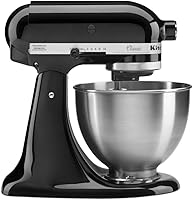
The KitchenAid Classic has 10 speeds, including a stir speed and a speed for whipping cream. Its tilt-head design provides access to the bowl, so it may suit someone who wants a familiar range of mixing tasks in a compact routine.
The Cuisinart Stand Mixer has 12 speeds and a 5.5 qt bowl. Those details may interest you if your priority is having a wider choice of settings and a larger bowl, though speed count alone doesn't tell you how loud it will be.
If your kitchen is tight on counter space, compare the footprint and where the mixer will sit before buying. See best stand mixers for small kitchens and the best stand mixer for a tiny kitchen.
Can you make a kitchen mixer quieter?
You can reduce avoidable vibration and sound around the mixer, though the motor itself will still make noise. Set it on a stable, level counter and move loose utensils or containers that may rattle nearby.
Keep the mixer away from corners if you have room, and don't block ventilation openings. Don't place a towel or other soft material underneath the appliance unless its manual says that's safe, since the mixer needs a stable surface.
Use the speed recommended for the recipe instead of running at high speed by default. For timed operation, compare stand mixers with timers and check how their controls fit the way you cook.
What mixer sounds could signal a problem?
A sudden new grinding, scraping, or repeated rattling sound deserves a pause. Switch the mixer off, unplug it if the manual instructs you to, and check whether the bowl or attachment is correctly positioned.
Don't put your fingers near a moving attachment or try to adjust parts while the mixer is running. If the sound persists after setup checks, stop using the mixer and consult the manual or the brand's support.
How loud are kitchen mixers compared with each other?
Kitchen mixer noise varies enough that no single number can rank every model for every recipe. Compare the same task, speed, and listening distance whenever you can, and look for clear measurement conditions.
Choose a mixer based on the sound information available, the settings you need, and how it fits your kitchen. The Artisan's published 4 dB figure is a point to investigate, while the Classic's 10 speeds and Cuisinart's 12 speeds describe settings, not guaranteed noise levels.
If the number is unclear or your usual task isn't covered, contact the brand for measurement details before deciding. That gives you a more useful basis for comparing kitchen mixers than treating a standalone decibel figure as a promise of quiet operation.
Frequently asked questions
How loud are kitchen mixers?
Kitchen mixers make a noticeable sound from the motor and the food moving in the bowl. The sound varies with speed, recipe, mixer design, and distance, so one decibel number can't describe every kitchen or task.
Compare the same kind of mixing at a similar distance when evaluating models.
Are stand mixers louder at higher speeds?
Usually, higher speeds create a sharper and more noticeable motor sound, while stirring at a low setting is often less intense. The ingredients matter too: a dense dough can make a mixer work differently from whipping cream.
Follow the manual's speed guidance for each task.
Does a kitchen mixer need to be quiet?
No single noise level suits every kitchen, but a mixer should run without new grinding, scraping, or rattling sounds. Normal motor and mixing noise can be noticeable.
If the sound changes suddenly, stop the mixer and check the bowl, attachment, and manual before using it again.
Can you make a stand mixer quieter?
You can reduce some noise reaching the room by placing the mixer on a stable, level counter away from corners and loose objects. Keep vents clear and use the recommended speed for the task.
Don't cover the mixer or put soft material beneath it unless the maker permits that.