Which Type of Stand Mixer Should You Choose?
Choose a stand mixer type by the work it will do most: a tilt-head suits everyday batches and easy bowl access, a bowl-lift suits larger or heavier batches, and a spiral mixer focuses on dough. Compare your counter space and how often you make bread before choosing.
On this page (8 sections)
- What are the main stand mixer types?
- Is a tilt-head stand mixer right for your kitchen?
- When does a bowl-lift stand mixer make sense?
- Is a spiral mixer better for bread dough?
- Which mixer type fits your workload and space?
- What should you check before choosing a stand mixer?
- How much room does a stand mixer need?
- How do you choose among stand mixer types?
Stand mixer types differ in how they hold the bowl and handle dough: tilt-head and bowl-lift designs are planetary mixers for varied kitchen tasks, while spiral mixers focus on kneading dough. Choose by your usual batch size, how often you bake bread and the room available on your counter.
For most home kitchens, a tilt-head planetary mixer is a practical starting point because it gives you access to the bowl and can work across mixing, whipping and kneading. A bowl-lift may suit larger or heavier batches, while a spiral mixer makes more sense when bread dough is the main job.
What are the main stand mixer types?
The main stand mixer types are tilt-head, bowl-lift and spiral. The first two describe how the bowl and mixing head meet; spiral refers to a mixing style built for dough.
| Type | How it works | Consider it if |
|---|---|---|
| Tilt-head planetary | The head lifts to give access to the bowl | You want access between steps and use the mixer for varied recipes |
| Bowl-lift planetary | A lever raises the bowl toward the mixing tool | You make larger batches or prefer a fixed head |
| Spiral | A spiral hook and bowl work together to knead dough | Bread dough makes up much of your mixer workload |
A planetary mixer moves its attachment around the bowl while the attachment spins. That motion suits recipes that call for a beater, whisk or dough hook, and some mixers accept optional attachments for other tasks.
A spiral mixer is more specialized. It is built to knead dough, so compare its footprint and capacity with the amount of bread you actually make.
Is a tilt-head stand mixer right for your kitchen?
A tilt-head mixer suits everyday baking and easy bowl access. Raising the head makes it simpler to add ingredients, change an attachment or remove the bowl between steps.
This design can work well for cookies, cakes, frosting and occasional bread dough. Check each model's bowl capacity and guidance for dough before assuming it can handle your largest recipe.
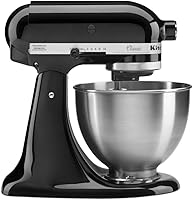
The KitchenAid Classic Series has a 4.5 qt stainless steel bowl, 10 speeds, a tilt-head and a flat beater, dough hook and wire whip. {{product B003OXNBYC | A 4.5 qt tilt-head mixer with a beater, dough hook and wire whip for varied home recipes.}}
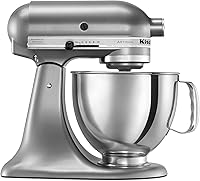
The KitchenAid Artisan has a 5 qt bowl and 10 speeds, with a tilt-head design. For a brand comparison, see Smeg vs KitchenAid stand mixers.
Its optional hub-powered attachments include choices such as food grinders and pasta makers, sold separately. {{product B004GUVD6K | A 5 qt tilt-head option for varied recipes, with optional attachments for additional tasks.}}
A tilt-head needs room overhead to open. Measure the counter and the clearance beneath cabinets, especially if the mixer will stay in place between uses.
When does a bowl-lift stand mixer make sense?
A bowl-lift mixer is worth considering when your batches are larger or heavier and you prefer the head to stay in place. A lever raises the bowl to the mixing attachment, so you can lower it to remove the bowl or add ingredients.
This setup may suit frequent baking or recipes that fill a larger bowl. Capacity alone does not tell you the dough a mixer can handle, so check the maker's batch guidance for your recipes.
The bowl-lift mechanism also needs room for the bowl to move. Compare its working height and width with the counter space you have, not just the mixer's footprint.
If you're unfamiliar with this design, our guide explains what a bowl-lift stand mixer is and how its lifting mechanism works.
Is a spiral mixer better for bread dough?
A spiral mixer may be the better fit when bread dough is your main reason for buying a mixer. Its mixing action is designed around kneading dough, while a planetary mixer is more varied across baking tasks.
Think about how often you make bread, how much dough you mix in one batch and whether you also need to whip cream or beat cake batter. A dough-focused machine can be a poor fit if you want one appliance for a wide range of recipes.
Our spiral mixer vs planetary mixer comparison explains the trade-offs for dough work and general mixing. If you want to compare planetary models, see our guide to the best planetary stand mixer.
Which mixer type fits your workload and space?
Choose the mixer type that covers your regular recipes while fitting the space where you'll use it. A larger bowl or specialized dough action only helps when it matches your routine.
| Your routine | Type to consider | Check before buying |
|---|---|---|
| Cakes, cookies and occasional bread | Tilt-head planetary | Bowl capacity and overhead clearance |
| Frequent large batches | Bowl-lift planetary | Working height and recipe limits |
| Bread dough most days | Spiral | Batch capacity and dedicated counter space |
| Many different kitchen tasks | Planetary with optional attachments | Which attachments are included and which are sold separately |
If you have limited hand strength or find heavy bowls difficult to handle, consider how each design lets you raise the head, move the bowl and attach tools. Our guide to the best stand mixer for seniors covers access and handling considerations.
The Cuisinart Stand Mixer offers a tilt-back head, a 5.5 qt stainless steel bowl and 12 speeds. It includes a chef's whisk, dough hook, flat mixing paddle and splash guard; optional attachments include pasta tools, a meat grinder and a frozen dessert maker. {{product B01LXC4JPJ | A 5.5 qt tilt-back mixer with 12 speeds and a splash guard for varied mixing jobs.}}
What should you check before choosing a stand mixer?
Check capacity, dough guidance, clearance and included tools before deciding which type to buy. Those details connect the mixer design to your recipes and kitchen.
Start with your largest usual batch, not an occasional recipe you might make someday. Compare the bowl capacity and the maker's guidance for dough, since the bowl's volume does not guarantee a particular dough workload.
Check how you will access the bowl. A tilt-head needs overhead space to open, while a bowl-lift needs room for the bowl to rise and lower.
Finally, look at the tools and attachments. A flat beater, whisk and dough hook cover common baking tasks, while specialty attachments may cost extra.
See how to choose the right stand mixer attachment for a recipe if you are deciding which tool a recipe calls for.
How much room does a stand mixer need?
A stand mixer needs room for its base, bowl access and safe handling. Measure the spot in use, including clearance above the mixer and room to lift out the bowl.
If you plan to store the mixer in a cabinet, check that it can be moved in and out without awkward lifting. The Classic Series measures 14.1 in deep, 8.7 in wide and 13.9 in high; compare those dimensions with your available storage and working space.
Sound can also matter if the mixer runs near a living area or while others are sleeping. Read our guide to how loud kitchen mixers are for factors to consider.
How do you choose among stand mixer types?
Choose a tilt-head planetary mixer for varied home baking and easy bowl access, a bowl-lift model for larger or heavier batches, and a spiral mixer when dough is the main workload. Match the machine's capacity and clearance to the recipes and counter space you use regularly.
If you want to make recipes with several tools, check the included attachments and the cost of optional ones before choosing. For extra mixing convenience, compare models in our guide to the best stand mixer with a timer or best stand mixer with a rotating bowl.
Frequently asked questions
What are the main types of stand mixers?
The main types are tilt-head, bowl-lift and spiral mixers. Tilt-head models give you access by raising the mixer head, bowl-lift designs raise the bowl to the mixing tool, and spiral mixers are built around kneading dough.
Choose based on batch size, dough workload and the space you have.
Is a tilt-head or bowl-lift stand mixer better?
A tilt-head mixer is often easier to access between steps, while a bowl-lift model can suit larger or heavier mixing jobs. Neither design is best for every kitchen.
Compare the bowl capacity and your usual recipes, then check the height and space needed to use the mixer.
What type of stand mixer is best for bread dough?
A spiral mixer is designed for dough-focused work, while a planetary mixer can handle varied tasks with different attachments. The right choice depends on how often you make bread and how much dough you mix at once.
Check each model's guidance for dough limits before buying.
Do stand mixers take up a lot of counter space?
Stand mixers need room for their base and enough clearance to use the head or bowl mechanism. Measure the intended counter area, including space above a tilt-head and room to lift or remove a bowl.
Check the mixer dimensions and leave accessible space for its attachments.
Can one stand mixer handle baking and other kitchen tasks?
Many planetary stand mixers use a beater, whisk and dough hook for mixing, whipping and kneading. Some models also accept optional attachments for tasks such as pasta making or grinding.
Check which parts come with the mixer and which attachments must be bought separately.