How to Choose Measuring Cups for Dry and Liquid Ingredients
Choose different cups for dry and liquid ingredients. Use flat rimmed cups you can level for flour and sugar, and clear cups with a spout for milk, oil and other pourable foods.
On this page (12 sections)
- What is the difference between dry and liquid measuring cups?
- Which cup should you use for flour, sugar and other dry foods?
- Which cup should you use for milk, oil and other liquids?
- What sizes do you actually need?
- How do markings affect accuracy?
- Which material is best for measuring cups?
- When do you need liquid cups with lids or long handles?
- How do you choose cups for specific recipes?
- What should you know about plastic, disposable and bulk options?
- What do color, metal and sets add?
- How should you clean and store measuring cups dry and liquid?
- How do you decide which measuring cups to buy first?
Choose different cups for dry and liquid ingredients. Use flat rimmed cups you can level for flour and sugar, and clear cups with a spout for milk, oil and other pourable foods.
That split is the core of choosing measuring cups dry and liquid. Dry cups are made to be filled above the rim and scraped level.
Liquid cups are made to be read from the side and poured cleanly.
You do not need a large set on day one. You need the right design for each food type, in the sizes your recipes use most.
This guide explains how cup design, size, markings and material change your results.
We compared specs and features across common designs. We looked at what each cup does with flour, sugar, milk, oil, butter and small amounts of spice or extract.
If you also want a broader view of tools, our baking scales guide explains when weight helps and when volume still matters.
What is the difference between dry and liquid measuring cups?
Dry measuring cups are nested cups with a flat rim at the top. You fill them past the line, then level them with a knife or straight edge.
Liquid measuring cups are clear jugs with markings on the side. You set them down, bend to eye level, and read where the liquid reaches.
The design follows the food. Flour and sugar can be leveled.
Milk and oil cannot, so they need a cup you can read without leveling.
Many beginners use one cup for both jobs. That often leads to too much flour or an inaccurate splash of liquid.
The fix is simple. Keep two types in your drawer.
How design changes accuracy
A flat rim lets you scrape flour level without losing any. A spout lets you pour milk without dripping down the side.
Clear sides let you see the liquid line. Opaque metal cups do not show that line at all.
That is why recipes often say "1 cup flour" and "1 cup milk" but expect different tools. The food and the cup work as a pair.
Our best measuring cups for dry ingredients roundup focuses on nested cups built for leveling.
Rule: buy one set of dry cups and one liquid jug, and use each only for its own job.
Which cup should you use for flour, sugar and other dry foods?
Use nested dry cups from 1/4 cup to 1 cup for most dry foods. They stack for storage and each size has a flat rim.
Fill the cup from your flour bag with a spoon, heap it slightly, then level it with a straight edge. Do not pack flour down with the cup.
Sugar is denser than flour, but the same method works. Fill, heap, level.
The flat rim is what makes the measure the same each time.
Cocoa, powdered sugar and rice flour also work best in dry cups. They are dry, they can be leveled, and they do not need a spout.
Why nesting matters
Nested cups save drawer space. You can keep 1/4, 1/3, 1/2 and 1 cup in the space of one.
That matters if you bake often. You will reach for the right size without searching through loose cups.
Look for cups with clear markings that do not fade quickly. Etched or stamped numbers hold up better than printed ones.
A set of best measuring cups with etched markings shows why permanent marks help over time.
Rule: for dry foods, choose nested cups with a flat rim and level every measure.
Which cup should you use for milk, oil and other liquids?
Use a clear liquid measuring cup with a spout and side markings. Set it on a flat counter and read at eye level.
That method works for water, milk, cream, stock, oil and melted butter. You can see the line, adjust it, and pour without lifting the cup to check.
A handle helps, especially for a 4 cup jug full of batter or stock. A wide base helps when your hands are wet or soapy.
The OXO cup is 2 cup in size, clear plastic, and BPA free. It has standard and metric markings, a non slip handle and a generous spout.
Its angled surface is the key detail. You read the measurement by looking down, instead of bending to the side level.
That helps with small adjustments. Add a little liquid, check from above, and stop when the line hits the mark.
Rule: use a clear liquid cup with a spout, and read the line at eye level or from above if the cup allows it.
What sizes do you actually need?
Most home bakers need 1 cup, 2 cups and 4 cups for liquids, and 1/4 cup to 1 cup for dry foods. That covers most recipes.
See best measuring cup sets for options that cover these sizes.
A 1 cup liquid cup suits a splash of milk or a half cup of oil. A 2 cup cup suits soups, sauces and smaller batters.
A 4 cup cup suits large batches and stocks.
For dry foods, 1/4 and 1/3 cups handle small amounts of salt, baking powder and cocoa. The 1/2 and 1 cup sizes handle flour and sugar.
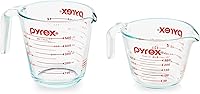
The Pyrex set includes 1 cup, 2 cup and 4 cup glass jugs. Each has bold ounce and milliliter markings, a curved spout and an easy grip handle.
Glass is microwavable, so you can melt butter or chocolate in the cup. The glass is also dishwasher, freezer and preheated oven safe, and it does not absorb odors.
That trio gives you a size for each common liquid task. You do not need to overfill a small jug or use a huge jug for a small pour.
Rule: start with 1, 2 and 4 cup liquid jugs, plus a 1/4 to 1 cup dry set.
How do markings affect accuracy?
Markings tell you where to stop filling, and how to read the level. Clear, bold marks are easier to read than small printed ones.
Look for both standard and metric marks if you cook from mixed sources. Cups, ounces and milliliters cover most home recipes.
On a liquid cup, marks should be on the side you read. On a dry cup, marks should be inside near the top so you can check before leveling.
The Cuisipro set includes 1/8, 1/4, 1/2, 1 tsp and 1 tbsp spoons. They are stainless steel, with measurements permanently stamped on the handles.
The oval shape fits into spice jars. The set nests for storage and attaches to a removable loop.
Spoons handle amounts that are too small for cups. That includes salt, baking powder, vanilla and spices.
Our measuring spoons vs measuring cups guide explains where the line falls between the two.
Rule: choose cups and spoons with permanent marks, and check them before you level or pour.
Which material is best for measuring cups?
There is no single best material, only the material that fits the food. Plastic, glass and metal each have a clear use.
Plastic liquid cups are light and easy to hold. They often have angled markings and non slip handles, and many are dishwasher safe.
Glass liquid cups can go in a microwave or oven. That makes them handy for melting butter, warming milk or holding hot stock.
Metal dry cups are sturdy and easy to level with a knife. They suit flour and sugar, and they nest well.
Choosing by food and task
If you melt butter often, glass has a clear edge. If you pour cold milk often, plastic is light and simple.
If you only measure dry foods, metal nested cups are a strong choice. If you measure both, you may end up with two materials.
This is also where style options come in. A best measuring cups ceramic set can suit dry foods and serving, while glass suits hot liquids.
Rule: pick glass for hot liquids, plastic for light everyday pouring, and metal or plastic for dry cups.
When do you need liquid cups with lids or long handles?
Lids and long handles help when you need to move, store or reach into a deep bowl. They are not needed for every measure.
A lid helps if you measure ahead, carry a cup to the mixer, or store leftover liquid. Look for a lid that stays on during a short carry.
Long handles help if you reach into a deep pot or a stand mixer bowl. They keep your hand away from heat and steam.
Our best measuring cups with lids roundup covers models built for storage and transport.
Our best measuring cups with long handles roundup covers models built for deep bowls and pots.
Those details matter most for frequent bakers. If you measure at the counter and pour right away, a standard handle is fine.
Drying matters too. Our how to dry a stand mixer bowl properly guide helps you avoid water spots after washing.
Rule: add lids for storage and long handles for deep bowls, only if those tasks come up often.
How do you choose cups for specific recipes?
Match the cup to the recipe type, not just the ingredient list. Cakes, breads and sauces each put different demands on your tools.
For cakes, you need dry cups for flour and sugar, a liquid cup for milk or oil, and spoons for baking powder and vanilla. Accuracy matters because the ratios are tight.
For bread, you need dry cups for flour and a liquid cup for water or milk. Large batches may need a 4 cup jug.
For sauces and soups, a 2 cup or 4 cup liquid cup does most of the work. You read, adjust and pour without leveling.
For coffee, a best measuring cups for coffee pick may suit scooping grounds, but liquid cups still handle milk or water.
If you use a mixer, our how to choose the right stand mixer attachment for a recipe guide helps you pair tools with the task.
Rule: choose cups by recipe type first, then fill in sizes for the foods you measure most.
What should you know about plastic, disposable and bulk options?
Plastic, disposable and bulk cups each solve a different problem: weight, cleanup or cooking for a group. None replaces a full set for daily baking.
Plastic cups are light and often have easy to read markings. They suit everyday liquid measures and are easy to wash.
Disposable cups suit picnics, bake sales and large messy jobs. They save cleanup but give you less control over pouring and reading.
Bulk sets suit classrooms, catering and commercial kitchens. They work best when many people measure at once.
Our best measuring cups plastic roundup covers reusable plastic options for daily use.
Our best-measuring-cups-disposable/ roundup covers single use options for events.
Our best measuring cups in bulk roundup covers sets for group cooking.
Rule: use reusable cups for daily baking, and keep disposable or bulk sets for events and groups.
What do color, metal and sets add?
Color and metal finishes change how the cups look, not how they measure. The design and markings still decide accuracy.
Red, gold and brass cups can suit serving, gifts or a themed kitchen. They still need a flat rim for dry foods or clear markings for liquids.
Our best measuring cups red roundup covers bold colored sets.
Our best measuring cups gold roundup covers gold toned sets.
Our best brass measuring cups roundup covers brass options, which are often dry cups for leveling.
Sets that include both cups and spoons save you from buying tools one by one. Our best measuring cups and spoons for baking roundup covers combined sets.
Our best liquid measuring cups roundup focuses on jugs for pourable foods.
Rule: choose color and finish after you have the right design, size and markings for the job.
How should you clean and store measuring cups dry and liquid?
Clean each cup by material and by how you used it. Wash, dry fully, then store where you can see the markings.
Plastic cups are often top rack dishwasher safe. Glass cups are often dishwasher safe, but hand washing can keep markings clear longer.
Metal dry cups wash well by hand or in a dishwasher. Dry them fully to avoid spots and to keep nested cups from sticking.
Store dry cups nested together. Store liquid jugs upright with spouts clear, so you can grab the right size fast.
Check markings now and then. If numbers fade, retire that cup for precise baking and use it for rough measures only.
Rule: wash by material, dry fully, and store so markings stay readable and cups stay nested.
How do you decide which measuring cups to buy first?
Buy a dry set and a liquid jug first, then add spoons and specialty sizes. That order covers most recipes with the fewest tools.
Start with nested dry cups from 1/4 to 1 cup. Add a 2 cup liquid jug for everyday pours.
Add a 4 cup jug when you make stocks, soups or large batters.
Add a spoon set for amounts under 1/4 cup. That covers salt, baking powder and vanilla without guesswork.
Our best measuring cups for dry ingredients roundup helps you compare dry sets.
Our best measuring cups with lids roundup helps if you store or carry measures.
Our measuring spoons vs measuring cups guide helps you decide where cups stop and spoons start.
Pick dry cups for leveling solids and liquid cups for reading pours. That split is the decision rule for every measuring cups dry and liquid choice you make.
Frequently asked questions
Do I need separate measuring cups for dry and liquid ingredients?
Yes, separate cups make the work easier. Dry cups have a flat top rim so you can level flour or sugar with a straight edge.
Liquid cups have clear markings on the side and a spout so you can read milk or oil at eye level and pour without spills.
Can I use a liquid measuring cup for flour?
You can fill it, but you cannot level it well. The rim is not flat in the same way, and the markings run up the side.
This often adds too much flour.
Use a dry cup, fill it, level the top, and save liquid cups for pourable foods.
What sizes of measuring cups should I buy first?
Start with 1 cup, 2 cups and 4 cups for liquids, plus a nested set from 1/4 cup to 1 cup for dry foods. That range covers most cakes, cookies and breads.
Add smaller or larger sizes only when a recipe calls for them often.
Are plastic, glass or metal measuring cups better?
Each material fits a different job. Plastic is light and easy to hold, glass can go in a microwave for melting butter, and metal dry cups are sturdy for leveling.
Choose the material for the foods you measure most, not by looks alone.