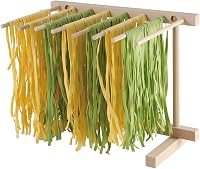
Why Use a Pasta Drying Rack?
A pasta drying rack helps separate fresh noodles so they are easier to handle and less likely to stick together. Hanging pasta also gives strands space to dry before cooking or storage.
On this page (8 sections)
- Why use a pasta drying rack for fresh noodles?
- When should you hang pasta on a rack?
- How does a drying rack make pasta easier to handle?
- Does a drying rack help pasta dry before storage?
- What should you look for in a pasta drying rack?
- How do you use a pasta drying rack?
- How do you clean and store a pasta drying rack?
- Is a pasta drying rack worth using?
A pasta drying rack helps separate fresh noodles so they are easier to handle and less likely to stick together. Hanging pasta gives strands space to dry before cooking or storage, which is useful after cutting spaghetti, tagliatelle, fettuccini, or linguini.
Fresh pasta can become difficult to lift when strands sit in a pile. Flour helps, but a rack gives each portion more space and reduces the need to pull apart noodles by hand.
The value shows up most when you make long noodles in more than one portion. A single strand can lie flat without much trouble, but several lengths of spaghetti or fettuccine will overlap as soon as you set them down.
Once strands overlap, their damp surfaces can cling during the wait before cooking. You then spend time teasing them apart, and some may stretch or break in the process.
A rack changes that sequence by giving each group its own arm to rest on. The strands hang loose instead of pressing against a counter, a tray, or each other in a heap.
That spacing also helps with handling after cutting. You can lift one portion from an arm and carry it to the pot while the remaining portions stay put.
It also makes the work area easier to read at a glance. You can see which portions are ready, which need more space, and where you still have room for the next batch.
For cooks who make pasta only now and then, a rack may feel like an extra item to set up and store. The benefit grows when long noodles wait while you roll, cut, or clean.
A rack does not fix dough that is too wet and it does not replace light flouring where a recipe calls for it. It works best as part of a simple routine from cutting through cooking.
Consider how often you make fresh pasta and how long the noodles need to wait. If regular batches leave you sorting piles, a rack can make the whole task calmer and more orderly.
Why use a pasta drying rack for fresh noodles?
The main reason to use a pasta drying rack is better separation during the short period between cutting and cooking. Noodles hang over separate arms instead of resting against one another on a counter or tray.
This matters most with long pasta. Spaghetti and fettuccini can overlap quickly, especially when you cut a large batch at once.
A rack also gives you a clear place to move noodles after they leave a pasta maker machine. That extra step can make the work area easier to manage when several portions are ready.
Does a pasta drying rack prevent sticking?
A pasta drying rack helps prevent sticking by keeping strands apart while their surfaces lose some moisture. It cannot correct dough that is too wet or strands that were cut too thick, so dough preparation still matters.
Dust noodles lightly with the flour your recipe recommends before hanging them. Avoid piling a large amount onto one arm, because crowded strands can still touch and cling together.
If you only make short pasta or cook each portion immediately, a rack may not add much value. It is more useful when long noodles need to wait before entering the pot.
When should you hang pasta on a rack?
Hang fresh pasta right after cutting and separating the strands. The rack is most helpful when cooking is delayed, when you are making several portions, or when you want noodles to dry enough for easier handling.
Transfer each portion gently so the strands stay loose. A rack should support the noodles without forcing you to stretch them or compress them into a bundle.
The Eppicotispai rack is made of natural beechwood, collapses for storage, and provides more than 10 square feet of pasta space.
Its 12 in D x 14.25 in W x 1 in H dimensions describe the collapsed item, so plan a clear counter area for assembly and use. Choose it if natural wood and broad stated pasta space matter more than a metal frame.
For more options, compare our guide to the best pasta drying rack. It can help you match the rack style to the batch size and storage space you have.
How does a drying rack make pasta easier to handle?
A drying rack makes pasta easier to handle because the strands stay in separate groups instead of forming one tangled pile. You can lift a portion from the arms and move it toward the cooking pot with less sorting.
This is especially helpful when your pasta machine produces long sheets that you cut into narrow noodles. A hanging rack gives those noodles a temporary home while you finish rolling or cutting the rest of the dough.
A rack can also keep the counter clearer. That does not replace cleaning or flour control, but it gives you a defined area for noodles that are ready.
The KITCHENDAO rack has 8 rods, rotary arms, and a transfer wand. It is stainless steel, folds for storage, and has a maximum weight capacity of 6 lb.
Choose KITCHENDAO if you want a compact rack with a stated weight limit and a transfer wand. Its detachable and foldable arms suit cooks who want the rack to take less drawer space after use.
The brand describes setup as requiring no additional tools. Check that the rack is stable before adding noodles, and distribute pasta across the rods instead of loading one area heavily.
Does a drying rack help pasta dry before storage?
A drying rack helps pasta dry by exposing more of each strand to the surrounding air. That can make noodles easier to separate before short-term storage or cooking.
Drying time depends on noodle thickness, room conditions, and the amount of pasta on each arm. A rack improves spacing, but it does not set a universal drying time for every recipe.
Do not store pasta until it is dry enough for the storage method you plan to use. If you are unsure, cook the pasta fresh or follow a trusted preservation guide.
For a rack made from wood, see best wooden pasta drying racks. For a metal option, see best stainless steel pasta drying racks.
What should you look for in a pasta drying rack?
Look for enough hanging space, a stable countertop base, and storage that fits your kitchen. The right choice depends on how much pasta you make and whether you prefer wood, stainless steel, or a compact folding design.
Consider these points:
- Count the arms or rods and compare them with your usual batch size.
- Check any stated weight capacity before hanging a large amount of pasta.
- Measure the space where the rack will stand.
- Look for collapsible or detachable parts if drawer storage matters.
- Choose a material and cleaning method that fit your routine.
- Make sure the rack can support the noodles without crowding them.
The Tinada rack is made of beech wood and has 9 arms. It measures 8.3 in L x 6.7 in W x 15.7 in H, with a 6.7 in round base and 8.3 in arms.
Tinada suits cooks who want a larger wooden stand with 9 arms and no screws or tools for assembly or disassembly. Its 15.7 in height may help separate long noodles, but measure your available counter and cabinet space first.
It can also be used as a paper towel holder after removing its arms. Choose it for that added use only if the removable-arm design fits your kitchen routine.
How do you use a pasta drying rack?
Use a pasta drying rack by assembling it on a clear counter, separating the noodles, and placing each portion over the arms. Keep strands loose enough that air can reach them.
A simple process works well:
- Assemble the rack according to its design.
- Cut and separate the fresh noodles.
- Dust them lightly if your recipe calls for flour.
- Transfer each portion to separate arms.
- Spread crowded strands apart.
- Cook or store the pasta when it reaches the condition your recipe requires.
A transfer wand can help move noodles from a pasta cutter to the rack. If you use a stand mixer attachment, our guide to how to use a pasta attachment on a stand mixer explains the handling sequence.
You can also compare equipment choices in best stand mixer for pasta dough before building a larger pasta setup.
How do you clean and store a pasta drying rack?
Clean a pasta drying rack by removing loose flour and following the care method for its material and parts. Let every washable piece dry before folding or storing it.
Keep wooden parts dry and avoid leaving moisture on them. Wipe away flour with a dry cloth where possible and dry the wood fully before putting the rack away.
For detachable parts, clean each piece separately so flour does not collect around joints. Check the rods or arms for stuck bits before you reassemble or fold the rack.
Fold or disassemble the rack after use if the design allows it. Store it where the arms will not be bent or pressed by heavy kitchen tools.
A stable, dry storage spot keeps the rack ready for the next batch and helps it stay in good shape.
Is a pasta drying rack worth using?
A pasta drying rack is worth using if you make long fresh noodles, prepare more than one portion, or need time between cutting and cooking. It gives strands space, improves handling, and reduces the chance of a tangled pile.
Choose Eppicotispai if you want natural beechwood and more than 10 square feet of pasta space. Choose KITCHENDAO if 8 rods, rotary arms, stainless steel, and a 6 lb capacity fit your larger batches.
Choose Tinada if 9 wooden arms and a 15.7 in stand suit your counter.
If you are deciding why use a pasta drying rack, start with your noodle length, batch size, and storage space. Then choose the rack that keeps fresh pasta separated without making setup or cleanup harder.
Frequently asked questions
Why use a pasta drying rack instead of a tray?
A pasta drying rack separates noodles by hanging them over individual arms, which helps reduce contact between fresh strands. A tray can work for short pieces, but long spaghetti or fettuccine may overlap, stick, or be harder to lift without tearing.
Do you need to dry fresh pasta before cooking it?
No, you can cook many fresh noodles soon after cutting them. A rack helps when you need better handling, want to prepare a batch before cooking, or plan to dry pasta for later use.
Follow your recipe and storage method for the needed drying time.
How much pasta can a drying rack hold?
Capacity depends on the rack design and its stated weight limit or available hanging space. The KITCHENDAO rack has 8 rods and a maximum weight capacity of 6 lb, while the Eppicotispai model provides more than 10 square feet of pasta space.
Which is better, a wood or stainless steel pasta drying rack?
Wood suits cooks who prefer a natural material and a traditional look, while stainless steel can suit people who want a metal frame and easy separation of detachable parts. Compare the rack's storage size, capacity, arm layout, and cleaning needs with your kitchen.