What Is a Wire Whisk Attachment Used For?
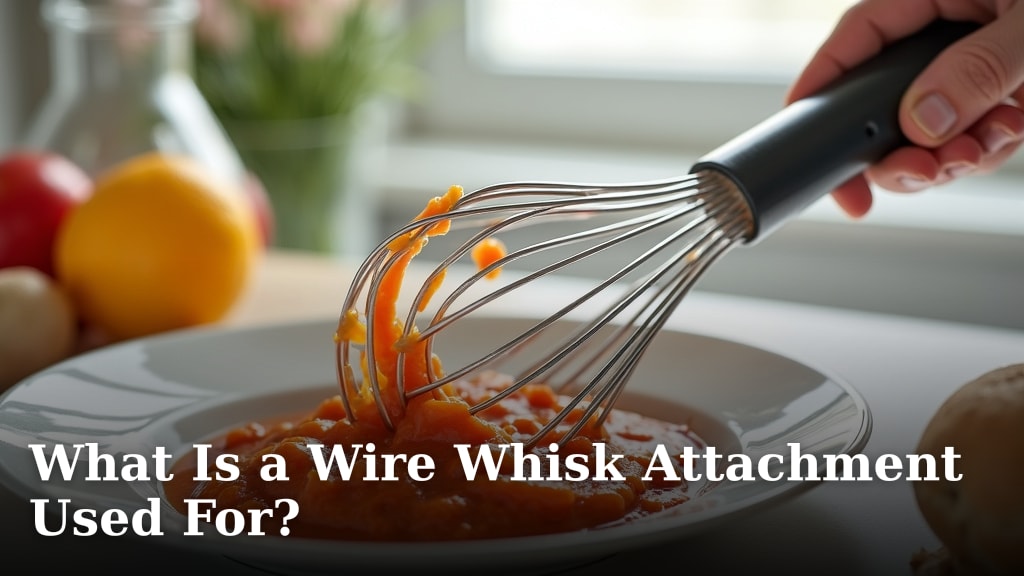
A wire whisk attachment is primarily used for aerating and mixing lighter ingredients in your stand mixer. It excels at whipping air into things like egg whites, cream, and light batters, creating fluffy textures for your favorite desserts.
Think of it as your go-to tool for anything that needs to be light and airy. We found that it’s perfect for meringues, whipped cream, and even some frostings. Do you want smooth, lump-free results in minutes? This attachment is your friend.
- Whips air into ingredients beautifully.
- Great for egg whites, cream, and light batters.
- Creates fluffy textures.
- Achieves smooth, lump-free mixtures.
- Ideal for meringues, whipped cream, and some frostings.
Let’s walk through exactly how this essential kitchen tool elevates your baking and what tasks it performs best.
Understanding Your Wire Whisk Attachment: What It Does Best
Your wire whisk attachment is a true workhorse for aeration. It introduces air into liquid ingredients, making them light, fluffy, and voluminous. This is its core superpower.
Think of it as a culinary alchemist. It transforms ordinary liquids into extraordinary textures. While other attachments mix, the whisk truly transforms air into your recipes.
The Science of Loft: How It Works
Ever wonder why egg whites get so fluffy? It’s all about air. The wire whisk’s thin, flexible wires move rapidly, creating thousands of tiny air bubbles.
These thin wires cut through liquids, trapping air as they go. This process is called aeration. The more air trapped, the lighter the final product will be.
The design is key here. Unlike a flat beater, the whisk’s open structure allows maximum air incorporation. It’s built for volume.
Why Not Just Use a Fork or Hand Whisk?
You certainly can, for small tasks! But for consistent, high-volume aeration, a stand mixer whisk wins every time. Its steady, powerful rotation achieves results that are hard to replicate manually.
If you’re whipping a single egg white, a hand whisk is fine. But for a meringue pie requiring several, your arm would get tired fast. For larger batches, the stand mixer provides unmatched efficiency and consistency.
Top Uses for Your Wire Whisk Attachment
This attachment shines brightest with specific ingredients. Knowing these helps you decide when to reach for it first. We found several key applications that stand out.
Whipping Egg Whites to Perfection
This is arguably the most famous use. The whisk turns liquid egg whites into stable, glossy peaks. These peaks are essential for meringues, soufflés, and light cakes.
Start slow, then increase the speed. You’ll see the transformation from clear liquid to foamy, then to soft peaks, and finally to stiff, glossy peaks. This takes just minutes with your whisk.
- Meringue cookies and pie toppings
- Soufflés and angel food cake
- Macarons (the Italian meringue method often uses this)
- Lightening batters for specific recipes
Creating Cloud-Like Whipped Cream
Dreamy, homemade whipped cream is a breeze with your wire whisk. Heavy cream, a little sugar, and vanilla transform into a luscious topping for desserts.
Cold cream whips best. The whisk incorporates air, creating a stable foam. You’ll get much better results than store-bought aerosol cans, both in flavor and texture.
We found that over-whipping can turn it into butter, so watch it carefully! Stop when it forms soft, firm peaks that hold their shape.
Blending Light Batters and Mixes
While often associated with aeration, the whisk is also great for certain light batters. Think crepes, thin pancakes, or some quick bread mixes.
It’s excellent for incorporating dry ingredients into wet ones without overworking the gluten. This keeps your baked goods tender and light.
For thicker, heavier batters, you’d typically switch to the paddle attachment. But for those delicate mixtures, the whisk is perfect.
Emulsifying Dressings and Sauces
Need a smooth vinaigrette or a light homemade mayonnaise? The whisk can help. Its vigorous action helps blend oils and vinegars that typically separate.
This process of combining liquids that don’t usually mix is called emulsification. The whisk creates a stable mixture by breaking down fat droplets and dispersing them evenly.
Many experts agree that a whisk is superior for achieving a stable emulsion quickly, leading to much better texture for your sauces (The Culinary Institute of America).
When to Choose the Wire Whisk (and When Not To)
Understanding the whisk’s limitations is just as important as knowing its strengths. It’s not a universal tool.
Here’s a quick guide to help you decide:
| Use the Wire Whisk For… | Avoid the Wire Whisk For… |
|---|---|
| Whipping egg whites | Thick cookie doughs |
| Making whipped cream | Mashing potatoes |
| Light, airy batters (e.g., crepes) | Heavy bread doughs |
| Emulsifying dressings | Mixing dense cake batters (often paddle is better) |
| Foaming milk for lattes | Shredding cooked chicken |
Tips for Optimizing Your Whisk Attachment’s Performance
Get the best out of your whisk by following these simple guidelines. A little know-how goes a long way!
Start Slow, Finish Fast
When beginning to whisk, especially with egg whites or cream, start at a low speed. This creates small, uniform bubbles. Then gradually increase the speed.
A slower start helps stabilize the mixture before powerful aeration begins. It prevents splattering and ensures consistent bubble formation.
Cleanliness is Key
Any trace of fat or oil in your bowl or on your whisk can prevent egg whites from whipping properly. Even a tiny bit can sabotage your efforts.
Always ensure your bowl and whisk are impeccably clean and dry. A quick wipe with a paper towel dampened with lemon juice or vinegar can remove invisible grease residues.
Temperature Matters
For whipped cream, cold is crucial. Use heavy cream straight from the fridge. Chilling your bowl and whisk beforehand can also speed up the process and result in a firmer whip.
For egg whites, many chefs prefer room temperature. We found that room temperature egg whites often achieve higher volume and whip up faster than cold ones. This is because the proteins are more relaxed and able to incorporate air more easily (Food Science of Cooking).
Don’t Over-Whip
While aeration is the goal, there’s a point of no return. Over-whipping egg whites makes them dry and brittle. Over-whipping cream turns it into butter.
Pay close attention to texture. Stop just when your desired consistency is reached. It’s better to slightly under-whip and gently finish by hand than to go too far.
Maintaining Your Whisk for Long-Lasting Use
Taking care of your attachment ensures it serves you well for years. A little maintenance goes a long way.
Here’s a quick checklist for your whisk attachment:
- Always wash immediately after use to prevent drying onto the wires.
- Hand wash with warm, soapy water. While some are dishwasher safe, handwashing is often gentler.
- Inspect wires for bending or damage. Gently reshape if needed, but avoid forcing.
- Ensure it’s completely dry before storing to prevent rust or residue buildup.
- Store in a clean, dry place, perhaps in a drawer or on a stand with your mixer.
By understanding what your wire whisk attachment excels at and how to care for it, you can unlock a world of lighter, fluffier, and more delightful culinary creations!
Conclusion
Your wire whisk attachment is a simple yet powerful tool. It’s your secret weapon for creating light, airy textures in many dishes. From perfectly whipped egg whites to cloud-like cream, it transforms ingredients with ease.
By understanding its best uses and following a few care tips, you ensure consistent, delicious results. Remember to clean it well and avoid over-whipping. Start using it with confidence!
Now, go forth and whip up some culinary magic in your kitchen.
Frequently Asked Questions
Can I use my KitchenAid wire whisk with other mixer brands?
Generally, no. Mixer attachments are usually designed specifically for their brand and model. The attachment mechanism and size can vary significantly between brands. Always check your mixer’s manual for compatibility.
What’s the difference between a wire whisk and a flat beater?
A wire whisk is designed to incorporate air, making mixtures light and fluffy. A flat beater, or paddle attachment, is for general mixing, creaming, and blending. It handles thicker batters without introducing too much air.
My whisk attachment is discolored. Is it safe to use?
Light discoloration, especially on older whisks, is usually due to food stains or oxidation and is generally safe. However, if you see rust, heavy corrosion, or damage to the wires, it’s best to replace it. Rust can compromise food safety.
How do I prevent “over-whipping” when using the whisk attachment?
The best way is to watch your mixture closely. Stop the mixer frequently to check the consistency with a spoon or spatula. For whipped cream, stop when it holds soft peaks. For egg whites, stop at stiff, glossy peaks. It’s better to stop slightly early than to go too far.
Can I use the wire whisk for kneading dough?
No, you should never use the wire whisk for kneading dough. Doughs are too heavy and dense, and attempting to knead them with the whisk can bend or break the wires. For kneading, always use the dough hook attachment.