What Is the Best Stand Mixer for Pizza Dough at Home?

For making pizza dough at home, the best stand mixer is typically a KitchenAid Artisan Series or a KitchenAid Professional 600 Series. We found that these models offer the power and durability needed for thick dough. You want a mixer that can handle the heavy kneading without bogging down.
You might be wondering if your current stand mixer can handle pizza dough. Many home mixers struggle with dense dough, leading to overheating or premature wear. We’ve researched and found that a powerful motor and a sturdy design are key for consistent results.
TL;DR
- KitchenAid Artisan or Professional series are top picks.
- Look for a powerful motor and sturdy build.
- Weak motors can overheat with thick pizza dough.
- A good mixer gives you consistent, well-kneaded dough.
Below, we’ll break down exactly what makes these mixers stand out for pizza dough and help you choose the best one for your kitchen. Let’s get baking!
Choosing the Right Stand Mixer for Your Pizza Dough
You’re looking for a mixer that can handle the sticky, dense challenge of pizza dough. We found that the best stand mixers for this task have robust motors and sturdy construction. They need to knead without strain, giving you that perfect, elastic dough every time.
Getting the right mixer means you’ll enjoy making pizza more. It reduces the effort and makes the whole process smoother. We want to help you pick a mixer that feels like an extension of your hands in the kitchen.
Why Your Stand Mixer Matters for Pizza Dough
Think about pizza dough. It’s not like whipping cream or mixing cake batter. Pizza dough is thick, heavy, and requires a lot of power to knead properly. If your mixer isn’t up to the task, you’ll notice it struggling.
A weak mixer might bog down, overheat, or even start to “walk” across your counter. We’ve all seen those videos! More importantly, it won’t develop the gluten structure needed for a great crust. This means a tough, less airy pizza.
The Science Behind Good Dough
When you knead dough, you’re developing gluten. Gluten is a protein network that gives dough its elasticity and strength. It traps the gas produced by yeast, creating those lovely air pockets in your crust (King Arthur Baking).
Proper kneading stretches and aligns these gluten strands. A powerful mixer does this efficiently, saving your arms and ensuring consistent results. If the dough isn’t kneaded enough, the gluten won’t form properly. You’ll end up with a dense, crumbly crust instead of a light, chewy one.
Key Features to Look for in a Pizza Dough Mixer
When you’re shopping for a stand mixer specifically for pizza dough, you need to focus on a few critical specifications. Not all mixers are created equal, especially when dealing with heavy doughs.
You want a mixer that won’t just survive the challenge, but thrive. Let’s break down the most important features to consider. This will help you make an informed decision.
Motor Power (Wattage)
For pizza dough, motor power is king. You’ll often see this measured in watts. We found that a higher wattage generally means a stronger motor. This translates directly into better performance with thick dough.
Most experts recommend at least 300 watts for occasional dough making. However, for regular pizza dough production, you’ll want something in the 500-watt range or higher. This ensures the mixer won’t strain or overheat. KitchenAid Professional models, for instance, often have robust motors.
Bowl Capacity
How much pizza dough do you typically make? The bowl capacity of your mixer will dictate this. Most home cooks find a 5-quart or 6-quart bowl to be ideal for pizza dough.
A 5-quart bowl can usually handle dough for 2-3 medium pizzas. A 6-quart or 7-quart bowl is perfect if you like to make larger batches, perhaps for a party or to freeze dough for later. Don’t go too small, or the dough will overflow during kneading.
Durability and Construction
A mixer that handles pizza dough needs to be built like a tank. Look for models with an all-metal construction, especially in the gearing. Plastic gears are a red flag for heavy-duty tasks like kneading.
The weight of the mixer can also be an indicator of quality. Heavier mixers tend to have more robust components and are less likely to “walk” on your counter during intense kneading. You want something that feels solid and stable.
Attachment Compatibility: The Dough Hook
Every stand mixer comes with various attachments, but for pizza dough, the dough hook is your MVP. Make sure the mixer you choose includes a sturdy dough hook. These hooks are designed specifically for kneading yeasted doughs.
There are generally two types of dough hooks: the C-shaped hook and the spiral hook. We found that spiral hooks are often preferred for larger capacity mixers as they tend to knead more efficiently. Either way, ensure it’s a well-made, durable attachment.
Top Mixer Brands for Pizza Dough
When it comes to stand mixers that excel at pizza dough, a few brands consistently rise to the top. Their reputation for power and reliability is well-earned. You’ll often see these in professional kitchens, too.
We’ve researched and found that KitchenAid is the standout for home use. However, other brands offer strong contenders, especially if you’re looking for different features or price points. It’s all about finding the best fit for your kitchen.
KitchenAid Artisan Series
The KitchenAid Artisan Series is a popular choice for many home bakers, and for good reason. It offers a good balance of power, capacity, and aesthetic appeal. These mixers typically come with a 5-quart bowl and a robust motor.
While the Artisan might be at the lower end of the power spectrum for heavy doughs, it often performs admirably for making 1-2 batches of pizza dough. It’s a great all-around mixer. Many home cooks find its tilting head design convenient for adding ingredients.
KitchenAid Professional Series
If you’re serious about pizza or bake frequently, the KitchenAid Professional Series is often recommended. These mixers are true workhorses. They feature a bowl-lift design, which provides more stability for heavier loads.
Professional series mixers usually have larger bowls (6-7 quarts) and more powerful motors. We found that these mixers are less likely to struggle with large quantities of stiff pizza dough. They are built for consistent, heavy-duty performance.
Comparing KitchenAid Models for Pizza Dough
Let’s take a quick look at how the popular KitchenAid series stack up when making pizza dough. This table should help clarify the differences you’ll want to consider.
| Feature | KitchenAid Artisan Series | KitchenAid Professional 600 Series |
|---|---|---|
| Motor Power (Watts) | 325 W | 575 W |
| Bowl Capacity | 5 Quarts | 6 Quarts |
| Design | Tilt-Head | Bowl-Lift |
| Construction | Mostly metal gears | All-metal gears |
| Dough Handling | Good for small batches | Excellent for large batches |
Other Brands to Consider for Heavy Dough
While KitchenAid is a dominant force, other brands offer strong performance for pizza dough. It’s always a good idea to explore your options. You might find a feature or a price point that suits you better.
Some users have had good experiences with brands like Bosch or Ankarsrum. These often have different designs, like a bottom-drive motor, which can be very effective for kneading large quantities of dough. Their unique approaches sometimes offer enhanced efficiency.
What Makes Good Pizza Dough Anyway?
Beyond the mixer, what else goes into truly great pizza dough? It’s a combination of factors, and your mixer is just one piece of the puzzle. Understanding these elements can help you get the best results from your new machine.
You’ll want to consider your ingredients, hydration levels, and even proofing techniques. A great mixer makes the kneading part easy, allowing you to focus on these other crucial steps. Remember, practice makes perfect with pizza.
Hydration Levels and Flour Type
The amount of water in your dough (hydration) significantly impacts its texture. High-hydration doughs are often stickier but can lead to a lighter, airier crust. Strong bread flour, with a higher protein content, is generally preferred for pizza dough as it forms stronger gluten.
Your mixer needs to be able to handle these varying hydration levels. A powerful motor won’t bog down with a stiff, lower-hydration dough, nor will it struggle with a very sticky, high-hydration one. It’s about having the versatility to experiment.
Your Stand Mixer Checklist for Pizza Dough Success
Before you buy, run through this quick checklist. It will help you confirm if a particular model is right for your pizza dough ambitions. We want you to be confident in your choice.
- Does it have at least 300-500 watts of motor power?
- Is the bowl capacity 5 quarts or larger?
- Does it have sturdy, preferably all-metal, construction?
- Is a durable dough hook included?
- Does it have positive reviews from users making bread/pizza dough?
By keeping these points in mind, you’ll be well on your way to making delicious, homemade pizza with ease. Your arms will thank you!
Conclusion
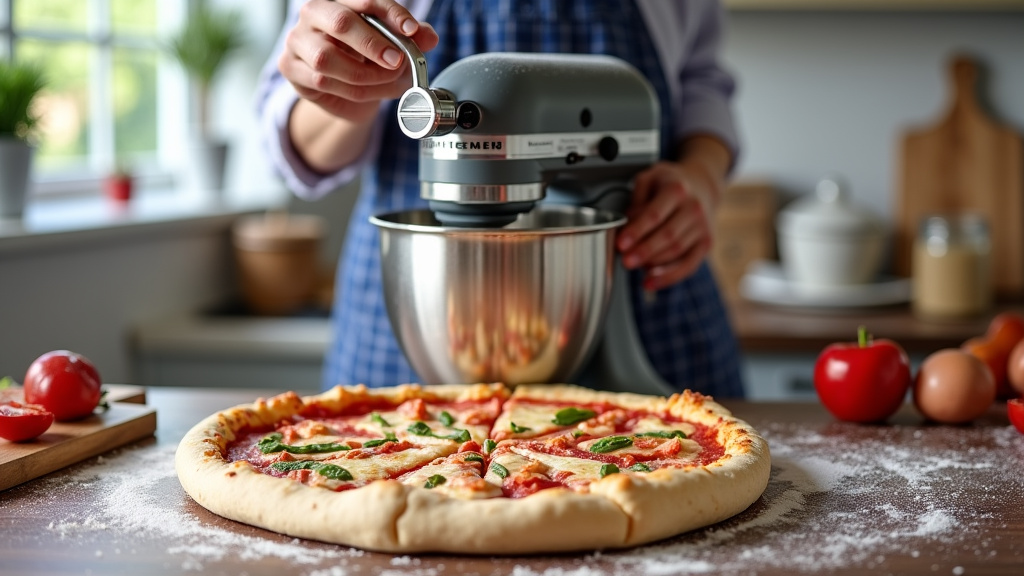
Choosing the right stand mixer makes a huge difference for homemade pizza. You’ve seen that models like the KitchenAid Artisan or Professional series offer the power you need. Investing in a mixer with a strong motor and durable construction ensures consistent, well-kneaded dough every time. This means less frustration and more delicious pizza for you.
You can now confidently select a mixer that will handle even the stickiest dough with ease. Go ahead and put this knowledge to use. Your next batch of perfect pizza dough is waiting!
Frequently Asked Questions
Can I make pizza dough by hand if I don’t have a stand mixer?
Yes, absolutely! Many people prefer kneading pizza dough by hand. It takes more effort and time, usually around 10-15 minutes of vigorous kneading. You’ll still achieve excellent gluten development for a great crust.
How do I know if my pizza dough is kneaded enough?
A good test is the “windowpane test.” Take a small piece of dough and gently stretch it. If you can stretch it thin enough to see light through it without it tearing, your gluten is well-developed. The dough should also feel smooth and elastic.
Is it better to use cold or warm water for pizza dough?
Most recipes recommend lukewarm water (around 95-105°F or 35-40°C). This temperature helps activate the yeast without killing it. Cold water will slow down the proofing process, while hot water can kill the yeast entirely.
What’s the ideal speed setting for kneading pizza dough in a stand mixer?
For most stand mixers, you’ll want to start on a low speed (like 1 or 2) to incorporate ingredients. Once the dough comes together, increase the speed to a medium-low setting (like 2 or 3) for the kneading process. Avoid high speeds, which can overheat the dough and the mixer.
Can I use a food processor to make pizza dough instead of a stand mixer?
You can use a food processor for pizza dough, but it kneads much faster and can easily overwork the dough. Pulse for short bursts, typically for 60-90 seconds total, to prevent over-kneading. The texture might be slightly different than mixer-kneaded dough.