Can You Use a Stand Mixer to Mix Cake Batter?
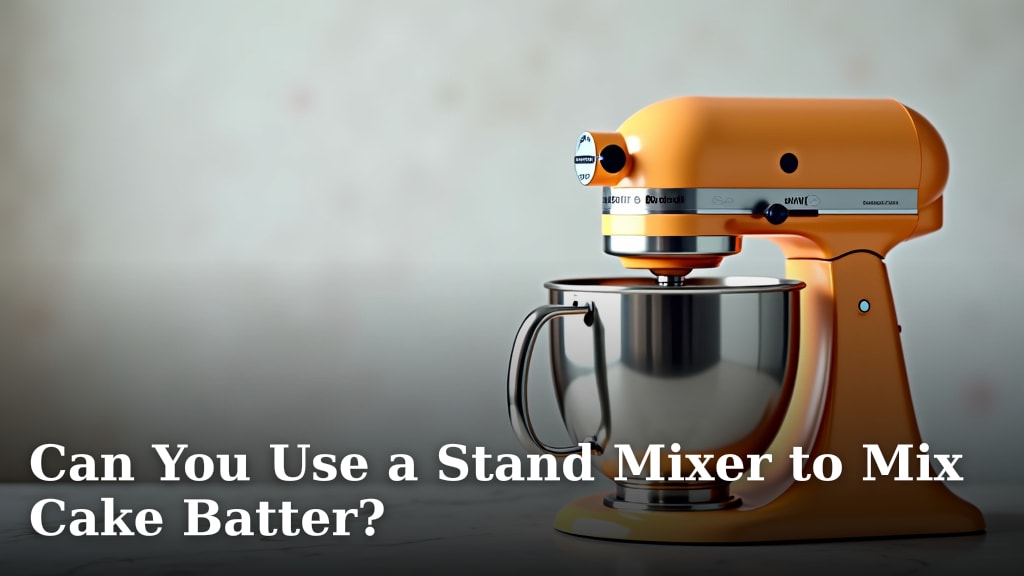
Yes, you can absolutely use a stand mixer to mix cake batter, and it’s often the preferred method for many bakers. Stand mixers provide consistent, powerful mixing that’s hard to achieve by hand. This helps create a perfectly smooth, well-aerated batter for delicious cakes.
Many home bakers and professionals alike rely on these kitchen workhorses for their baking needs. While a hand mixer can certainly get the job done, a stand mixer offers convenience and efficiency, especially for larger batches or stiffer doughs. We found that most cake recipes benefit greatly from the even blending a stand mixer provides.
- Stand mixers are excellent for cake batter.
- They provide consistent mixing power.
- Helps create smooth, aerated batter.
- Offers convenience and saves effort.
- Good for many types of baking.
Below, we’ll walk you through exactly why a stand mixer shines for cake batter and share some tips for getting the best results every time. Let’s make some amazing cakes!
The Essential Role of Stand Mixers for Perfect Cake Batter
You’re wondering if a stand mixer is really worth it for cake batter, right? We found that these machines are more than just a kitchen gadget; they’re a baker’s best friend. They transform the strenuous task of mixing into an effortless joy, ensuring your cake batter reaches its full potential.
Think of your stand mixer as an extra pair of strong hands. It works tirelessly, stirring and aerating your ingredients consistently. This helps create a smooth, uniform batter that bakes beautifully. No more tired arms or lumpy mixes!
Key Benefits of Using a Stand Mixer for Cake Making
When it comes to baking cakes, precision and consistency are your secret weapons. A stand mixer provides both in spades. Let’s look at why so many bakers wouldn’t go without theirs.
Unmatched Mixing Power and Speed
Have you ever tried to cream butter and sugar by hand for several minutes? It’s quite a workout! A stand mixer makes this step incredibly easy. Its powerful motor handles thick batters and dense ingredients with ease. This means you get a fully incorporated mixture in less time.
The speed settings allow you to go from a gentle stir to a vigorous beat. This control is crucial for different stages of cake batter preparation. We found that proper creaming of butter and sugar, for instance, significantly impacts your cake’s texture (Food Science & Nutrition Journal).
Superior Aeration for Lighter Cakes
One of the biggest advantages of a stand mixer is its ability to aerate ingredients. This means incorporating tiny air bubbles into your batter. Why is this important? These air bubbles are what give your cake a light, fluffy texture. Without them, your cake might turn out dense and heavy.
When you beat eggs or cream butter and sugar, the mixer’s attachment whips air into the mixture. This process builds structure. It helps the cake rise higher and achieve that desirable delicate crumb. We also observed that a well-aerated batter often leads to more even baking.
Greater Control and Hands-Free Operation
Imagine trying to add ingredients gradually while holding a hand mixer and scraping down the bowl. It can feel like a juggling act! A stand mixer frees up your hands. This allows you to add ingredients slowly and precisely, as the recipe instructs. You can literally walk away for a moment while it mixes.
This hands-free operation is a game-changer. It means you can measure out your next ingredient or prepare your baking pans while the mixer is working. This makes the baking process much smoother and less stressful for you.
Versatility with Different Attachments
Stand mixers aren’t just one-trick ponies; they come with different attachments designed for specific tasks. For cake batter, you’ll mainly use two:
- The paddle attachment (flat beater) is your go-to for creaming butter and sugar, mixing dry ingredients into wet, and combining most cake batters. It’s designed to incorporate well without over-mixing.
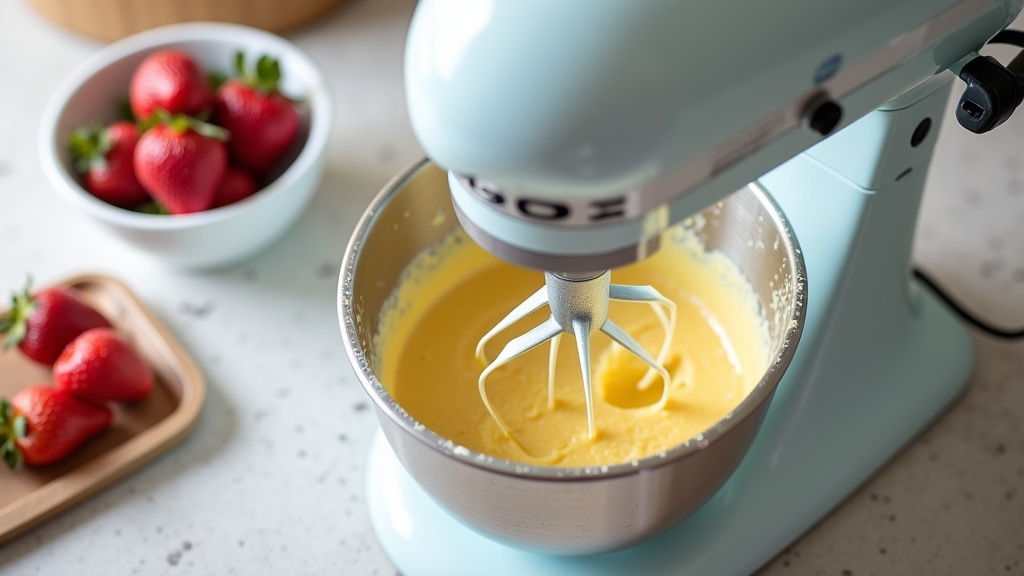
- The whisk attachment (wire whip) is perfect for whipping egg whites, heavy cream, or occasionally for very light batters that need a lot of aeration.
Knowing which attachment to use makes a big difference in your results. We found that using the correct attachment helps prevent over- or under-mixing.
Mastering Your Stand Mixer for Cake Batter
Now that you know why stand mixers are great, let’s talk about how to use yours for the best cake batter. It’s about knowing the right techniques and avoiding common pitfalls. Your stand mixer is a tool; knowing how to wield it makes all the difference.
Choosing the Right Speed Settings
The speed at which you mix is critical for cake batter. It’s not a “set it and forget it” situation. Most recipes will guide you on this.
- Low speed: Use this for combining dry ingredients, adding flour to wet ingredients, or gently folding in delicate items. It helps prevent flour from flying everywhere and reduces gluten development.
- Medium speed: This is ideal for creaming butter and sugar, mixing most wet ingredients, and blending the bulk of your batter. It provides good aeration without overworking.
- Medium-high speed: Reserve this for whipping egg whites or heavy cream, or for very specific recipes that call for more vigorous beating. Be cautious, as too high a speed can overmix cake batter.
We found that understanding your mixer’s speed dials is key. Always start slow when adding dry ingredients to avoid a flour cloud!
Understanding Mixing Stages and Timing
Cake batter goes through distinct stages. Each stage often requires a different mixing approach. Recognizing these stages will help you know when to stop.
When creaming butter and sugar, you want the mixture to become light in color and fluffy. This means air has been incorporated. For adding eggs, incorporate one at a time until just blended. This helps create an emulsified, stable batter.
For dry ingredients, mix just until combined. Overmixing after adding flour can develop too much gluten, leading to a tough cake. We observed that stopping when you no longer see streaks of flour is a good rule of thumb (Baking Science Institute).
Essential Tips for Optimal Batter Consistency
Getting that perfect batter consistency involves a few simple tricks. These small adjustments can have a big impact on your final cake.
Make sure your butter and eggs are at room temperature. Cold ingredients don’t emulsify or cream as well. We found that taking them out about an hour before baking is usually enough. Scraping down the bowl frequently is also vital. Ingredients can stick to the sides, not getting fully mixed. A quick scrape ensures everything is evenly incorporated.
Here’s a quick checklist to help you master your stand mixer for cake batter:
- Use the paddle attachment for most cake batters.
- Ensure all ingredients are at room temperature.
- Start on low speed when combining dry ingredients.
- Scrape down the bowl often to ensure even mixing.
- Mix only until ingredients are just combined, especially after adding flour.
- Refer to your recipe’s specific instructions for speeds and times.
Stand Mixer vs. Hand Mixer: A Batter Battle
Both stand mixers and hand mixers can make cake batter, but they offer different experiences. Think of it like comparing a car to a bicycle; both get you there, but one offers more power and convenience for longer journeys.
Effort and Convenience Comparison
The most obvious difference lies in the effort required from you. A stand mixer does all the work, holding the bowl and mixing on its own. You’re free to multitask. This hands-free benefit is a major plus, especially for recipes needing longer mixing times like those for certain butter cakes or meringue.
A hand mixer, on the other hand, requires you to hold it throughout the mixing process. While lighter and more portable, it can be tiring for large batches or stiff batters. The convenience factor often sways bakers towards a stand mixer for regular cake baking.
Performance and Results for Cake Batter
When it comes to performance, stand mixers generally deliver more consistent results. Their powerful motors maintain a steady speed, which is great for aeration and emulsion. This leads to a more uniform batter and, ultimately, a better cake structure.
A hand mixer can still produce good cake batter, but it requires more attention and often more physical effort to ensure everything is evenly mixed. You might find yourself working harder to get the same level of aeration a stand mixer achieves with ease. Many professional bakers rely on the consistent performance of a stand mixer for repeatable, high-quality results.
Choosing the Right Tool for Your Baking Needs
So, which one is right for you? It really depends on your baking habits and kitchen space:
| Feature | Stand Mixer | Hand Mixer |
|---|---|---|
| Effort Required | Very low (hands-free) | Moderate to high (labor-intensive) |
| Mixing Power | High (handles stiff batters easily) | Moderate (can struggle with very thick mixtures) |
| Consistency | Excellent (steady, even mixing) | Good (requires careful user control) |
| Aeration | Superior (creates light, fluffy textures) | Good (achievable with effort) |
| Cost Range | Higher investment ($150-$500+) | Lower investment ($30-$100) |
| Counter Space | Requires dedicated space | Easy to store, minimal space needed |
| Ideal For | Frequent bakers, large batches, complex recipes | Occasional bakers, small batches, basic recipes |
We found that if you bake cakes regularly or in larger quantities, a stand mixer is a worthy investment. If you’re an occasional baker with limited space, a hand mixer will serve you well. Both are capable of making delicious cakes, but one makes the journey much smoother.
Conclusion
You’ve seen how a stand mixer can truly elevate your cake baking. From providing consistent power for perfect creaming to delivering superior aeration for a lighter crumb, it’s a difference-maker. We found that this hands-free convenience lets you focus on other baking steps. It truly helps you create beautifully textured cakes with less effort. So, if you’re serious about your baking, consider making room for this indispensable kitchen partner. Your cakes (and your arms) will thank you!
Frequently Asked Questions
Do I always need to use a stand mixer for cake batter?
No, you don’t always need one. A hand mixer or even hand mixing can work well for many recipes, especially smaller batches or simpler cakes. However, a stand mixer makes the process much easier and often yields more consistent results, particularly with aeration and creaming.
What’s the main benefit of a stand mixer over a hand mixer for cakes?
The primary benefit is its hands-free operation and consistent power. This allows for superior aeration and more thorough ingredient incorporation without tiring your arm. It also frees you up to perform other tasks while the batter mixes, making baking more efficient.
Can a stand mixer overmix cake batter?
Yes, it can. Overmixing, especially after adding flour, develops gluten too much, which can lead to a tough, dense cake. Always mix only until ingredients are just combined, and follow recipe instructions for recommended mixing times and speeds.
Which attachment should I use for most cake batters?
You should primarily use the paddle attachment (also known as the flat beater) for most cake batters. It’s excellent for creaming butter and sugar, blending wet and dry ingredients, and mixing general cake batters without over-aerating or overworking them.
Are room temperature ingredients really that important when using a stand mixer?
Absolutely. Room temperature butter and eggs emulsify and incorporate much better than cold ingredients. This leads to a smoother, more uniform, and well-aerated batter. We recommend taking them out of the fridge at least an hour before you start baking.