Can You Overmix Bread Dough in a Stand Mixer?
On this page (8 sections)
Yes, you absolutely can overmix bread dough in a stand mixer, and it’s a common baking mistake. Mixing too long can develop the gluten too much, leading to a tough and rubbery texture in your final loaf. It’s all about finding that perfect balance for a tender crumb.
You might think more mixing equals better dough, but that’s not always true for bread. We found that stand mixers are very efficient, so they need less time than hand kneading. Keeping an eye on your dough’s texture is key to success.
- Overmixing makes bread tough.
- Stand mixers work fast.
- Watch for a tight, springy dough.
- Under-mixing is better than over-mixing.
- Stop mixing when dough is smooth.
Let’s explore what happens when you overmix, how to spot the signs, and what you can do to get perfectly kneaded dough every time.
The Risks of Over-Kneading Dough in Your Stand Mixer
You might be wondering what actually happens inside your dough when it gets over-kneaded. It’s a common question, and we’ve got the answers for you.
When you mix dough, you’re developing gluten. Gluten is a protein network that gives bread its structure and elasticity. Think of it like tiny springs. When properly developed, these springs trap the gases produced by yeast, making your bread rise and giving it that lovely airy texture.
A stand mixer is incredibly efficient at this process. Its powerful motor and consistent motion can develop gluten much faster than hand kneading. This efficiency is a double-edged sword: great for saving time, but also prone to overdoing it if you’re not careful.
What Happens at a Molecular Level?
Let’s get a little scientific, but keep it simple. As you mix, the gluten proteins stretch and align. This creates a strong, elastic network. When you overmix, you stretch these proteins beyond their breaking point. It’s like pulling a rubber band too far until it snaps.
Once those gluten strands break, they can’t reform easily. This damages the dough’s ability to hold gas. Instead of a strong, flexible structure, you get a weak, tight, and often sticky mess. Your bread won’t rise well, and it will be dense and tough.
Comparing Under-Mixing vs. Over-Mixing
Many bakers actually prefer to slightly under-mix their dough rather than over-mix it. Why? Because you can often fix under-mixed dough, but over-mixed dough is much harder to save.
- Under-mixed dough: Feels shaggy, tears easily, and doesn’t pass the windowpane test (more on that in a moment). You can usually knead it a bit more by hand or for a minute or two in the mixer.
- Over-mixed dough: Is often sticky, loses its elasticity, and feels lifeless. The gluten has been destroyed. It’s tough to bring back to life.
We found that a little less mixing is often safer for beginners. It gives you more room for error.
Telltale Signs Your Dough is Overmixed
So, how do you know if you’ve gone too far? Your dough will give you clues. Learning to read your dough is one of the most important skills in bread baking. It’s like learning the language of your ingredients.
The Visual Cues
First, look at your dough. Is it behaving as expected?
- Loss of Elasticity: Healthy, well-kneaded dough is elastic. It stretches and then springs back. Over-mixed dough will feel tight and resistant at first, almost like it’s fighting you. Then, as the gluten breaks, it will lose its bounce and become slack and lifeless.
- Shiny and Wet Appearance: Over-mixed dough can sometimes look overly wet and shiny, even if you haven’t added too much water. This is because the damaged gluten can’t properly absorb the moisture.
- Tearing and Shredding: Instead of stretching smoothly, the dough might tear or shred easily when you try to pull it. This is a clear sign that the gluten network has been compromised.
The Feel and Texture
Touch your dough. What does it feel like?
- Excessive Stickiness: While some doughs are naturally sticky, over-mixed dough becomes excessively sticky. It will cling to your hands and the bowl in an unpleasant way. It feels gluey rather than merely tacky.
- Warm to the Touch: The friction from prolonged mixing in a stand mixer generates heat. If your dough feels noticeably warm or hot, it’s a strong indicator that you’ve been mixing for too long. Excessive heat can also affect yeast activity.
- Lack of Structure: When you try to form it, over-mixed dough might not hold its shape. It will spread out rather than maintain a taut surface.
The Windowpane Test (and How It Changes)
The windowpane test is your best friend for checking gluten development. You gently stretch a small piece of dough between your fingers. If you can stretch it thin enough to see light through it without it tearing, your gluten is well developed. It’s like a thin membrane or a “windowpane.”
With over-mixed dough, the windowpane test will fail in a different way than under-mixed dough. Instead of tearing because it’s too shaggy, it will simply tear because the gluten strands have broken. You won’t be able to achieve that thin, translucent sheet.
Why Stand Mixers Make Overmixing Easy
Stand mixers are powerful kitchen tools, and that power comes with responsibility. They are designed for efficiency, which is great, but also why you need to be extra vigilant. To ensure you have the right equipment, explore our recommendations for the best stand mixer for bread baking.
Speed and Power
Unlike hand kneading, where you feel the dough change gradually, a stand mixer works quickly. Even at lower speeds, the consistent action of the dough hook develops gluten rapidly. What might take 15-20 minutes by hand could take only 5-8 minutes in a mixer.
We found that many recipes designed for hand kneading don’t always translate perfectly to stand mixer times. Always start with less time than you think you need when using a stand mixer.
Lack of Direct Feedback
When you hand knead, your hands are constantly feeling the dough, sensing its stickiness, elasticity, and warmth. This direct feedback helps you know when to stop. With a stand mixer, you’re observing from a distance. It’s easy to get distracted and let the mixer run a bit too long without noticing subtle changes.
Because of this, it’s important to stop the mixer periodically and touch your dough. Don’t rely solely on visual cues from outside the bowl.
Preventing Overmixing: Best Practices
The good news is that preventing overmixing is entirely achievable with a few simple adjustments to your routine. It’s all about mindfulness and paying attention to your dough.
Timing and Observation
Don’t just set a timer and walk away. Use the timer as a guide, but let your dough tell you when it’s ready.
- Start with Less Time: If a recipe calls for 10 minutes of kneading in a stand mixer, start with 5-7 minutes.
- Check Frequently: Stop the mixer every minute or two during the last half of the kneading time.
- Perform the Windowpane Test: This is your ultimate indicator. When you can just barely achieve that thin, translucent windowpane, stop mixing. It’s better to be slightly under-kneaded than over-kneaded.
Listen to Your Recipe (with a Grain of Salt)
Recipes are great starting points, but remember that your flour, your kitchen’s humidity, and even the specific mixer model can affect kneading times. Use recipe instructions as a suggestion, not an absolute rule. Understanding the right size stand mixer for your needs can also impact how well it handles dough and prevents overmixing.
Many experts say that experience helps you recognize the “feel” of perfectly kneaded dough (King Arthur Baking). It’s a skill you develop over time, like riding a bike.
The Right Speed for the Job
Most bread doughs are best kneaded on medium-low to medium speed (speed 2-4 on a KitchenAid, for example). High speeds might seem faster, but they can quickly overdevelop gluten and generate excessive heat, both of which are detrimental to your dough.
For tougher doughs, a slightly higher speed might be okay for a short burst, but generally, a slower, steadier approach works best.
Can You Fix Overmixed Dough?
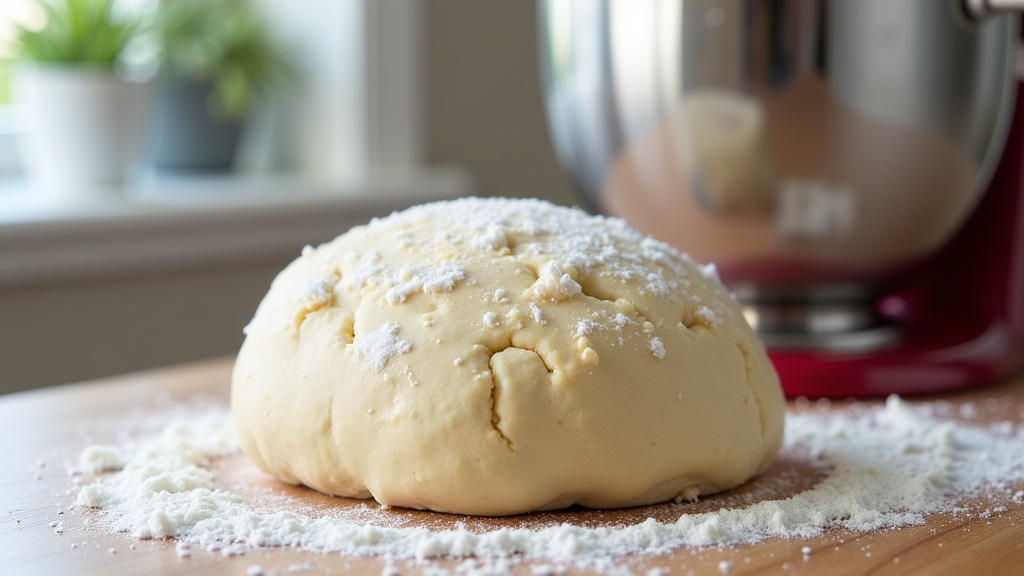
This is the tough question, and honestly, the answer is often “not really.” Once the gluten structure is completely broken, it’s very difficult to repair it.
However, if you’ve only slightly overmixed it, you might be able to mitigate some of the damage. For instance, if your dough feels warm, letting it rest in a cool place can help bring its temperature down. Some bakers suggest adding a tiny bit more flour and kneading very gently by hand to try and reincorporate. But this is not a guaranteed fix.
It’s often better to learn from the mistake and try again. Don’t be discouraged! Every baker has experienced overmixed dough at some point.
Your Dough-Kneading Checklist
Keep this quick checklist handy when you’re making your next batch of bread. It will help you avoid the pitfalls of overmixing and achieve fantastic results.
- Read your recipe, but be ready to adjust kneading time.
- Start with a lower mixing speed.
- Stop the mixer and check the dough’s feel often.
- Perform the windowpane test as your primary guide.
- Look for elasticity and a non-sticky, smooth surface.
- Turn off the mixer as soon as the dough passes the test.
Remember, practice makes perfect. The more you bake, the better you’ll get at understanding your dough’s needs.
Conclusion
You now know that overmixing bread dough in a stand mixer is a real concern. While stand mixers are efficient tools, they require your attention to prevent a tough, rubbery loaf. We found that paying close attention to your dough’s texture and feel is far more important than strictly following a recipe’s timing.
Trust your instincts, perform the windowpane test, and stop when your dough is smooth and elastic. By being mindful of these signs, you’ll consistently achieve beautifully tender, perfectly risen bread. So, go forth and bake with confidence, knowing you have the tools to avoid this common baking pitfall!
Frequently Asked Questions
How can I tell if my dough is kneaded enough without overmixing?
The best way is the windowpane test. Take a small piece of dough and gently stretch it. If you can stretch it thin enough to see light through it without it tearing, it’s ready.
What’s the ideal mixing speed for bread dough in a stand mixer?
Generally, you should use medium-low to medium speed (typically speeds 2-4 on most mixers). High speeds can overdevelop gluten and heat the dough too quickly, leading to problems.
Can I add more flour if my dough feels overmixed and too sticky?
If it’s only slightly overmixed and very sticky, you can try adding a tiny bit more flour and kneading by hand for a minute. However, if the gluten is completely broken, adding flour won’t fully fix the issue.
Does the type of flour affect how easily dough can be overmixed?
Yes, flour with higher protein content (like bread flour) has more gluten and can withstand more kneading before breaking down. All-purpose flour, with less protein, might overmix more easily.
Is it better to slightly under-knead or slightly over-knead dough?
It’s generally better to slightly under-knead. Under-mixed dough can often be corrected with a bit more hand kneading, but severely over-mixed dough is much harder to salvage.