Can You Use a Stand Mixer to Make Bread Dough without a Dough Hook?
On this page (7 sections)
- Mixing Bread Dough Without a Dough Hook: Your Stand Mixer to the Rescue
- Understanding the Role of the Dough Hook (and Why You Can Skip It!)
- The Essential Next Step: Hand Kneading Your Dough
- When Your Stand Mixer Without a Dough Hook Shines (and When It’s Tricky)
- Tips for Success Without the Dough Hook
- Conclusion
- Frequently Asked Questions
Yes, you absolutely can use a stand mixer to make bread dough without its dough hook, though it may take a bit more effort. You’ll primarily use the paddle attachment for the initial mixing and then switch to your hands for kneading. We found this method works well for many types of bread, especially softer doughs.
While the dough hook is designed for efficient kneading, the paddle attachment can effectively combine your ingredients. After using the paddle, you’ll need to properly knead the dough by hand to develop gluten. This process is key for achieving a good bread texture, and we’ve learned it’s perfectly achievable even without the specialized hook.
- You can make bread dough without a dough hook using a stand mixer.
- Use the paddle attachment for initial mixing, then knead by hand.
- Hand kneading is essential for developing gluten and achieving good texture.
- This method works for many bread recipes, especially softer ones.
Let’s walk through exactly how you can achieve delicious bread using your stand mixer, even without its dedicated dough hook.
Mixing Bread Dough Without a Dough Hook: Your Stand Mixer to the Rescue
So, you’re ready to bake some delicious bread, but you’ve misplaced your stand mixer’s dough hook? Don’t panic! You can absolutely still make fantastic bread dough using your stand mixer. It just requires a slightly different approach. We found that by using the paddle attachment for the initial mixing and then switching to your hands for kneading, you can achieve excellent results. This method is especially forgiving for softer doughs, making it a great option for many home bakers.
Understanding the Role of the Dough Hook (and Why You Can Skip It!)
The dough hook is designed to mimic the kneading motion of your hands. It effectively stretches and folds the dough, developing gluten strands. Gluten is what gives bread its structure and chewy texture. When you knead, you’re essentially building this network. While the dough hook does this efficiently, it’s not the only way. Your hands are incredibly capable tools! Many recipes have been perfected over generations using only manual kneading.
Why the Paddle Attachment Can Be Your Stand-In
The paddle attachment is typically used for creaming butter and sugar or mixing cake batters. However, it can also work wonders for bringing your bread ingredients together. Its broad surface area is great at combining flour, water, yeast, and other components. Think of it as the preliminary mixer, getting everything acquainted before the real work begins. We found it successfully coats the flour with liquid and begins the initial hydration process, which is key to gluten development later.
What to Expect When Using the Paddle
When you first start mixing with the paddle, it might seem a bit messy. Ingredients might fly out of the bowl if you start on too high a speed. We recommend starting on the lowest setting. You’ll see the ingredients gradually come together. It won’t form a smooth, elastic ball like it would with a dough hook. Instead, you’ll get a shaggy mass. This is perfectly normal! The goal here is simply to combine everything evenly. Don’t expect it to look like fully kneaded dough at this stage. It’s just the first step.
The Essential Next Step: Hand Kneading Your Dough
Once your ingredients are mostly incorporated by the paddle attachment, it’s time to get your hands in there. This is where the magic of gluten development truly happens. Hand kneading is a time-honored tradition for a reason. It allows you to feel the dough’s texture and respond to its needs. Many bakers find this tactile connection very satisfying. Research shows that proper kneading is vital for achieving the desired crumb structure in bread (King Arthur Baking Company).
Why Hand Kneading is Non-Negotiable
The paddle attachment, while useful for mixing, cannot develop gluten on its own. It doesn’t have the same stretching and folding action. This is why hand kneading is absolutely essential when you don’t have a dough hook. Without it, your bread will likely be dense and crumbly. You need to physically work the dough to align and strengthen those gluten proteins. This process traps the gases produced by the yeast, allowing your bread to rise beautifully.
Preparing Your Workspace for Kneading
Before you begin, make sure you have a clean, flat surface. Lightly flour your countertop. You don’t want the dough to stick excessively, but you also don’t want to add too much extra flour, which can make your bread tough. A little bit of flour on your hands and the surface is usually enough. We found that a light dusting is best. You can also use a tiny bit of oil on your hands if sticking is a major concern.
The Kneading Technique: Step-by-Step
Here’s how to knead effectively:
- Turn the shaggy dough out onto your lightly floured surface.
- Gently fold the dough towards you.
- Then, push down and away with the heels of your hands.
- Rotate the dough a quarter turn.
- Repeat this fold, push, and rotate motion.
You’ll do this for about 8-10 minutes. At first, the dough will be sticky and unruly. As you continue kneading, it will transform. It will become smoother, more elastic, and less sticky. You’ll notice it springs back when gently poked. This is a sign that the gluten network is well-developed.
Troubleshooting Sticky Dough During Hand Kneading
If the dough feels unmanageably sticky, resist the urge to dump in lots of extra flour. Instead, lightly flour your hands and the dough surface. Continue kneading. The stickiness often subsides as gluten develops and the dough becomes more cohesive. Sometimes, a tiny bit of oil on your hands can help it glide more easily. If it’s extremely wet, add flour just a teaspoon at a time. We found that patience is key here.
When Your Stand Mixer Without a Dough Hook Shines (and When It’s Tricky)
This method works wonderfully for many bread recipes. Think of soft sandwich breads, enriched doughs (like brioche or challah), or even some pizza doughs. The initial mixing with the paddle gets things going well for these. However, very stiff doughs, like those for bagels or some artisan crusty breads, might be more challenging. These require extensive kneading, and while hand kneading is possible, a dough hook makes the process much simpler and less physically demanding.
Best Bread Types for the Paddle-and-Hands Method
We found this technique particularly successful for:
- Soft white bread: These doughs are typically higher in hydration and benefit from good kneading.
- Enriched doughs: Brioche, challah, and cinnamon rolls often have butter and eggs. The paddle mixes these in well, and hand kneading develops the structure needed for their soft texture.
- Pizza dough: A quick mix with the paddle followed by a few minutes of hand kneading yields a great base.
- Quick breads (yeast-based): For recipes that don’t require extensive kneading, this is a perfect shortcut.
When to Be Extra Cautious
If your recipe calls for a very firm, low-hydration dough, you might find hand kneading quite strenuous. Doughs for bagels or pretzels often fall into this category. They need significant kneading to achieve their characteristic chewiness. While it’s certainly doable, be prepared for a workout! You might find yourself wishing for that dough hook. Many experts suggest that dough hooks are particularly helpful for those with any hand or wrist conditions that make prolonged kneading difficult (Cleveland Clinic).
Tips for Success Without the Dough Hook
Here are a few extra pointers to help you on your bread-making journey:
- Use the right bowl size: Ensure your stand mixer bowl is large enough to accommodate the dough as it forms.
- Don’t over-flour: Resist adding too much flour during hand kneading.
- Trust your senses: Learn to feel when the dough is properly kneaded. It should be smooth, elastic, and spring back when poked.
- Clean as you go: Wipe down the sides of the bowl with a spatula while the paddle is mixing. This ensures all ingredients get incorporated.
- Embrace the process: Baking is a journey. Enjoy the hands-on aspect of hand kneading!
Your Bread-Making Checklist
Before you get started, consider this quick checklist:
- Have your ingredients measured out accurately.
- Ensure your stand mixer is clean and ready.
- Lightly flour your work surface.
- Have a damp cloth ready to cover the dough.
- Be prepared to knead by hand for about 8-10 minutes.
- Don’t forget to preheat your oven!
You’ve got this! With a little adaptation and some good old-fashioned hand kneading, your stand mixer can help you bake delicious bread, even without its dedicated dough hook.
Conclusion
You’ve learned that making bread dough without a dough hook is totally achievable with your stand mixer! By using the paddle attachment for initial mixing and then switching to your hands for kneading, you can successfully develop gluten and create a delicious loaf. Remember, hand kneading is your secret weapon here, transforming a shaggy mixture into beautifully elastic dough. This method works especially well for softer breads, giving you a fantastic result even without the specialized hook. So, don’t let a missing dough hook stop you – grab your paddle and get baking!
Frequently Asked Questions
How long should I hand knead the dough?
You should aim to hand knead your dough for about 8 to 10 minutes. During this time, you’ll feel the dough transform from sticky to smooth and elastic. Keep kneading until it springs back when gently poked.
What if my dough is too sticky to hand knead?
If your dough feels unmanageably sticky, resist adding too much extra flour. Instead, lightly flour your hands and the surface. Continue kneading; the stickiness often decreases as the gluten develops. A tiny bit of oil on your hands can also help.
Can I use my stand mixer’s whisk attachment instead of the paddle?
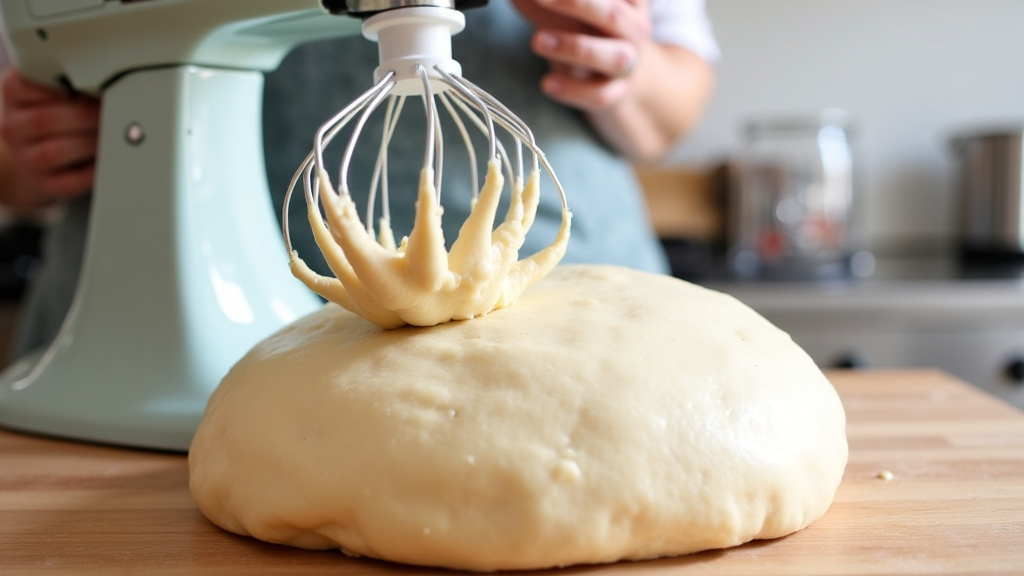
No, we do not recommend using the whisk attachment. The whisk is designed for aeration and is too delicate for bread dough. It won’t effectively combine ingredients or begin the gluten development process needed for bread.
Will using the paddle attachment affect the final bread texture?
The paddle attachment is just for initial mixing. The hand kneading afterwards is what truly develops the gluten structure. As long as you knead properly by hand, the final bread texture should be excellent, comparable to using a dough hook.
What kinds of bread are hardest to make without a dough hook?
Very stiff doughs, like those for bagels or some dense artisan breads, can be challenging to knead sufficiently by hand. These recipes require extensive kneading, and while possible, a dough hook makes the process much less physically demanding.