Are Silicone Baking Mats Safe?
Silicone baking mats are generally safe when they are food-safe, used within their temperature limit, and replaced when damaged. Check the material, follow the heat guidance, and use a baking tray for support.
On this page (8 sections)
- Are silicone baking mats safe for food contact?
- How hot can a silicone baking mat get?
- Does silicone quality affect baking mat safety?
- When should you stop using a silicone baking mat?
- Is parchment paper a safer alternative?
- Can a large silicone pastry mat be safe for countertop work?
- How do you use silicone baking mats safely?
- So, are silicone baking mats safe?
Silicone baking mats are generally safe to use when they are made for food contact, kept below their temperature limit, and replaced after damage. They should sit on a baking tray for support, not directly on an oven rack.
Safety depends on the mat's material quality and condition. Read the heat guidance for the exact mat, keep it away from direct flames and heating elements, and clean it fully after each use.
Are silicone baking mats safe for food contact?
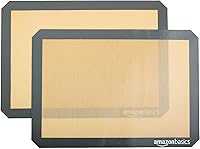
Food-safe silicone baking mats are designed for contact with dough, batter, and food. The Amazon Basics mat is described as food safe, and its material is silicone and bisphenol A free.
Silicone is flexible and non-stick, so food can release without oil, cooking spray, or parchment paper. That convenience does not remove the need to inspect the surface before use.
Look for clear food-contact wording and a stated temperature range. If a mat has no useful material or heat guidance, choose a different option or contact the brand before using it with food.
The US Food and Drug Administration explains how food-contact substances are evaluated in its food contact substances guidance.
How hot can a silicone baking mat get?
Use a silicone mat only within its stated heat limit. The Amazon Basics mat is heat resistant up to 480°F, while the Folksy Super Kitchen mat is listed for temperatures from -30°F to 470°F.
Those limits are not interchangeable. Check the temperature setting for the recipe, account for the oven's accuracy, and leave a margin instead of using a mat at its maximum for every bake.
Place the mat on a baking tray for support. Do not put a silicone baking mat directly on an oven rack, because the mat can sag, shift, or sit too close to a heating element.
Avoid broilers, open flames, stovetops, and direct contact with heating elements unless the mat's instructions specifically allow that use. A baking mat is an oven liner or work surface, not a general heat shield.
Is the Amazon Basics mat a safe everyday choice?
The Amazon Basics Silicone Rectangular Baking Mat is a practical fit for readers who want 2 reusable, non-stick mats for baking, roasting, and food prep. Each mat measures 16.5 x 11.6 inches and is heat resistant up to 480°F.
Its dishwasher-safe design can simplify cleanup, and the flexible silicone surface can be reused instead of replaced after each bake. The rectangular shape suits standard rectangular trays, but measure your tray before ordering.
Use the mat flat and keep it away from direct oven-rack contact. If you want to compare other options before choosing, start with our guide to best silicone baking mats.
Does silicone quality affect baking mat safety?
Material quality matters because food contact and heat use depend on the mat being made for the job. A mat should lie flat, have a consistent surface, and show no cuts, peeling, or cracking.
Thickness can also affect daily use. A very thin mat may be easier to fold and store, while a thicker work mat may stay steadier during dough preparation.
Neither thickness alone proves that a mat is safe, so use the product's food-contact and temperature information as the main checks.
A silicone mat can still pick up odors or greasy residue if it is not cleaned well. Wash it using the care instructions, rinse away soap, and dry it before rolling or storing.
For a full care routine, see the best way to clean silicone baking mats. If you are checking whether your mat can go into the dishwasher, read are silicone baking mats dishwasher safe.
When should you stop using a silicone baking mat?
Stop using a mat when the surface is cut, cracked, peeling, or badly damaged. Damage can trap food and make the mat harder to clean, especially around edges and deep marks.
Replace a mat that no longer lies flat if it shifts during baking or leaves part of the tray uncovered. A curled edge can catch batter, make dough uneven, or bring the mat closer to a heating element.
Discoloration alone does not always show that a mat is unsafe, but sudden changes, sticky patches, strong lingering odors, or surface breakdown deserve caution. When you cannot tell whether the surface is intact, replacing the mat is the simpler choice.
Do not cut a silicone mat to fit a tray. Altering it can create exposed edges and may remove the smooth surface that makes cleaning easier.
Is parchment paper a safer alternative?
Parchment paper can be a useful alternative when you want a disposable liner or need a different size. It does not require washing, but it has its own heat limit and should not touch an open flame or heating element.
The SMARTAKE 200 Pcs Parchment Paper Baking Sheets are 12 x 16 inches, non-stick, unbleached, and made from food-grade wood pulp. They are rated to resist temperatures up to 450°F, so do not exceed that limit.
The sheets are rectangular and designed for a 12 x 16 inch baking sheet. They can suit cookies, bread, grilling, frying, steaming, and wrapping, but use them only within the stated temperature guidance.
Choose parchment when you need a clean liner for one batch or want to avoid washing a mat. Choose silicone when repeated use and a reusable surface matter more.
Can a large silicone pastry mat be safe for countertop work?
A large silicone pastry mat can be safe for countertop dough work when it is food grade, kept within its temperature range, and cleaned after use. Countertop use does not mean the mat can be used under every hot pan or near direct heat.
The Folksy Super Kitchen Non-slip Silicone Pastry Mat Extra measures 36 x 24 inches and has a 0.7 mm thickness. Its non-slip back is intended to help it stay in place while rolling dough, and its stated temperature range is -30°F to 470°F.
Its extra-large size can help when a small counter mat leaves too little room for flouring and shaping. Measure your counter first, and make sure the mat can be washed and dried without folding food residue into the surface.
The mat is also described for pastry, pizza, pie crust, sourdough, fondant, and countertop use. Those uses do not make it a replacement for a supported baking tray in the oven.
For round pans and circular dough work, compare the options in best round silicone baking mat. If your main problem is moving a heavy mixer, a silicone pastry mat is not the same as a Best Stand Mixer Slide Mat For Kitchenaid Stand Mixer or a Best Stand Mixer Slide Mat For Heavy Stand Mixers.
How do you use silicone baking mats safely?
Use the mat flat on a suitable baking tray, stay below its heat limit, and let it cool before washing. These steps reduce shifting, heat stress, and sudden temperature changes.
Follow this routine:
- Check the mat for cuts, cracks, peeling, or sticky areas.
- Place it flat on a baking tray that supports the full mat.
- Keep the mat away from open flames, stovetops, and heating elements.
- Set the oven below the mat's stated maximum temperature.
- Let the mat cool before cleaning it.
- Wash, rinse, dry, and store it without trapped crumbs or grease.
Do not use a silicone mat as a cutting board. Knives can damage the surface and leave grooves that are difficult to clean.
Do not place a hot pan on a countertop mat unless that mat is specifically intended for that temperature and use. An oven-safe baking mat and a countertop pastry mat can overlap in purpose, but they are not automatically interchangeable.
So, are silicone baking mats safe?
Silicone baking mats are safe for normal baking when they are food-safe, used below their stated heat limit, supported by a tray, and replaced when damaged. The safest choice is the one with clear material and temperature guidance that matches your recipes.
Choose the Amazon Basics mat for 2 reusable rectangular mats rated up to 480°F. Choose SMARTAKE parchment when you want 200 disposable 12 x 16 inch sheets rated up to 450°F.
Choose the Folksy Super Kitchen mat when you need a 36 x 24 inch non-slip surface for dough work.
Keep the decision simple: check the material, check the temperature, inspect the surface, and clean it well. That is the practical answer to whether silicone baking mats are safe to use.
Frequently asked questions
Are silicone baking mats safe to use in the oven?
Silicone baking mats are generally safe in the oven when they are food-safe and used within the temperature limit stated for that mat. Keep the mat on a baking tray for support, never place it directly on an oven rack, and avoid temperatures above its rated limit.
How hot can silicone baking mats get?
The safe temperature depends on the specific mat. For example, the Amazon Basics mat is heat resistant up to 480°F, while the Folksy Super Kitchen mat is listed for temperatures from -30°F to 470°F.
Follow your mat's own instructions rather than using a general limit.
When should you replace a silicone baking mat?
Replace a silicone baking mat when it has cuts, cracks, peeling, severe discoloration, or damage that changes its surface. A damaged mat may be harder to clean and less suitable for food contact.
Do not keep using one that no longer lies flat or has a broken surface.
Are silicone baking mats safer than parchment paper?
Neither is automatically safer in every kitchen. A food-safe silicone mat is reusable and can reduce the need for disposable paper, while parchment paper is a single-use option with its own heat limit.
Choose based on the recipe, temperature, cleanup needs, and the condition of the material.