Benefits of Silicone Baking Mats?
Silicone baking mat benefits include reusable non-stick release, less oil, and easy cleanup. They spread heat evenly, fit standard pans, and last for many bakes, but they still need a pan for support and regular washing.
On this page (10 sections)
- What are the benefits of silicone baking mats for everyday baking?
- How do silicone baking mats compare with parchment paper?
- Do silicone baking mats cook food more evenly?
- Which sizes work best for standard sheet pans?
- Can a silicone baking mat be used for roasting and food prep?
- How do you clean and store a silicone baking mat?
- What are the limits of silicone baking mats?
- Is a large pastry mat useful beyond the oven?
- Who should choose a silicone mat, and who should skip it?
- How do you pick the right silicone baking mat?
Silicone baking mat benefits include reusable non-stick release, less oil, and easy cleanup. They spread heat evenly, fit standard pans, and last for many bakes, but they still need a pan for support and regular washing.
These benefits matter most for cookies, roasted vegetables, and frozen foods that tend to stick. A good mat can cut prep time because you skip greasing and tearing parchment, then wash and reuse the same sheet again.
What are the benefits of silicone baking mats for everyday baking?
The biggest benefit is food release without repeated greasing. Cookies slide off with less scraping, and roasted vegetables lift without torn bits left behind.
A mat also gives you a flat, stable surface on a sheet pan. That helps dough spread evenly and keeps small items from sliding into the edges of the pan during baking.
For busy kitchens, reuse is the practical win. One mat can handle many batches, so you buy fewer disposable sheets and create less kitchen waste over time.
How do silicone baking mats help with non-stick results?
Silicone creates a smooth, flexible surface that lets baked edges release as food cools. Cookies may still need a few minutes on the pan, but they usually separate more cleanly than food baked directly on metal.
Roasted foods benefit too. Potatoes, carrots, and chicken pieces can brown without the same hard bond that forms on bare steel, especially when you add a light coating of oil.
The surface also makes cleanup faster. Most baked-on residue wipes off after soaking, while parchment allows you to throw the sheet away.
Your choice depends on whether you value speed or reuse.
How do silicone baking mats compare with parchment paper?
Silicone mats win on reuse and value over many bakes. Parchment wins on zero washing and flexible shapes.
Keeping both covers most recipes.
Parchment can line loaf pans, muffin cups, and deep dishes where a flat mat cannot fit. It also makes lifting bread or cake easier because you can use the sheet as a sling.
Silicone is usually faster for standard sheet pan work. You unroll it, bake, cool the pan, wash the mat, and store it for the next batch without cutting a new sheet.
The SMARTAKE sheets measure 12 x 16 inches and supply 200 pieces, which suits households that bake often and want a ready cut sheet. They resist heat up to 450°F, so check your recipe temperature before choosing them.
Do silicone baking mats cook food more evenly?
Yes, a mat can help because silicone spreads heat more evenly than bare metal. Hot spots on a thin pan may cook the center faster than the edges.
That effect is most useful for cookies and thin batters. The mat cushions the pan surface and reduces the sharp difference between the pan bottom and the oven air.
It does not replace a good oven or a heavy pan. Uneven oven calibration can still brown one side more than the other, so rotate the pan midway when your recipe calls for it.
A mat also keeps edges from sticking to pan corners. That can preserve the shape of bars, roasted vegetables, and frozen appetizers while they finish browning.
Which sizes work best for standard sheet pans?
Most home bakers need a rectangular mat sized for a standard sheet pan. Measure the inside of your pan before you order, because a mat that curls at the edges will not release food cleanly.
If your mat is too large, see whether you can cut a silicone baking mat to size.
A 16.5 x 11.6 inch mat fits many standard pans and leaves room for cookies to spread. Two mats can cover two pans when you bake a full batch at once.
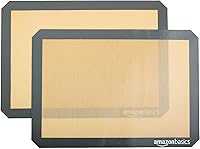
The Amazon Basics mat in this post is food-safe silicone, heat resistant to 480°F, and dishwasher safe. Each mat measures 16.5 x 11.6 inches, so it suits rectangular pans close to that size.
Larger pastry mats serve a different job. They cover counters for rolling dough, not ovens for baking, so confirm the intended use before you buy a jumbo size.
Can a silicone baking mat be used for roasting and food prep?
Yes, roasting is one of the best uses for a silicone mat. Vegetables, fish, and chicken release well and the pan stays cleaner.
Use the mat on a baking tray for support. Do not place it directly on an oven rack, because the flexible material can sag under food weight and may be unsafe without support.
Frozen foods work well too. Place items on the mat, freeze the tray flat, then transfer the food to a bag.
The mat helps keep pieces from bonding to the pan.
For food prep outside the oven, choose a mat made for counters or rolling. Oven mats and pastry mats can differ in thickness and grip, so keep each tool on the job it was made for.
How do you clean and store a silicone baking mat?
Wash the mat after it cools, with warm water and mild soap. Most stuck food loosens after a short soak, and scrubbing is rarely needed.
Some mats are dishwasher safe, but hand washing can extend life. If you use a dishwasher, keep the mat flat on the top rack and away from direct heat where possible.
If you want step-by-step care, our guide to the best way to clean silicone baking mats covers soaking, scrubbing, and drying. Check whether are silicone baking mats dishwasher safe for your exact mat before you put it in the machine.
Store the mat flat or rolled loosely in a drawer. Avoid sharp folds that can crease the surface, and keep it away from knives and metal utensils that can cut the silicone.
What are the limits of silicone baking mats?
Silicone mats have real limits on heat, support, and shape. They are not a full replacement for every pan liner.
Heat limits vary by brand. The Amazon Basics mat here is rated to 480°F, while the Folksy pastry mat is rated from -30°F to 470°F.
Always follow your mat's stated limit.
A mat is also flexible, so it needs a pan under it. That rules out direct rack use and makes it a poor choice for recipes that need a shaped liner or a sling.
Odors and stains can linger after strong foods such as fish or tomato sauce. Thorough washing helps, but some silicone still holds scent over time.
For round pans, a rectangular mat may leave gaps or curl. Our best round silicone baking mat guide helps if your pans are round.
If you compare overall bakeware, our bakeware sets guide can help you choose pans and liners together.
Is a large pastry mat useful beyond the oven?
A large pastry mat helps when you roll dough on the counter every week. The size gives you room for pie crusts, bread dough, and fondant without flour covering the whole counter.
The Folksy mat in this post measures 36 x 24 inches and is 0.7 mm thick. That thickness helps it stay flatter than thinner mats and reduces wrinkling during rolling.
Folksy Super Kitchen describes the back as non-slip, which helps the mat stay in place while you roll. It can also serve as a table mat or countertop mat, with temperatures from -30°F to 470°F.
This is not the same as a sheet pan mat. Use the large pastry mat for rolling and prep, and use a pan-sized mat for oven baking.
If you use a stand mixer, a Best Stand Mixer Slide Mat For Kitchenaid Stand Mixer can also protect counters and help you move a heavy mixer.
Who should choose a silicone mat, and who should skip it?
Choose a silicone mat if you bake sheet pan recipes several times a month. Cookies, roasted vegetables, and frozen snacks will use it often enough to justify the cost.
For larger batches, compare large silicone baking mats.
Choose parchment if you hate washing up or need liners for loaf pans and deep dishes. Disposable sheets also help when you bake sticky or messy foods and want fast cleanup.
Skip a mat if your pans are mostly round, your oven often runs above the mat's limit, or you rarely use sheet pans. In that case, one good set of pans plus parchment may fit your kitchen better.
For heavy stand mixers, counter protection matters as much as baking. Our Best Stand Mixer Slide Mat For Heavy Stand Mixers guide covers mats built for moving and shielding counters.
How do you pick the right silicone baking mat?
Pick size, heat limit, and intended use first. A mat that fits your pan and matches your oven temperature will do the job you need.
What should you check before you buy?
Check the pan size, the mat's heat limit, and whether it is dishwasher safe. Then confirm the shape matches your pans and the thickness suits rolling or baking.
We compared the best silicone baking mats to help you narrow the field by size and use. Measure your pan first, then match the mat to that number rather than to a product photo.
For silicone baking mat benefits, the simple rule is this. Pick a pan-sized reusable mat if you bake sheet pan recipes often, pick parchment if you want disposable ease, and pick a large pastry mat if you roll dough on the counter.
Match the mat to the task, and it will save time on weeknight bakes.
Frequently asked questions
What are the main silicone baking mat benefits?
The main benefits are reusable non-stick release, no need for oil or parchment for many foods, even heat across the pan, and simple washing after cooling. A mat also protects a pan from baked-on residue, though you must still use it on a baking tray.
Are silicone baking mats better than parchment paper?
Silicone mats are better when you want a reusable option and wash them after each use. Parchment is better when you want no washing, need liners for bread loaves, or need a sheet rated for a different task.
Many bakers keep both and match the liner to the recipe.
What are the limits of a silicone baking mat?
A mat needs a rigid pan, has a maximum temperature limit, and can retain odors or stains from strong foods. It also takes counter space for drying and may not suit round pans or no-roll recipes.
Check size, heat range, and care needs before baking.