Glass vs Ceramic Baking Dishes: Which Should You Choose? (November 2026)
Choose glass for easy food monitoring and storage, or ceramic for presentation, handles and high-heat baking. The best glass vs ceramic baking dish depends on how you bake, serve and store meals.
On this page (8 sections)
- Glass vs ceramic baking dish: which should you choose?
- Which material is better for browning?
- Which baking dish is easier to handle?
- Which dish is best for storage?
- What should you look for in a glass baking dish?
- What should you look for in a ceramic baking dish?
- How should you care for glass and ceramic?
- Glass vs ceramic baking dish: what is the final choice?
Choose glass for easy food monitoring and storage, or ceramic for presentation, handles and high-heat baking. This glass vs ceramic baking dish comparison looks at how each material fits real kitchen routines, not just how it looks on a shelf.
Glass suits cooks who want to see food while it bakes and see what is left later. A clear dish shows browning at the edges, helps you spot bubbling, and makes leftovers easy to identify without lifting a lid.
Ceramic suits cooks who want a dish that can move from oven to table without looking like storage. Its opaque glazed surface gives a finished serving look, and the ceramic options here include double handles for carrying a full dish.
The material alone does not settle the choice. Size, depth, lid design, handles, color and care instructions all affect whether a dish works well for your usual recipes.
A deep dish gives more room for lasagna, casseroles, fillings and sauces. It also takes more oven space and may be heavier when full.
A set of smaller dishes gives flexibility for small portions. It needs more cupboard space for the dishes and their lids.
Glass is often the simpler option when storage matters. You can bake, cover, refrigerate and reheat in the same container, which cuts down on washing and transferring food.
Ceramic is often the simpler option when serving matters. You can bring the dish to the table, keep food warm there, and clean the smooth glaze afterwards without moving everything into another bowl.
Think about how you most often finish a bake. If you cover and store leftovers quickly, a fitted lid may save time each week.
If you serve straight away, handles and color may matter more.
Think also about how you handle hot cookware. Wide handles help when a dish is full, but they also need room in the oven and on the table.
Smaller glass dishes can be easier to lift when you do not need a large casserole.
The best choice matches your recipe size and your routine after baking. Visibility and storage point toward glass, while presentation, handles and high-heat baking point toward ceramic.

Glass vs ceramic baking dish: which should you choose?
Choose glass when visibility and storage matter most; choose ceramic when serving style and sturdy handles matter most. Both materials can suit casseroles, lasagna, vegetables and desserts when the dish size matches the recipe.
Glass is useful when you want to check the sides and bottom of a dish without lifting or cutting into the food. The clear surface also lets you see what is stored in the refrigerator.
Ceramic creates a more finished look at the table. For pies, compare ceramic pie dishes.
The DOWAN options are soft white or red, so they can serve as part of the meal presentation rather than looking like a plain storage container.
If you are building a broader collection, our guide to bakeware sets explains how to match dish sizes and materials to the recipes you make most often.
What changes during baking?
Glass and ceramic can produce different baking results because they heat and retain heat differently. Recipe instructions should guide your starting point, but the dish's depth, shape and color also affect the finished food.
A clear glass dish helps you monitor browning around the edges. A ceramic dish hides the sides, so use the recipe's stated time and check the center with the method suited to that recipe.
Dark or strongly colored ceramic can make the dish look hotter than a clear or white one. That does not create a fixed rule for every recipe, so avoid changing temperature without a reason.
Which material is better for browning?
Glass is the easier choice for watching browning, while ceramic is useful when you want steady baking and a table-ready finish. Neither material guarantees the same result for every cake, casserole or baked pasta dish.
The M MCIRCO dishes are clear borosilicate glass, so you can monitor the cooking process and identify stored food. The Pyrex dish is also glass and has a 9 x 13 inch rectangular shape.
The DOWAN dishes use ceramic with smooth glazed finishes. Their white and red colors make the dish more visible at the table, but they do not let you see the bottom or sides while the food cooks.
For cakes and other bakes where edge color matters, observe the first bake carefully. For round cake layers, see how to choose ceramic round cake pans.
Record what you see so you can adjust placement or timing in future batches without guessing.
Which baking dish is easier to handle?
Ceramic dishes with double handles offer a clear grip advantage, while glass dishes can offer lighter, smoother handling depending on the size. A full baking dish can be awkward regardless of material.
The DOWAN 9 x 13 ceramic dishes measure 15.6 x 9.3 x 3.1 inches including the handles. Their double-handled design supports moving the dish from the oven or freezer to the table.
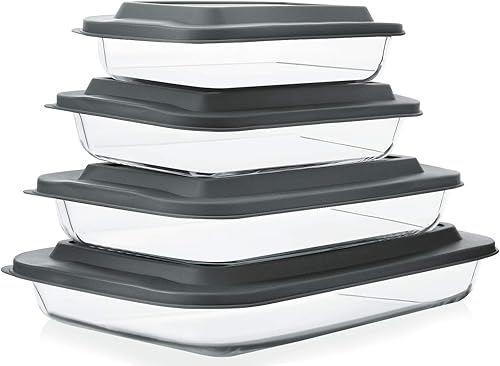
The M MCIRCO glass dishes have widened, rounded handles. The set includes four sizes from 1 to 3.2 quarts, which lets you choose a smaller dish when the recipe does not need a large casserole pan.
The Pyrex deep dish is a single 9 x 13 inch glass dish with a 4.5 quart capacity. Compare large glass baking dishes if you need a similar large format.
Measure your oven and clear a safe path to the table before carrying any full dish.
For more glass options, compare our best glass baking dishes guide. It can help if you want to stay with glass but need a different shape or depth.
Which dish is best for storage?
Glass with a fitted lid is the most convenient choice when baking and leftover storage happen in the same container. Ceramic can still move to the refrigerator or freezer, but the options here do not include a matching storage lid.
The M MCIRCO set includes four gray plastic lids for its four glass dishes. The dishes can be used in the oven, microwave, freezer and dishwasher, while the lids support stacking and storage.
The Pyrex Deep includes one BPA-free plastic lid. The 9 x 13 x 2.75 inch dish is 4.5 quarts, giving you a deep option for casseroles, fillings and sauces that need extra room.
The DOWAN ceramic dishes are refrigerator and freezer safe, but no lid is included with either model. Cover leftovers with a suitable separate method, and let hot food cool according to safe food-handling practice before long storage.
If you want a round format for smaller bakes, see our guide to the best round glass baking dish. For extra depth, compare the best deep glass baking dish options.
What should you look for in a glass baking dish?
Match the glass dish to your usual recipe size, then check the lid and temperature-safe uses. A set is useful for varied baking, while one deep dish may be better if you repeat large casseroles.
The M MCIRCO set includes 1, 1.7, 2.3 and 3.2 quart dishes. This range helps you avoid using a very large pan for a small portion, and the lids make the dishes useful after baking.
The Pyrex Deep is more focused. Its 4.5-quart capacity and 9 x 13 inch format suit large bakes, but it does not replace smaller dishes for individual or small-batch recipes.
A glass dish should be handled according to its care instructions. Before using one in an air fryer, check glass dish air fryer safety.
Avoid sudden temperature changes, inspect it before use and do not use a damaged dish.
For a large rectangular format, our guide to the best 9x13 glass baking dish compares useful features for this common size.
Is borosilicate glass worth choosing?
Borosilicate glass is worth considering if you want a glass set with several sizes and the listed oven, microwave, freezer and dishwasher uses. The M MCIRCO set specifically identifies its dishes as borosilicate glass.
That does not remove the need for careful temperature changes. Move dishes gradually between hot and cold environments, and follow the care instructions for the exact item.
The clear material also helps with serving and leftover identification. If you want to compare this material with other glass options, see the best borosilicate glass baking dishes guide.
What should you look for in a ceramic baking dish?
Choose ceramic when the dish will often go from oven to table and you want handles, a glazed finish or a specific serving color. Size and weight should guide the decision as much as appearance.
The soft white DOWAN dish is 4.2 quarts and has a 9 x 13 format with double handles. It is described as oven safe up to 500°F and safe for the dishwasher, refrigerator, freezer and microwave.
The red DOWAN dish has the same 15.6 x 9.3 x 3.1 inch dimensions including handles and a 135 oz capacity. Its red finish gives it a more noticeable table presence.
Neither DOWAN dish includes a storage lid. Ceramic is also heavier than many glass dishes, so use two hands when moving a full pan even when handles are available.
How should you care for glass and ceramic?
Let either material cool and follow its care instructions before washing or storing it. Care starts long before washing, because sudden temperature changes and rough handling can damage glass or ceramic.
Let a hot dish rest until it has cooled gradually. Do not move a very cold dish straight into a hot oven, and do not place a hot dish on a cold or wet surface.
The M MCIRCO glass dishes and the Pyrex dish are dishwasher safe. That makes routine washing easier, but it does not remove the need to let the dish cool first.
The M MCIRCO lids and the Pyrex lid are plastic. Keep plastic lids away from oven heat unless the specific instructions for that lid allow it, and remove them before heating unless their care instructions say otherwise.
Both DOWAN ceramic dishes are dishwasher safe. Their smooth glazed surfaces are designed for easier cleaning, which helps with baked-on food and serving marks.
Use tools that will not damage the glaze. Harsh handling can harm the surface over time and make future cleaning harder.
Avoid striking glass or ceramic against the sink, taps or other dishes. Chips often start from a small knock, and damage around rims and handles can make a dish unsafe to use.
Check every dish before use for chips, cracks or other damage. Look at the corners, edges and handles, because those areas take the most knocks during carrying and storage.
Do not return a damaged baking dish to the oven, microwave or freezer. A crack can grow with heat or cold, and a chipped edge can make the dish harder to handle safely.
Wash lids according to their own instructions, not the instructions for the glass or ceramic dish. Plastic can respond differently to heat, water and detergent, so lid care matters as much as dish care.
Store dishes so they are not crowded against other pans. Stacking with lids on can save space, but only when the lids fit correctly and the dishes are stable.
For glass, clear surfaces make it easier to spot damage before you cook. For ceramic, look closely at the glaze and handles, since small chips may be less obvious on a colored finish.
Good care is about patience and gentle handling. Cool the dish, wash it as directed, dry it properly, and store it where it will not be knocked.
Glass vs ceramic baking dish: what is the final choice?
Pick the M MCIRCO set if you need several glass sizes and matching lids, pick Pyrex for one deep 9 x 13 glass dish, and pick DOWAN ceramic for handled oven-to-table serving. Each option suits a different baking routine, so start with the size and storage you need most.
Choose the M MCIRCO set when you bake in different amounts. Its four borosilicate glass dishes range from 1 to 3.2 quarts, so you can use a smaller dish for a small portion and a larger one for a family bake.
The matching gray plastic lids make that set useful after cooking. You can cover, stack and store food in the same dishes, which suits meal prep and leftovers as much as baking.
Choose the Pyrex Deep when one large rectangular dish is enough. Its 9 x 13 x 2.75 inch shape and 4.5 quart capacity give extra depth for casseroles, fillings and sauces.
That depth helps prevent spillover when a dish is full. It also means the dish needs a clear oven space and a safe path to worktop or table when it comes out hot.
Choose the soft white DOWAN ceramic dish when presentation is a priority. It has a 4.2 quart capacity, double handles, and a smooth glaze that suits a neutral table setting.
Choose the red DOWAN ceramic dish when you want the same deep 9 x 13 format with more visible color. Its 135 oz capacity and double handles support large bakes that go from oven to table.
Remember that neither DOWAN dish includes a storage lid. If you often keep leftovers in the baking dish, you will need a separate cover and a way to store it safely.
Glass and ceramic both work for everyday baking, but they serve different habits. Pick glass for visibility and simple storage, or ceramic for handles, serving style and high-heat use.
Frequently asked questions
Is glass or ceramic better for baking?
Glass is better when you want to watch browning, store leftovers in the same dish and choose a transparent baking surface. Ceramic is better when serving presentation, built-in handles and high-heat use matter more.
Recipe temperature, dish size and safe handling still matter more than material alone.
Does ceramic bake differently from glass?
Yes, glass and ceramic can change how quickly a dish heats and how the edges brown. Use the recipe's guidance, avoid swapping materials without checking the result, and watch the first bake closely.
Dish depth, color and shape also affect baking more than material alone.
Can you put a glass baking dish in the freezer?
Some glass baking dishes are freezer safe, including the M MCIRCO and Pyrex options here. Avoid sudden temperature changes, such as moving a very cold dish directly into a hot oven.
Follow the care instructions for the exact dish and let it handle temperature changes gradually.
Which is easier to carry, glass or ceramic?
Ceramic dishes with wide double handles can be easier to grip when full, while glass dishes may weigh less depending on their size and construction. The DOWAN ceramic dishes have double handles, and the M MCIRCO glass dishes have widened handles.
Use both hands and suitable protection.
Can glass and ceramic baking dishes go in the microwave?
The M MCIRCO glass set, Pyrex deep glass dish and both DOWAN ceramic dishes are described as microwave safe. Remove plastic lids before heating unless their care instructions specifically allow microwave use.
Check the exact dish instructions and avoid heating a damaged dish.