How to Bake a Pie in a Ceramic Dish
Bake a pie in a ceramic dish at the recipe temperature, place it on a preheated baking sheet, and cool it fully before slicing. Ceramic holds heat well, but it may need more time than a metal pan to brown the bottom crust.
On this page (8 sections)
- How do you bake a pie in a ceramic dish?
- Why does ceramic work well for pie baking?
- How do you get a properly baked bottom crust?
- Which ceramic pie dish suits a standard pie?
- Can glass replace a ceramic pie dish?
- When is metal a better choice for pie?
- How should you cool a pie baked in ceramic?
- What should you choose for baking pie in a ceramic dish?
Bake a pie in a ceramic dish by using the recipe temperature, a fully preheated oven, and a hot baking sheet beneath the dish. Ceramic retains heat and gives the pie a steady bake, but the bottom crust may brown more slowly than it would in metal.
A ceramic pie dish also makes a useful serving dish. The main challenges are avoiding a pale or soft bottom crust, managing the dish's heat, and allowing enough cooling time before cutting.
How do you bake a pie in a ceramic dish?
Set the ceramic dish on a preheated baking sheet and bake on a lower oven rack. This gives the bottom crust more direct heat while the ceramic dish warms gradually.
- Prepare the crust and filling according to your recipe.
- Preheat the oven fully, with a sturdy baking sheet inside if the recipe allows.
- Place the filled ceramic dish on the hot sheet.
- Bake at the recipe temperature until the crust is browned and the filling is bubbling as directed.
- Move the dish to a dry cooling rack and let the pie set before slicing.
Don't place a hot ceramic dish on a cold stone counter or a wet towel. Sudden temperature changes can stress ceramic and porcelain, so follow the care instructions for your dish.
Why does ceramic work well for pie baking?
Ceramic holds heat well and spreads it steadily through the dish. That makes it useful for fruit pies, custard pies, quiche, and pot pies where the filling needs time to cook while the crust browns.
Ceramic dishes are also attractive enough for serving. Their thicker walls can make the pie stay warm longer after it leaves the oven, but that same heat retention means the dish may not respond as quickly as metal when you reduce the oven temperature.
Before choosing one, compare the options in our guide to bakeware sets. A set may suit you if you bake more than pies, while a dedicated ceramic dish is easier to store and use for one familiar recipe.
For coordinated ceramic pieces, compare ceramic bakeware sets.
How do you get a properly baked bottom crust?
Use bottom heat, limit excess liquid, and check the center before removing the pie. A preheated baking sheet helps transfer heat to the base of the ceramic dish.
Keep the oven rack in the lower third unless your recipe says otherwise. If the rim becomes dark before the center is ready, shield the edge with a pie shield or a loose strip of foil while the filling continues to bake.
A wet filling can soften any crust, regardless of the dish material. Drain very juicy fruit, avoid overfilling, and give the pie enough cooling time for the juices to thicken.
For another pan comparison, see our guide to best pie pans for baking. Metal can brown quickly, while ceramic gives you a deeper serving dish with strong heat retention.
Should you blind bake a crust in ceramic?
Blind baking can help when a recipe has a wet filling or a crust that needs to be partly cooked first. Follow the recipe's timing, prick or weigh the crust as instructed, and let the ceramic dish heat gradually with the oven.
Don't assume every pie needs blind baking. Apple, berry, and other double-crust pies often bake with the filling and crust together, while custard and cream pies may use a pre-baked shell.
Which ceramic pie dish suits a standard pie?
A 9-inch ceramic pie dish with a 2.5-inch depth suits bakers who want a deep, fluted dish for standard pie recipes. The MORA Ceramic Pie Pan is porcelain, vanilla white, round, and listed for oven, microwave, freezer, and dishwasher use.
MORA's fluted edges can shape the crust rim without a separate decorative tool. Its 54-fluid-ounce capacity gives you room for a deeper filling, but you should still follow the recipe's fill line and leave space for bubbling.
The dish weighs 2.2 lb and measures 10.5 x 10.5 x 2.5 inches overall. Measure your oven rack and storage space before buying, especially if you keep several dishes stacked together.
MORA says its Paladin Clay is 20% stronger than competing clay and that the dish resists thermal shock. It also states that the dish can handle temperatures over 500°F and has a lead-free, cadmium-free crystallized glaze.
Follow the brand's care directions for temperature changes.
Can glass replace a ceramic pie dish?
Glass can work for baked dishes, but a rectangular glass set is not a direct replacement for a round ceramic pie plate. It may help if you also bake casseroles, brownies, lasagna, or other foods.
The M MCIRCO set includes 4 borosilicate glass baking dishes and 4 gray plastic lids. The dishes are rectangular, with sizes from 1 qt to 3.2 qt, and are listed for oven, microwave, freezer, and dishwasher use.
The clear glass lets you monitor the food and serve it directly in the dish. Its handles can help when moving a dish to and from the oven, while the lids are intended for storage rather than oven baking.
This set suits a kitchen that needs several baking and storage sizes. It is less suitable if your main goal is a traditional round pie with a shaped crust edge.
Keep the plastic lids away from the oven unless the care instructions specifically allow them there. Let hot glass cool according to the manufacturer's guidance before adding a lid or moving it to a colder area.
When is metal a better choice for pie?
Choose metal when fast browning and a lighter pan are your main priorities. Aluminized steel transfers heat differently from ceramic and can help a bottom crust brown sooner.
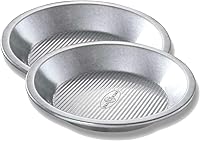
The USA Pan set includes 2 round 9-inch commercial pie pans made from heavy-gauge aluminized steel. Each pan has a 9 x 9 x 1.5-inch baking surface, a corrugated design, and a PTFE-, PFOA-, and BPA-free Americoat silicone coating.
The corrugated surface is designed to support air circulation and quick release. The pans are also made in the USA from globally sourced materials.
This pair suits someone who bakes multiple pies or wants two matching pans for a top-and-bottom crust workflow. The pans are shallower than the 2.5-inch-deep MORA dish, so check your recipe's filling volume before switching.
USA Pan's care instructions call for hand washing with warm, soapy water and immediate drying. Avoid treating a coated pan like an uncoated metal tool, and use utensils that won't damage the surface.
How should you cool a pie baked in ceramic?
Cool the pie on a dry rack until the filling has time to set. Cutting too soon can release hot juices and make even a well-baked crust seem wet.
Fruit pies often need longer cooling than you expect because the filling continues to thicken after baking. Custard pies need their own recipe-specific cooling and chilling instructions.
Use dry oven mitts and support the ceramic dish from underneath when moving it. A deep dish can be heavier when full, so clear the route from the oven to the cooling rack first.
If you want a lid for transport or storage, compare best pie pans with lids. For smaller servings, see best mini ceramic pie dish, and for easier carrying, browse best ceramic pie dish with handles.
What should you choose for baking pie in a ceramic dish?
For baking pie in a ceramic dish, use the MORA 9-inch porcelain pan if you want a deep, fluted round dish with strong heat retention. Use the USA Pan set if faster browning, quick release, and 2 matching pans matter more.
Choose the M MCIRCO set only if you also need rectangular glass dishes for baking, serving, reheating, and storage. Its containers are useful across the kitchen, but they are not round ceramic pie plates.
The best method is simple: preheat thoroughly, add bottom heat, watch the crust and filling, and cool the pie before slicing. If you use a stand mixer for related baking tasks, our guide to how to bake a cake using a stand mixer covers the mixing side of dessert preparation.
Frequently asked questions
Do you need to change the oven temperature for a ceramic pie dish?
Usually, start with the recipe's stated temperature and watch the crust closely. Ceramic can heat more slowly than thin metal, so the pie may need extra baking time.
Use the crust color, filling bubbles, and recipe instructions together rather than changing the temperature automatically.
How do you prevent a soggy bottom crust in a ceramic pie dish?
Place the ceramic dish on a preheated baking sheet or oven stone, use a fully preheated oven, and avoid adding watery filling to an unbaked crust. A short blind bake can help for some recipes.
Let the finished pie cool so the filling sets before slicing.
Can you put a cold ceramic pie dish in a hot oven?
Follow the dish manufacturer's temperature and thermal-shock instructions. Avoid sudden temperature changes unless the dish is specifically designed for them.
Don't move a hot ceramic dish onto a cold, wet surface, and use dry oven mitts when handling it.
Why does the bottom of my pie stay pale in a ceramic dish?
The bottom may stay pale because ceramic heats more slowly than metal, the oven rack is too high, or the baking sheet was not preheated. Move the pie to a lower rack, use a preheated sheet, and continue baking until the crust is fully cooked without letting the rim burn.