How to Make Pineapple Upside-Down Cake in a Bundt Pan
Use a well-greased Bundt pan, place the pineapple and cherries carefully, and release the cake while it is still warm. A slow flip helps keep the fruit layer attached to the cake.
On this page (8 sections)
- How do you make pineapple upside-down cake in a Bundt pan?
- How should you arrange pineapple and cherries in a ring-shaped pan?
- How much batter should go into the Bundt pan?
- How do you bake and cool the cake?
- Which Bundt shape works best for pineapple upside-down cake?
- How do you turn out the cake without losing the fruit?
- How should you store and carry the finished cake?
- What is the best method for bundt pan pineapple upside down cake?
Use a well-greased Bundt pan, careful fruit placement, and a slow release to make bundt pan pineapple upside down cake without losing the topping.
Arrange the pineapple and cherries around the base and center tube, spoon the batter over them, then turn the cake out while it is still warm.
This method suits home bakers who want a familiar cake with a more interesting presentation.
The ring shape gives you a cake that serves neatly and looks finished without extra frosting.
It also rewards a little patience, since the fruit layer needs to stay in place until the final flip.
A ring-shaped pan changes how you build the fruit layer in practical ways.
Pineapple slices may need to be trimmed, and small pieces work better in the narrow spaces around the tube.
Full rings can overlap at the curves and push the batter up at the edges.
Smaller pieces sit flatter and make a more even layer for the syrup to cling to.
Cherries fill the gaps between pineapple pieces and add color once the cake is turned out.
Pat the fruit dry before you arrange it, because extra juice can make the topping slide.
Grease the center tube as carefully as the outer wall, since that is where cakes often catch.
Spoon the batter gently over the fruit instead of pouring it in one heavy stream.
That slow approach helps keep the arrangement where you placed it during baking.
Rest the baked cake briefly, then flip it in one steady motion onto a flat plate.
Let it cool a little more before slicing so the crumb firms and the topping stays attached.
How do you make pineapple upside-down cake in a Bundt pan?
Prepare the pan, arrange the fruit, add the batter, bake, rest, and flip. The order matters because the fruit and syrup sit against the pan while the cake bakes.
- Grease the inside of the Bundt pan thoroughly, including the center tube and grooves.
- Add melted butter and brown sugar if your recipe uses them.
- Place pineapple pieces and cherries around the bottom and center tube.
- Pour the cake batter slowly over the fruit.
- Bake according to the recipe, checking the center for doneness.
- Let the cake rest briefly, loosen the edges, and invert it onto a serving plate.
Keep the fruit layer fairly even. Large pineapple rings can crowd the curved base, so cut them into smaller pieces that follow the pan's shape.
For broader bakeware choices, compare bakeware sets before choosing a pan for this recipe. If you want more shape options, our guide to the best Bundt cake pans explains how pan material and design affect release.
How should you arrange pineapple and cherries in a ring-shaped pan?
Place smaller pineapple pieces around the center tube and in the deepest grooves. Add cherries after the pineapple so they stay visible when the cake is turned out.
Pat excess juice from the pineapple before arranging it. Too much liquid can make the fruit layer slide or leave wet patches beneath the cake.
Don't press fruit tightly into every groove. Leave enough space for batter to move around the pieces and hold them in place during baking.
Which pan helps with cake release?
A pan with a removable center can simplify release, while a traditional Bundt pan gives the familiar ring and decorative surface. Your choice depends on whether easy removal or the shaped finish matters more for this cake.
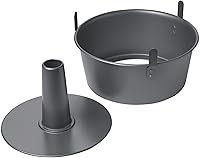
The Chicago Metallic Angel Food Cake Pan 2-Piece has a removable center tube, built-in feet, and a 16-cup capacity. Its heavy-weight carbon steel and silicone-based nonstick coating suit readers who want a large round tube pan for cakes that need careful cooling and release.
Its 9.5 in diameter and 4 in height give you a broad baking area, but the design is an angel food cake pan rather than a classic fluted Bundt shape. Hand wash it and let it dry fully before storage to help maintain the nonstick coating.
How much batter should go into the Bundt pan?
Fill the pan no more than about three-quarters full. The batter needs room to rise without covering the fruit layer or overflowing through the center tube.
Capacity varies by pan, so compare your recipe's batter volume with the pan's stated capacity. A recipe written for a standard round cake pan may need adjustment when moved into a ring-shaped pan.
Spoon batter over the fruit instead of pouring it quickly into one spot. This helps keep pineapple and cherries from shifting toward the sides.
Is a 10-cup Bundt pan suitable?
A 10-cup pan suits many Bundt-style cakes, but the recipe still determines how much batter you can safely use. Leave headroom even when the pan's capacity appears large enough.
The Nordic Ware Blossom Bundt Pan has a 10-cup capacity, cast aluminum construction, a premium silicone nonstick surface, and a 10.3 in diameter by 3.8 in height. Its flower-like shape can create a decorative fruit cake, though pineapple pieces may need trimming to fit the curves.
The pan is oven safe to 400°F and should be hand washed. Keep fruit pieces modest in size so they do not block the detailed shape or make the finished cake difficult to release.
How do you bake and cool the cake?
Bake until the center is set, then rest the cake briefly before turning it out. A toothpick or skewer should come out without wet batter, though it may touch fruit or syrup near the bottom.
Set the pan on a stable oven rack and avoid moving it while the batter is still loose. Follow the recipe's temperature and baking time because batter depth, fruit moisture, and pan shape all affect the result.
After baking, place the pan on a heat-safe surface. Let it rest long enough for the cake to settle, but do not wait until the syrup hardens completely around the edges.
Run a thin, flexible spatula around the outer edge and center tube. If the cake resists, pause and loosen another section rather than pulling hard on one side.
Which Bundt shape works best for pineapple upside-down cake?
Choose a simpler Bundt shape when reliable fruit placement matters more than a detailed design. Deep swirls and narrow grooves can look attractive, but they give the fruit layer more places to stick.
A 9-cup pan can work well when your recipe makes a moderate amount of batter. Its shape also affects how evenly pineapple pieces sit around the ring.
The Nordic Ware 91377 Nordicware 9 Cup Bundt has cast aluminum construction, a premium nonstick surface, a gold finish, and four Bundt designs: Fleur de Lis, elegant party, cathedral, and chiffon. It suits readers who want several decorative shapes for different cakes.
The pan is hand wash only according to its care instructions. Because the designs vary, check the selected shape before arranging fruit and keep the pieces small enough to follow the ring.
For another specialty shape, see how to choose and use a bundt pan cast iron. If you make smaller desserts, best mini bundt pan options can help you divide the batter into individual cakes.
How do you turn out the cake without losing the fruit?
Place the serving plate over the pan, hold both firmly, and flip in one smooth motion. Keep the plate centered so the cake lands without sliding.
Wait a few seconds after turning the pan over. The cake may release gradually as the syrup moves downward, so lift the pan straight up instead of twisting it.
If fruit remains in the pan, remove it with a small spatula and place it back on the cake. A warm cake is easier to repair than a fully chilled one with hardened syrup.
Let the cake cool further before slicing. This gives the crumb time to firm up and helps the pineapple layer stay attached.
How should you store and carry the finished cake?
Cool the cake fully before covering it or moving it. A warm syrup layer can smear against a cover and make the decorative top harder to protect.
Give the cake time to set on the serving plate before you cover it.
Residual heat can create moisture under a lid and soften the fruit layer.
Use a flat serving plate with enough room around the ring.
Extra space at the edges makes lifting and carrying safer.
If you plan to bring the cake to a gathering, compare best Bundt pan carrier options for a container that matches the cake's shape.
Choose a cover that clears the raised fruit without pressing on it.
Keep the cake level while carrying it. The fruit and syrup are concentrated on top, so tilting the plate can make the topping shift.
Carry it with two hands and avoid sudden turns or bumps.
Store leftovers covered in a cool place and slice only what you need.
That helps the remaining cake stay moist and keeps the topping from drying at the cut edge.
What is the best method for bundt pan pineapple upside down cake?
For bundt pan pineapple upside down cake, use small fruit pieces, grease the center tube and grooves, keep the batter below the fill limit, and flip the cake after a short rest. Choose the Chicago Metallic pan for its removable center, the Nordic Ware Blossom for a 10-cup decorative shape, or the Nordic Ware 91377 for multiple Bundt designs.
The main decision is release versus appearance. A simpler ring is easier to arrange and turn out, while a detailed Bundt shape creates a stronger presentation when the fruit is trimmed to fit.
Frequently asked questions
Can you make pineapple upside-down cake in a Bundt pan?
Yes. Use a Bundt pan with enough capacity for the batter, arrange the pineapple and cherries in the bottom and curves, then pour the batter gently over the fruit.
Leave room for the cake to rise, and let it cool briefly before turning it onto a plate.
How do you keep pineapple upside-down cake from sticking in a Bundt pan?
Grease every part of the Bundt pan, including the center tube and deep grooves, then arrange the fruit without pressing it into corners. Let the baked cake rest for a short time, loosen the edges carefully, and turn it over in one controlled motion.
Should pineapple upside-down cake cool before flipping?
Let the cake cool briefly before flipping, rather than turning it out immediately from the oven or waiting until it is completely cold. A short rest helps the cake set while the warm topping remains soft enough to release from the pan.
What Bundt pan is best for pineapple upside-down cake?
A Bundt pan with a clear capacity and a surface that releases cake well is a practical choice. Cast aluminum pans conduct heat evenly and show detailed shapes, while a 2-piece tube pan can make removal easier but may not create the same ring-shaped design.