Stand Mixer Clearance Above the Counter
Measure the gap from counter to cabinet, then check the mixer’s height and full head movement. How far above the counter a stand mixer needs depends on its shape, how it opens, and whether you use it in place or pull it forward.
On this page (8 sections)
- How far above the counter should a stand mixer sit?
- How do you measure stand mixer clearance?
- Can you use a stand mixer beneath a cabinet?
- What if your stand mixer won’t fit under the cabinets?
- Do stand mixer attachments need extra overhead space?
- How should you set up a stand mixer under a cabinet?
- What clearance mistakes should you avoid?
- How do you choose the right spot for your mixer?
How far above the counter for a stand mixer? Measure from the countertop to the lowest cabinet or shelf, then check that the mixer fits and its head can open fully.
The right clearance depends on the model’s height and movement, plus whether you plan to mix in place or pull the machine forward.
There’s no single clearance number that works for every mixer. Plan for the whole task: fitting the mixer, opening it, adding ingredients, removing the bowl, and reaching any attachment you intend to use.
How far above the counter should a stand mixer sit?
Leave enough space for the closed mixer and its full opening motion. The counter-to-cabinet gap only tells you whether the body fits; it doesn’t show whether the head can move freely.
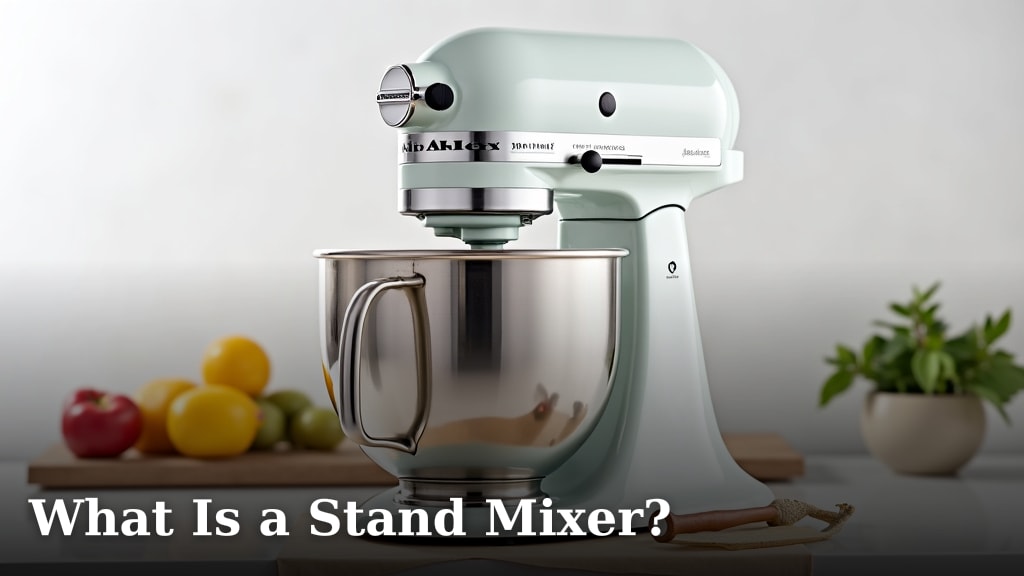
The KitchenAid Classic Series tilt-head mixer is 13.9 in tall. That gives you a useful starting point for comparing the closed mixer with your available gap, but the head also needs room to tilt back.
Measure your own model rather than relying on a general rule. A bowl-lift mixer raises the bowl toward the mixing head, while a tilt-head model moves its head up and back.
Both need room for their particular movement. The path may be partly behind the mixer rather than directly above it.
How do you measure stand mixer clearance?
Measure vertically from the countertop to the lowest obstruction above the mixer’s planned position. Include cabinet trim, shelf edges, and anything else that could block movement.
Measure at the spot where the mixer will actually sit. A cabinet may be level while the counter is not, and a small change in position can affect the available gap.
Next, compare the opening with the mixer’s height and check the full head movement. If you already have the machine, place it on the counter unplugged and move the head as the manual directs.
If you’re choosing a mixer, use its dimensions as a first check. Then account for how the head opens.
Also check the space in front and behind the machine. If you need to pull it forward to open the head, make sure it stays fully supported on the counter and leaves room to work.
A guide to stand mixer parts and designs can help you identify whether your model tilts or lifts. That distinction matters when you’re checking its movement near cabinets.
How much extra clearance does a tilt-head mixer need?
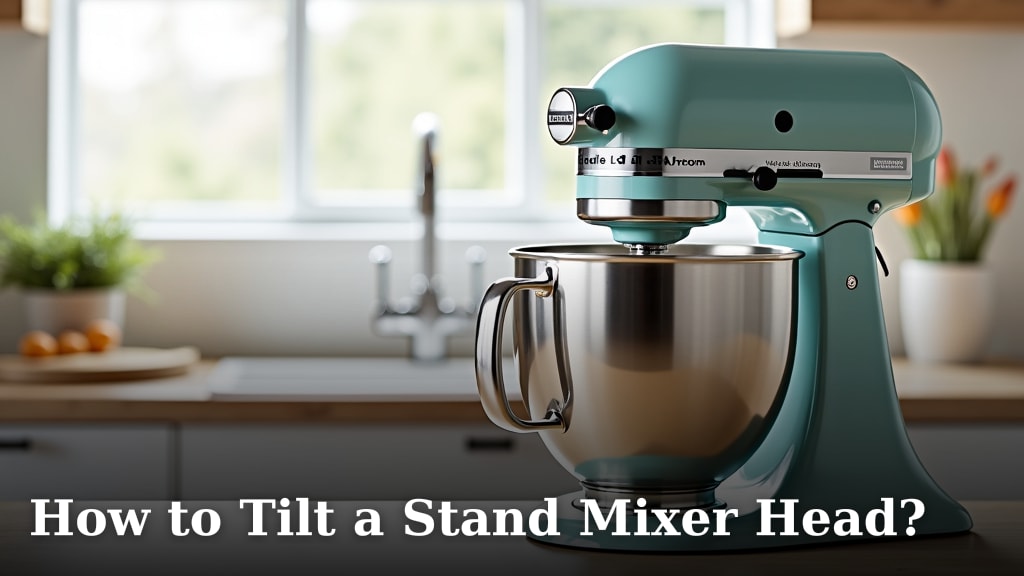
A tilt-head mixer needs room for the head to swing back without striking a cabinet or shelf. Check the full arc of movement, not only the closed height.
If the head needs to move into open space, position the mixer farther forward before opening it. Leave enough counter depth for the whole base to remain supported, and confirm you can still reach the bowl and remove the beater.
Follow your model’s instructions when tilting the head. The guide to how to tilt a stand mixer head covers the basic motion.
Can you use a stand mixer beneath a cabinet?
Yes, if the mixer clears the cabinet while you open it and work with the bowl. You should be able to add ingredients, reach the controls, and lift out the bowl without knocking the machine or scraping your hands.
A mixer that fits only while closed may still work in the same spot if you can safely pull it forward for use. Decide whether that extra step suits your routine.
Frequent bakers may prefer an open counter area. Occasional bakers may be comfortable moving the mixer when needed.
The KitchenAid Classic Series mixer weighs 22 lb, so consider whether you can move it comfortably. For a limited counter, the small-counter mixer storage guide offers ways to plan its place between uses.
Does a swivel base change the clearance you need?
A swivel base can help you reposition a mixer, but it doesn’t add overhead height. You still need room for the head to open and the bowl to come out.
Check that the base fits the available counter depth and doesn’t leave the mixer too close to an edge when turned. See how to store a stand mixer on a swivel base for more about that setup.
What if your stand mixer won’t fit under the cabinets?
Use an open counter area or another stable spot where the head can move freely. Don’t force the head against a cabinet or use the mixer perched partly over the counter edge.
If there’s no suitable stand mixer space, a hand mixer may be the simpler choice for smaller mixing jobs. The Hamilton Beach 6-Speed Electric Hand Mixer includes two beaters, a whisk, and a snap-on storage case to keep those attachments together.
Choose a hand mixer if you mainly mix batters, whip cream, or handle other jobs that don’t require a stand mixer’s bowl and hands-free operation. If your recipes call for kneading dough or mixing larger batches, first look for a better location for a stand mixer.
The guide to using a stand mixer covers basic setup and operation.
Do stand mixer attachments need extra overhead space?
Some attachments need extra room to install or remove, so check the steps for the accessory you plan to use. Clearance for the mixer alone may not be enough for a particular setup.
The KitchenAid Ice Cream Maker Attachment fits household stand mixers 4.5 qt and larger, with exclusions for the Artisan Mini and certain 6, 7, and 8 qt models. It makes up to 2 qt of frozen dessert in 20–30 minutes, so confirm compatibility with your exact mixer before choosing it.
The attachment requires access to the bowl and mixer, so plan for the steps needed to set it up and remove it. Don’t assume an accessory will fit or install easily just because the mixer body clears the cabinet.
After use, follow its care instructions; this attachment is hand-wash only.
How should you set up a stand mixer under a cabinet?
Set the mixer on a stable, level counter and check its movement before adding ingredients. Keep it unplugged while you confirm the head, bowl, and attachments have room.
Use this setup check:
- Measure from the counter to the lowest overhead obstruction.
- Compare that gap with the mixer’s closed height.
- Open or raise the head fully, following the manual.
- Check that you can reach the bowl, controls, and any attachment points.
- Confirm the machine stays fully supported on the counter.
If it needs to move forward, practice the movement before mixing. Clear the path and make sure you can reposition the mixer without tipping it or dragging its cord.
For a machine that shifts during use, see how to keep a stand mixer from walking on the counter.
What clearance mistakes should you avoid?
Don’t judge the space by the mixer’s closed height alone. The head, bowl, and accessories all affect how easy the setup is to use.
Common mistakes include measuring only at the front of an uneven counter, overlooking cabinet trim, and forgetting that a tilt-head mixer swings back. Another is leaving enough room to open the head but not enough depth to pull the mixer forward while keeping its base on the counter.
Avoid choosing a storage spot before checking whether you can move the mixer safely. If lifting or shifting it each time would be difficult, a permanent open spot or a hand mixer may fit your needs better.
How do you choose the right spot for your mixer?
Choose the spot that gives you room to open the mixer, work with the bowl, and keep the base stable. A good storage position isn’t automatically a good working position.
If your mixer clears the cabinet with its head open and you can reach everything comfortably, it can stay under the cabinet. If it fits only when closed, choose that arrangement only if pulling it forward is easy and safe for you.
If neither position works, move it to open counter space or choose a hand mixer for the jobs you do.
Measure first, then check the complete movement in the intended spot. For how far above the counter a stand mixer needs, the best answer is the clearance that lets your specific machine open and operate without contact.
Keep it under a cabinet only if it’s comfortable to use there. Otherwise, plan an open spot or a practical alternative.
Frequently asked questions
How much space should be above a stand mixer?
Measure the mixer’s height and leave enough room for its head to open or lift without hitting a cabinet or shelf. The exact clearance depends on the model and whether it tilts or lifts.
Check the maker’s dimensions, then test the full movement in the spot where you plan to use it.
Can a stand mixer sit under a cabinet?
Yes, if it fits below the cabinet and you can raise or tilt its head fully without contact. Also consider how you’ll add ingredients and remove the bowl.
If the mixer has to move forward to open, make sure the counter has enough depth and the mixer stays stable.
Do tilt-head mixers need more clearance?
They need open space above the mixer’s head so it can tilt back, but the amount varies by model. Measure the head’s path or test it on the counter before placing the mixer under a cabinet.
Leave room to remove the bowl and attachments, too.
Can I store a stand mixer under a cabinet and move it to use?
You can, if moving it is safe and practical for you and the counter has room for the mixer during use. Check its weight, the route to the work area, and whether its head can open once moved.
A dedicated spot with full operating clearance is simpler for frequent baking.