How to Use a Manual Pasta Maker
To use a manual pasta maker, prepare a firm dough, rest it, roll it through wider settings first, then cut and handle the sheets gently. Clamp the machine securely before turning the crank.
On this page (9 sections)
- What do you need before using a manual pasta maker?
- How should you prepare pasta dough?
- How do you set up a manual pasta maker?
- How do you roll pasta through a manual machine?
- How do you cut pasta after rolling?
- Can you make filled pasta with a manual machine?
- How do you cook and handle fresh noodles?
- How do you clean a manual pasta maker?
- What mistakes should you avoid?
To use a manual pasta maker, prepare a firm dough, let it rest, roll it through the widest setting first, and reduce the setting gradually before cutting. Clamp the machine to a stable counter, turn the crank smoothly, and keep your hands clear of the rollers and cutters.
Manual pasta making is easier when the dough is neither wet nor crumbly. The finished dough should pass through the rollers without tearing, sticking heavily, or needing force at the crank.
What do you need before using a manual pasta maker?
You need rested pasta dough, flour for light dusting, a stable counter, a knife or cutter, and a place to dry the noodles. Read the machine instructions before attaching the hand crank or changing the roller setting.
A manual machine works by turning rollers with a crank. It doesn't mix or knead dough for you, so finish those steps before the dough reaches the machine.
A machine such as the pasta maker machine complete buying guide can help you compare roller types, cutters, clamps, and attachments before choosing a model.
How should you prepare pasta dough?
Prepare dough that is firm, smooth, and rested before rolling. Knead it until the surface looks even, then cover it and allow it to rest so the dough becomes easier to roll.
Divide the dough into smaller portions before feeding it through the machine. Smaller pieces are easier to guide and less likely to fold under their own weight.
Flatten each portion by hand into a thick rectangle. Keep the unused dough covered so it doesn't dry while you work.
How do you set up a manual pasta maker?
Secure the machine with its table clamp before inserting dough. The clamp keeps the machine from shifting while you turn the handle, which gives you better control over the sheet.
Attach the hand crank according to the instructions. Turn the rollers without dough once to check that the handle moves freely and that the cutting parts are in the position you want.
Keep the counter area clear. A long sheet needs room to pass through the machine, and a crowded workspace makes it easier to crease or drop the dough.
Which manual machine suits a first batch?
The CucinaPro Pasta Maker Deluxe Set- Stainless Steel suits cooks who want a manual machine with 3 interchangeable attachments and several noodle options. Its set includes a hand crank, table clamp, cleaning brush, pasta maker, 3 attachments, and pasta cutter.
Its adjustable thickness settings help you move from a thicker starting sheet to a thinner one without needing a separate roller. The attachments cover Lasangette, Fettuccine, Angel Hair, Spaghetti, and Ravioli.
Choose it if you want a broad set of shapes in one box. If you prefer a machine with a 150-millimeter sheet width and 10 settings, compare the Marcato option below.
How do you roll pasta through a manual machine?
Start at the widest roller setting and pass the dough through without forcing it. Catch the sheet as it exits, fold it if the instructions call for it, and repeat the pass until the dough becomes smooth.
Dust the dough lightly if it sticks. Too much flour can make the surface dry, so add only enough to prevent sticking.
Reduce the roller setting one step at a time. Don't jump from the widest setting to the thinnest one because a large change can tear the dough or create an uneven sheet.
Guide the dough straight into the rollers. If the sheet enters at an angle, it can come out wider on one side or fold over itself.
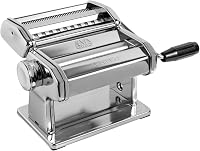
The MARCATO Atlas150 Manual Pasta Maker Machine-LASAGNA, FETTUCCINE & TAGLIOLINI. Made in Italy suits cooks who want a manual chrome steel machine with 10 settings and sheets up to 150 millimeters wide.
It includes the pasta maker and black crank handle.
The Atlas 150 adjusts from 0.8 to 4.8 millimeters. That range lets you choose a thicker sheet for some pasta dishes or a thinner sheet for delicate noodles.
Its included components are limited to the machine and crank handle, so choose it if you want a focused pasta roller. For model-specific setup, see how to use a Marcato Atlas 150 pasta machine.
How do you cut pasta after rolling?
Let the sheet rest briefly if it feels very soft, then feed it through the chosen cutter in one smooth motion. Support the sheet as it exits so the strands don't bunch together.
Dust the cut noodles lightly and separate them with your fingers. Hang them over a rack, place them in loose nests, or cook them soon after cutting.
Use a knife to cut sheets for lasagna if your machine doesn't include the cutter you need. Keep the widths even so the pieces cook at a similar rate.
Don't pull hard on noodles caught in the cutter. Stop the crank, remove the dough carefully, and check whether the sheet is too wet or thick.
Can you make filled pasta with a manual machine?
Yes, you can make filled pasta when the machine or attachment supports it. Roll a smooth sheet, add small portions of filling, press out excess air, and seal the edges before cutting.
The Marcato Ravioli 150 Attachment for Atlas suits cooks who want an attachment for forming and cutting homemade ravioli with an Atlas 150 machine. It has aluminum rollers, chrome-plated steel and ABS parts, and is made in Italy.
Use only the filling amount that allows the dough to seal. Excess filling can split the ravioli or prevent the edges from joining.
The attachment is not for use with a motor, and it should not be washed with water or placed in a dishwasher. Clean it with a brush or wooden rod after the dough dries.
The best stainless steel pasta maker guide can help if material and care are central to your choice.
How do you cook and handle fresh noodles?
Cook fresh noodles in boiling water soon after cutting, or dry them before storing. Fresh pasta often cooks faster than dried pasta, so watch the texture instead of relying only on a dried-pasta cooking time.
Lift noodles gently into the pot to prevent clumps. Stir carefully during the first part of cooking, then taste a strand to check whether it is ready.
If you are making pasta for children, keep the process simple and supervise the crank, cutters, and boiling water. Our guide to the best pasta maker for kids covers features that can make shared pasta projects easier.
How do you clean a manual pasta maker?
Clean a manual pasta maker after dough residue has dried, using the supplied brush or another dry brush approved for the machine. Dry residue is easier to remove than wet dough pressed into the rollers.
Don't rinse the machine under water or put it in a dishwasher unless its instructions specifically allow that. Water can remain around moving parts and make cleaning more difficult.
For the Marcato Atlas 150 and its ravioli attachment, allow residue to sit for at least 30 minutes before brushing. Remove scraps from the cutters without using sharp metal tools.
Store the crank and attachments where they won't collect moisture. Check the clamp and rollers before the next batch.
What mistakes should you avoid?
Avoid wet dough, rushed roller changes, loose clamps, heavy flouring, and overfilled ravioli. These problems can cause sticking, tearing, uneven sheets, or poor seals.
Don't turn the crank backward while dough is trapped unless the instructions allow it. Stop, remove the dough gently, and correct the thickness or flouring.
Don't feed a large lump into the rollers. Divide it first so the machine can flatten it evenly.
The best setup depends on your goal. Choose the CucinaPro set for several shapes and included accessories, the Atlas 150 for a focused machine with a wide thickness range, and the Ravioli 150 attachment when filled pasta is the priority.
For readers comparing hand-crank work with powered mixing and rolling, Top 7 Best Stand Mixer For Pasta Making and Best Stand Mixer Attachment For Pasta Making explain the other setup. If your wider kitchen project includes bread dough, compare Zojirushi Supreme vs Virtuoso before choosing a bread maker.
Use a manual pasta maker slowly at first. Rested dough, steady passes, and dry cleaning are the habits that produce smoother sheets and cleaner noodles.
Frequently asked questions
How thin should pasta dough be rolled?
Roll pasta dough through the wider settings first, reducing the setting one step at a time. The right final thickness depends on the pasta shape and recipe.
For example, the Marcato Atlas 150 adjusts from 0.8 to 4.8 millimeters, giving you a wide range for sheets and cut noodles.
Do you flour pasta dough before using a manual pasta maker?
Use a light dusting of flour when the dough feels sticky, but avoid covering it heavily. Too much flour can make the dough dry and affect how cut noodles hold sauce.
Let the dough rest before rolling, and add small amounts only when the rollers begin to grab.
How do you clean a manual pasta maker?
Let dough residue dry, then brush it away with a dry cleaning brush or wooden rod where appropriate. Don't wash a manual pasta maker with water or put it in a dishwasher unless the manufacturer specifically allows it.
Keep the rollers and cutters free of damp dough.
Can you make ravioli with a manual pasta machine?
Yes, but the machine needs a ravioli attachment or another compatible ravioli tool. The Marcato Ravioli 150 Attachment forms and cuts filled pasta and is designed for the Atlas 150 Pasta Machine.
Keep the filling modest so the dough can seal cleanly.