What Is a Commercial Stand Mixer?
On this page (12 sections)
- Defining the Commercial Stand Mixer
- What Makes It Different from Your Home Mixer?
- Common Types and Configurations
- Key Parts You’ll Interact With
- How a Commercial Mixer Works in Daily Use
- Capacity and Specs: What Do the Numbers Mean?
- Cleaning and Maintenance for Longevity
- Is a Commercial Mixer Worth It For You?
- What to Look For: Your Buying Checklist
- The Final Whisk: Putting It All Together
- Conclusion
- Frequently Asked Questions
Defining the Commercial Stand Mixer
A commercial stand mixer is a heavy-duty appliance designed for the nonstop demands of a professional kitchen. It’s built to mix, knead, and whip large batches of ingredients for hours without overheating. Think of it as the workhorse of a bakery or restaurant, handling everything from bread dough to frosting.
What Makes It Different from Your Home Mixer?
The differences start with the motor and end with the frame. While your kitchen mixer is great for weekend cookies, a commercial model is engineered for all-day use. We found that the core distinctions are all about power, capacity, and durability.
Power and Motor Strength
A commercial mixer’s motor is its heart. It’s significantly stronger, often measured in horsepower or heavy-duty wattage. This raw power lets it handle thick, stiff doughs without straining or slowing down. A home mixer might overheat if you push it too hard.
Why Power Matters for Your Business
Consistency is key in any food business. A powerful motor ensures your dough or batter is mixed the same way every single time. This reliability protects your product quality and your reputation.
Bowl Capacity and Throughput
Commercial mixers come in standard, large bowl sizes like 20, 30, 60, or even 80 quarts. This allows you to produce massive quantities in one go. A restaurant might use a 20-quart model, while a large bakery needs a 60-quart or bigger.
Construction and Durability
These machines are built to last with cast-iron or steel bodies. They are heavy, stable, and designed to minimize vibration. Many experts point out that this robust construction prevents the mixer from “walking” across the counter under a heavy load (Commercial Kitchen Association guidelines).
Common Types and Configurations
You’ll encounter a few main styles in professional settings. The choice often depends on your specific menu, space, and production volume.
| Type | Key Features | Ideal Use Case |
|---|---|---|
| Planetary Mixer | The beater rotates on its own axis while also orbiting the bowl’s center. This is the most common type, offering versatile mixing action. | Bakeries, restaurants, and caterers needing all-purpose mixing. |
| Spiral Mixer | The bowl spins while the spiral hook kneads the dough. It develops gluten efficiently with less friction and heat. | Pizzerias and bread-focused bakeries making high-hydration doughs. |
| Vertical Mixer (Hobart-style) | A very large, stationary floor model. Extremely powerful for industrial-scale production. | Large food manufacturers, commissary kitchens. |
Key Parts You’ll Interact With
Even though it’s a complex machine, its primary components are user-friendly. Understanding them helps you use it correctly and safely.
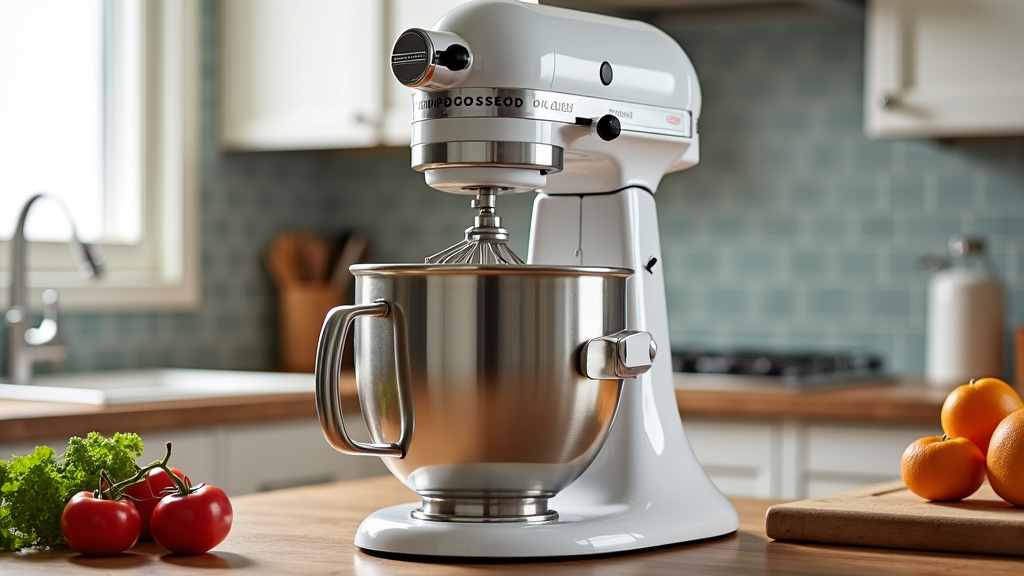
- Bowl: Usually stainless steel. Often comes with a bowl guard for safety.
- Attachment Hub: Where you connect the beater, hook, or whip. Some models have a power take-off for extra tools.
- Speed Control: Typically a lever or dial with specific speed settings (e.g., a 4-speed or variable-speed control).
- Head Lift / Bowl Lift: Mechanism to raise or lower the bowl or the mixer head.
How a Commercial Mixer Works in Daily Use
Operation is straightforward once trained. You’ll attach the correct tool, lock the bowl, and select the right speed. But a pro tip from industry veterans: always start on a low speed to combine ingredients before increasing.
This simple habit prevents ingredient splash and puts less initial stress on the motor. It’s a small step that extends the life of your mixer.
Choosing the Right Attachment
The attachment does the actual work. Using the wrong one can damage the machine or give poor results.
- Dough Hook: For kneading bread, pizza dough, and bagels. It mimics hand-kneading.
- Flat Beater (Paddle): For general mixing—cookie dough, cake batter, mashed potatoes. It folds and combines.
- Wire Whip: For incorporating air—whipping cream, meringues, egg whites. It moves quickly through mixtures.
Capacity and Specs: What Do the Numbers Mean?
When you see a “20-quart mixer,” it refers to the capacity of the mixing bowl, not the motor power. A 20-quart mixer can comfortably handle about 12-14 quarts of a medium-consistency batter or dough. Overfilling is a common mistake that leads to poor mixing and motor strain.
Always follow the manufacturer’s guidelines for maximum capacity based on ingredient type. It’s not just a suggestion; it’s about protecting your investment.
Cleaning and Maintenance for Longevity
These machines are designed for easy cleaning, but they require diligent care. Food buildup is unhygienic and can jam the machine. After each use, remove the bowl, guard, and attachment.
Wash them thoroughly in a commercial sink. Never submerge the mixer’s body or motor in water. A damp cloth is enough for the exterior. Many service schedules recommend a professional inspection annually (Equipment & Food Service Association recommendations).
Is a Commercial Mixer Worth It For You?
Making the leap to a commercial model is a big decision. It’s a significant expense, but for many, it’s a necessary one. Ask yourself these questions.
- Are you consistently producing large batches that strain a home mixer?
- Is your production time hampered by slow, small-batch mixing?
- Do you need to maintain perfect consistency across every batch?
- Are you scaling up for catering, farmers markets, or wholesale orders?
If you answered yes to several of these, a commercial mixer isn’t a luxury—it’s a tool that will save you time, money, and headaches.
What to Look For: Your Buying Checklist
Ready to shop? Don’t just look at the price tag. Consider these critical factors to find the right fit for your operation.
- Capacity Needs: Assess your average and peak production volume.
- Motor Power (HP/Watts): Match it to the heaviest dough you’ll make.
- Speed Options: Do you need many precise speeds or just a few reliable ones?
- Attachment Compatibility: Check if you can add tools like pasta rollers or meat grinders later.
- Warranty & Service: What does the manufacturer’s warranty cover? Who services it locally?
- Footprint & Space: Measure the counter or floor space where it will live.
The Final Whisk: Putting It All Together
A commercial stand mixer is a foundational piece of equipment for serious food production. It combines brute strength with reliable mechanics to handle jobs far beyond a home kitchen’s scope. By understanding its components, types, and proper use, you can select and maintain a machine that serves your business well for years.
We found that the right mixer doesn’t just mix ingredients; it mixes efficiency and quality into everything you create. It becomes a trusted partner in your kitchen’s daily rhythm.
Conclusion
A commercial stand mixer is a serious upgrade for any kitchen facing consistent, high-volume demands. We covered how its robust motor, large bowls, and heavy-duty build outperform home models. This equipment ensures your products stay consistent, batch after batch. You’re not just buying a tool; you’re investing in efficiency and quality. Your next step is straightforward. Use the buying checklist to match a mixer’s specs to your actual production needs. Take the time to compare models and consult with suppliers. The right mixer will support your business as it grows.
Frequently Asked Questions
Can a commercial stand mixer be used in a home kitchen?
While technically possible, it’s generally not recommended. Commercial mixers require specific electrical outlets, produce more noise, and take up significant counter space. Their power is often overkill for home recipes, making a high-end residential mixer a more practical choice.
How do I know what bowl size is right for my business?
Assess your typical batch sizes and peak production days. A good rule is to choose a bowl that comfortably holds your largest batch with room for mixing. Remember, overfilling strains the motor and yields poor results, so plan for some extra capacity.
What’s the main advantage of a spiral mixer over a planetary one?
We found spiral mixers excel at developing gluten in doughs efficiently, often with less heat buildup. They are ideal for focused bread or pizza production. Planetary mixers offer more versatility for general baking tasks like whipping and creaming.
How much does a typical commercial stand mixer cost?
Prices vary widely based on capacity, power, and brand. A new 20-quart planetary mixer can start around $1,500, while larger industrial models run into tens of thousands. It’s best to get quotes from suppliers based on your specific needs.
Are commercial stand mixers difficult to clean?
They are designed for ease of cleaning, but require thoroughness. Most bowls, guards, and attachments are removable and dishwasher-safe. The key is to clean them after every use to prevent food buildup, which can harm hygiene and machine function.