Baking Sheet vs Baking Pan: Which Should You Use? (November 2026)
Use a baking sheet for shallow, open baking and a baking pan for recipes that need depth or contained sides. The right choice depends on the food's shape, spread and moisture.
On this page (13 sections)
- Baking sheet vs baking pan: what is the main difference?
- Is a baking tray the same as a baking sheet?
- Which recipes need a baking sheet?
- Which recipes need a deeper baking pan?
- How does side height change baking results?
- Which material should you choose?
- Should you choose a set or one half sheet?
- How do handles affect a baking sheet?
- How should you use parchment with either shape?
- Can you use a baking sheet on a grill?
- How should you clean and store each type?
- How do you choose the right one for bread?
- Baking sheet vs baking pan: which should you use?
Use a baking sheet for shallow, open baking and a baking pan for recipes that need depth or contained sides. The baking sheet vs baking pan choice affects airflow, browning, spreading and how safely the food stays inside the bakeware.
The terms overlap, so the shape matters more than the name. A baking sheet is usually broad and shallow, while a baking pan is often deeper and better suited to batter, liquid or layered food.
This guide compares the two shapes, explains baking tray vs baking sheet wording and matches each one to common recipes.

 Best for mixed sheet sizes
GoodCook Everyday Nonstick Baking Sheet Set
Baking sheet vs baking pan: what is the main difference?
A baking sheet has low sides for open baking, while a baking pan has taller sides for food that needs support or containment. That difference changes how heat reaches the food and how easily you can remove it.
A shallow sheet gives cookies, vegetables and other spread-out foods more open surface area. Its low rim also makes it easier to slide a spatula under food or lift parchment from the pan.
A deeper pan holds more batter, sauce or layered ingredients. For pie-specific guidance, see baking pie in a ceramic dish.
The sides help a cake rise within its shape and keep juices from running onto the oven floor.
The boundary is not perfect. Some baking sheets have raised rims, and some pans are nearly flat, so measure the interior depth when a recipe depends on it.
Is a baking tray the same as a baking sheet?
Baking tray and baking sheet often mean the same shallow, rimmed bakeware, but the exact shape varies by brand and region. Look at the sides and interior measurements rather than the product name.
A sheet may have a low rolled edge around all 4 sides. A tray may have a similar rim, or it may have handles and a slightly different side height.
The phrase cookie sheet can also cause confusion. Traditional cookie sheets may have 1 or 2 raised edges, while rimmed baking sheets have a border around the entire surface.
For a deeper look at sizes and materials, see our guide to bakeware sets. A set can help if you need several shapes, but it does not make a shallow sheet suitable for every deep-pan recipe.
Which recipes need a baking sheet?
Choose a baking sheet for cookies, roasted vegetables, sheet-pan meals and foods that need a broad, shallow surface. The open layout gives food room to spread and helps you lift it out after baking.
Cookies usually benefit from a flat surface with low sides. Leave space between portions because dough can spread as it heats.
Vegetables and other dry roasting ingredients also fit a sheet well. A broad surface makes it easier to arrange food in one layer, which helps avoid steaming from overcrowding.
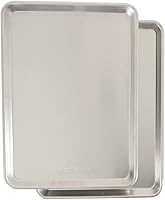
A half sheet can suit larger batches. The Nordic Ware Naturals Half Sheet is made from pure aluminum and measures 17.9 x 12.9 x 1 in on the exterior.
Its encapsulated galvanized steel rim is designed to resist warping.
Use parchment when you want easier release or faster cleanup:
Parchment should fit the baking surface without extending into an oven's heating element. Keep its 450°F maximum in mind, and follow the recipe and oven guidance for the food you're making.
Which recipes need a deeper baking pan?
Choose a deeper baking pan for cakes, brownies, casseroles, lasagna and recipes with batter, sauce or several layers. Taller sides help contain the mixture as it expands or moves during baking.
Cake batter needs a vessel that supports the sides as the cake rises. A shallow sheet can let batter spread too thin or run over the rim.
Casseroles and layered dishes also need depth for ingredients and liquid. A deeper pan gives you room to portion the food without pushing it over the sides.
Roasting can use either shape. A shallow sheet suits dry vegetables and smaller pieces, while a deeper pan can work better when the recipe creates more liquid or needs taller walls.
Don't swap shapes based only on the footprint. A pan with the same length and width can still hold a very different amount if its sides are taller.
How does side height change baking results?
Low sides encourage spreading and browning, while high sides contain moisture and support thicker food. Match the side height to the recipe's expected movement and final thickness.
Cookies placed on a deep pan may sit farther from open airflow at the edges. That doesn't automatically ruin them, but it can change how the outside sets and how easily you reach under each cookie.
A shallow sheet can expose more food surface to the oven's heat. This suits roasted vegetables and foods where browning is part of the goal.
A deeper pan protects the sides of a thick mixture and holds juices close to the food. It is less useful when the recipe calls for a single layer with space between pieces.
The GoodCook set gives you 13 x 9, 15 x 10 and 17 x 11 in shallow cookie sheets. Its carbon steel construction and scratch-resistant nonstick coating suit kitchens that need different sheet sizes for small and large batches.
Which material should you choose?
Choose aluminum for strong heat conductivity and light color, or carbon steel with nonstick coating when release and size variety matter more. The best material depends on how you bake and how you clean.
The Nordic Ware half sheets use pure aluminum. The light surface can help prevent overbrowning, while the steel rim helps the pans hold their shape.
Aluminum can react with acidic ingredients such as vinegar and tomato products. For those foods, use a suitable liner or choose bakeware designed for the recipe.
The GoodCook sheets and NutriChef sheets use carbon steel. Carbon steel gives these sets a more structured tray feel, while their nonstick coatings are intended to help food release.
Nonstick surfaces still need reasonable care. Avoid tools and cleaning methods that can damage the coating, and follow the care directions for the exact set.
Should you choose a set or one half sheet?
Choose a set when you bake different batch sizes, and choose a half-sheet pair when you want 2 matching surfaces for repeated recipes. Your storage space and usual recipes should decide the format.
A set with small, medium and large sheets can help when one recipe fills a smaller surface and another needs more room. It also lets you use more than one size during a busy baking session.
The Nordic Ware option includes 2 half sheets with 17.9 x 12.9 x 1 in exterior dimensions. That format suits large cookie batches, roasting and recipes written for a half sheet.
The NutriChef set includes 3 carbon steel cookie sheets with red silicone handles. The pans are oven safe to 446°F and designed to stack, which can help in a compact cupboard.
Its handles may make a loaded tray easier to grasp, but keep the oven space and hand clearance in mind. Silicone handles can also change how the tray fits beside other cookware.
How do handles affect a baking sheet?
Handles can improve grip when moving a shallow tray, but they also add width and may affect storage. Check the full shape before choosing handled bakeware for a tight oven or cupboard.
A handle can help when a tray is warm or full. Grip the bakeware with both hands and use suitable heat protection, even when the handles are designed to stay cooler than the metal.
Measure the tray with its handles if your oven rack or storage shelf is narrow. A broad tray may fit the rack but still be awkward to turn or remove.
For more options, compare best baking sheets with handles. Choose by the recipes you make, not by handles alone.
How should you use parchment with either shape?
Use parchment to reduce sticking and cleanup, but keep it flat, correctly sized and below its heat limit. It can line a shallow sheet or the base of a suitable pan, but it does not create deeper sides.
The SMARTAKE sheets measure 12 x 16 in and are pre-cut. Match that size to the usable surface of the bakeware and trim or fold it only when the recipe allows.
Do not let paper extend toward an oven element. Keep it away from an open flame, and do not exceed 450°F.
Parchment can help cookies slide off and keep bread from sticking. It cannot stop batter from flowing over a low rim, so use a deeper pan when the recipe needs containment.
Can you use a baking sheet on a grill?
You can use a baking sheet on a grill only when the pan, food and grill setup are suitable for the heat. Check the bakeware's temperature guidance and keep the pan away from direct flame if the instructions require it.
A grill has stronger hot spots than many ovens. Thin food may brown quickly, and a pan can become difficult to handle once it is hot.
Read our guide to using a baking sheet on a grill before trying the swap. The shape may work, but the grill's heat pattern and the pan's material still matter.
How should you clean and store each type?
Clean shallow sheets soon after use, protect nonstick coatings and store pans so their surfaces do not rub hard against each other. Good care helps preserve release and keeps rims from taking unnecessary damage.
For the Nordic Ware aluminum sheets, avoid prolonged contact with acidic foods such as tomato products and vinegar. Wash using a method suitable for aluminum, then dry the pan before storage.
The GoodCook set is dishwasher safe, though hand washing is recommended for longer-lasting use. Its scratch-resistant coating still deserves careful handling.
The NutriChef set is dishwasher safe, with hand washing recommended. Stack the pans carefully so the carbon steel and nonstick surfaces do not receive avoidable scratches.
If you want more than one size, compare the best baking sheet sets before deciding. If you already know you need a broad half sheet, a matching pair may be simpler.
How do you choose the right one for bread?
Choose a shallow baking sheet for free-form loaves, rolls and flat breads, but use a deeper pan when the dough needs side support. The dough's shape determines the better match.
Free-form dough can spread across a sheet, so leave room around each loaf. Parchment can help move shaped dough onto the surface and reduce sticking.
A deeper pan suits dough that must rise within a defined shape. It can also help contain wetter mixtures that would move across a flat sheet.
If you use a stand mixer to prepare dough, our guides to the Best Stand Mixer For Bread Baking and What Is the Best Stand Mixer for Bread Baking? can help with the mixing side of the process.
Baking sheet vs baking pan: which should you use?
Pick a baking sheet for cookies, dry roasting and foods that need a wide, shallow surface. Pick a baking pan for cakes, casseroles, brownies and mixtures that need taller sides.
Choose the Nordic Ware Naturals Half Sheet when even browning and 2 matching aluminum half sheets matter most. Choose the GoodCook set when 3 shallow sizes offer the flexibility your kitchen needs.
Choose SMARTAKE parchment when release and cleanup are the main concern, remembering that paper does not replace pan depth. Choose NutriChef when red silicone handles and a stackable 3-piece set fit your tray-handling routine.
The key rule is simple: match the bakeware's depth to the food's movement. Baking sheet vs baking pan stops being confusing when you choose by surface area, side height and whether the recipe contains liquid.
Frequently asked questions
Is a baking sheet the same as a baking pan?
A baking sheet is usually shallow, with a broad flat surface and low sides, while a baking pan usually has deeper sides that hold batter, liquid or layered food. The names overlap in stores, so check the rim height and interior shape before matching one to a recipe.
Can you use a baking sheet instead of a baking pan?
Use a baking sheet instead of a baking pan only when the recipe needs a shallow surface and the food will not spill or spread beyond the rim. Cookies, vegetables and thin roasted foods often work on a sheet, but cake batter, casseroles and saucy dishes need deeper sides.
Is a baking tray the same as a baking sheet?
Baking tray and baking sheet often describe the same shallow, rimmed piece of bakeware. Names vary by region and brand, so compare the actual depth, dimensions and material instead of relying on the label alone.
Which is better for cookies, a baking sheet or pan?
A shallow baking sheet is usually better for cookies because its low sides allow easier airflow and spreading. Use parchment that fits the surface, leave space between dough portions and avoid a deep pan that may change browning around the edges.