How to Remove Cheesecake from a Springform Pan
To remove cheesecake from a springform pan, chill it fully, loosen the edge, open the ring, and lift the ring away. Then slide the cake from the base with a flat spatula or leave it on the base to serve.
On this page (12 sections)
- When should you open the springform ring?
- How do you loosen the edge before opening the ring?
- How to remove cheesecake from springform pan step by step
- Why does cheesecake stick to the ring?
- How do you keep the sides neat when you lift the ring?
- How do you slide cheesecake off the removable base?
- What if you want to serve slices from the pan?
- Which springform pan makes removal easier?
- How do you clean the pan after release?
- What if the cheesecake cracks when the ring opens?
- Can you make cheesecake without a springform pan?
- How do you remove cheesecake from springform pan for clean slices?
To remove cheesecake from a springform pan, chill it fully, loosen the edge, open the ring, and lift the ring away. Then slide the cake from the base with a flat spatula or leave it on the base to serve.
This method works for most baked cheesecakes. It also helps with no-bake versions, mousse cakes, and quiches that use the same pan style.
When should you open the springform ring?
Open the ring only after the cheesecake has cooled and chilled. A warm cake can slump or crack when the side support is removed.
Let the cheesecake cool in the pan on a rack for about 1 hour. Then cover it loosely and move it to the fridge for at least 4 hours.
Overnight chilling gives the cleanest edge.
If you are in a rush, chill it until the center feels firm to a light touch. Do not force the ring if the cake still feels soft or wet.
Chilling also makes slicing easier. Cold cheesecake cuts with less drag, so the top stays smooth.
How do you loosen the edge before opening the ring?
Loosen the edge with a thin knife or a small offset spatula. Run it slowly between the cake and the ring all the way around.
Press the blade flat against the ring. Move it in short, gentle strokes.
Do not saw back and forth, because that can tear the crust.
Wipe the blade clean between passes. A clean blade leaves a neater side and picks up less cheese as you go.
If the cake has a crust, take care near the base. You want to free the side, not cut into the crust.
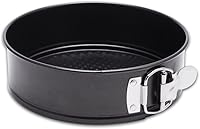
A nonstick pan helps here. The HIWARE 9 Inch Non-stick Cheesecake Pan Springform Pan has a double layer nonstick coating that HIWARE says helps the cake release without damage.
That coating does not replace loosening the edge, but it can make the step easier.
How to remove cheesecake from springform pan step by step
The basic order is chill, loosen, open, lift, and slide. Set the pan on a stable surface so it does not shift while you work.
Loosen the edge with a thin knife. Then find the latch or buckle on the outside of the ring and open it slowly.
Lift the ring straight up with both hands. Keep it level so it does not bump the cake as it rises.
If the cake will serve from the base, set the base on a cake stand or serving plate. If you want it off the base, slide a thin, flat spatula under the cake and move it in one smooth motion onto the serving plate.
Why does cheesecake stick to the ring?
Cheesecake sticks when cheese, butter, or crust fills the small gap at the edge. That gap can bond as the cake cools and sets.
Sugar and fat can leave a thin film on metal or coated surfaces. The film may look thin, but it can still grip the side.
A hot water bath can splash batter onto the ring during baking. That residue can dry and hold the cake in place later.
Loosening the edge solves most sticking. Do not skip that step just because the pan is nonstick.
Our guide on how to prepare springform pan for cheesecake covers greasing, parchment, and leak control before baking. Good prep makes release easier later.
How do you keep the sides neat when you lift the ring?
Keep the sides neat by lifting the ring slowly and straight up. A tilted ring can scrape or dent the cake.
Use both hands, one on each side of the ring. Raise it a few inches, then pause and check for sticking.
If the ring catches, stop and loosen that spot again. Do not pull harder to force it free.
A smooth, even lift works best on a flat counter. Avoid lifting over a sink or a crowded stove, where a bump is more likely.
After the ring is off, smooth small marks with the back of a warm spoon. Use light pressure so you do not press into the cheese.
For a crustless cake, the edge needs extra care. The cheese body is softer than a crumb crust, so a gentle touch matters more.
How do you slide cheesecake off the removable base?
Slide the cheesecake off the base with a wide, thin spatula and a steady hand. The base is thin, so support the cake from below.
Place the serving plate close to the base. Line up the spatula with the cake edge.
Slide the spatula under the cake in one motion. Then move the cake straight onto the plate.
Do not carry it far if you can avoid it. Short moves reduce the chance of a crack or a drop.
The RFAQK 9 Inch Springform Pan Nonstick Leakproof includes a removable bottom and an angled icing spatula. That spatula helps with serving, although a flat metal spatula may give firmer support for a heavy cake.
What if you want to serve slices from the pan?
You can serve slices without moving the whole cake. Leave it on the base and cut it in place.
Use a long, thin knife. Dip it in hot water, wipe it dry, and cut one slice.
Repeat the hot water dip for each cut. This keeps cheese from building up on the blade.
Press straight down, then pull the knife out cleanly. Do not rock the blade side to side.
Lift each slice with a small spatula or pie server. Place it on a plate right away.
If your recipe is smaller, a best springform pan 8 inch pick may fit your oven and serving plan better. Size affects both baking time and slice count.
Which springform pan makes removal easier?
A pan makes release easier when it has a smooth nonstick surface, a strong buckle, and a flat removable base. Those features reduce sticking and give you control.
Check the diameter and height before you buy. A 9 inch pan fits most standard cheesecake recipes and serves about 8 to 10 people, depending on slice size.
The three pans here are rated to 450°F, which covers most cheesecake recipes. The HIWARE Springform Pan Set of 3 Non-stick includes 6 inch, 8 inch, and 10 inch pans for small cakes, standard cheesecakes, and larger gatherings.
If you are comparing sizes, our best 9 inch springform pan for cheesecake guide breaks down fit and use. You can also browse best springform pan for cheesecake options for other diameters.
How do you clean the pan after release?
Clean the pan by hand with warm, soapy water and a soft sponge. Hand washing protects the nonstick coating.
Rinse off cheese and crust right after serving. Let the pan soak for a few minutes if residue sticks.
Do not use metal scouring pads or sharp utensils on the coating. They can scratch the surface and make future release harder.
Dry the pan fully before you store it. Put the ring and base together only when both parts are dry.
Keep the buckle clean too. Wash away cheese that collects near the latch, then dry it well.
If you store other bakeware sets in the same cabinet, place parchment between pans. That stops stacking marks on the coating.
What if the cheesecake cracks when the ring opens?
A crack usually means the cake was too warm, too soft, or caught on the ring. You can often smooth minor cracks after release.
Let the cake sit at room temperature for 10 to 15 minutes. Use the back of a warm spoon to press the edge gently, and wipe the spoon clean as you work.
For the top, a light sweep of sour cream or a thin glaze can cover small cracks. That is a serving fix, not a repair.
If the crack came from high oven heat, cheesecake often bakes best at moderate heat with a water bath. If you spot rust on other kitchen gear, our guide on how to remove rust from a stand mixer bowl shows safe cleaning habits for metal items.
Can you make cheesecake without a springform pan?
Yes, you can make cheesecake without a springform pan, but release will be harder. A regular cake pan has fixed sides, so you must turn the cake out or dig out slices.
That is why springform pans remain the standard choice. The ring opens, so you lift it away instead of flipping the cake.
If you do not own one yet, read can i make cheesecake without springform pan for workarounds. Then decide if a dedicated pan fits your baking habits.
For most home bakers, a 9 inch pan is the safest first buy. It fits standard recipes, ovens, and serving plates.
How do you remove cheesecake from springform pan for clean slices?
For clean slices, chill the cake, loosen the edge, open the ring, and cut with a hot, dry knife. Each step protects the shape of the cake.
Chill the cheesecake until it is firm. Loosen the edge before you touch the buckle, then lift the ring straight up.
Leave the cake on the base if you plan to cut it in place. Dip the knife in hot water before each cut, wipe it dry, then cut straight down and out.
Serve each slice on a small plate and keep the remaining cake in the fridge between servings. Pick the HIWARE 9 inch pan for a single standard size, the HIWARE set of three for different sizes often, or the RFAQK pan for parchment liners and a spatula in the box.
Frequently asked questions
When should I remove a cheesecake from a springform pan?
Remove the ring after the cheesecake has cooled and chilled for several hours, often overnight. The cake should feel firm and set near the center, not soft or wobbly.
Chilling helps the edge hold its shape when the ring opens.
Can I remove cheesecake from the pan while it is warm?
You can open the ring once the cake is cool enough to handle, but the slices may look less neat. Warm cheesecake is softer and more likely to tear at the edge.
For clean slices, chill it first and cut it cold.
What if cheesecake sticks to the springform ring?
Run a thin knife or offset spatula around the edge before opening the ring. Work gently and wipe the blade between passes.
A nonstick coating helps, but a loose edge makes the release much cleaner.