Silicone Baking Mat vs Parchment Paper: Which to Use? (November 2026)
Choose a silicone baking mat for repeat use and a parchment sheet for quick cleanup or disposable lining. Your pan size, recipe temperature and cleanup routine decide which works best.
On this page (9 sections)
- Silicone baking mat vs parchment paper: which is better?
- When should you use a silicone baking mat?
- When should you use parchment paper?
- Is a silicone baking sheet better for half-sheet pans?
- Which option works better for dough and pastry?
- How do the 2 parchment options compare?
- Which liner gives the easiest cleanup?
- Which option has the better heat range?
- Which should you choose for your kitchen?
Choose a silicone baking mat for repeat use and a parchment sheet for quick cleanup or disposable lining. The best choice depends on your pan size, recipe temperature and how often you want to wash or replace the liner.
The routines behind each liner feel very different in daily use. A reusable mat asks you to wash and put away one item after each batch.
A parchment sheet asks you to pull a fresh sheet, use it and throw it away. Neither routine suits every kitchen, so start with your habits rather than the material alone.
Silicone mats are reusable and can reduce the need for oil, cooking spray or paper. That suits people who bake cookies, roast vegetables or prep food several times in a week.
Parchment sheets are ready to use and easy to remove. They help keep sticky food away from a tray and suit large batches or anyone who prefers to finish cleanup by lifting the liner away.
Pan size matters more than many shoppers expect. A liner that folds over the rim or leaves a wide strip of bare metal exposed will not sit as neatly as one that fits flat inside the tray.
Measure the inside of your most used pan before you compare options. Then match that measurement against the liner size you are considering.
Temperature is the next check. Each product carries its own stated limit, and a recipe hotter than that limit is not a good fit for that liner.
Cleanup follows from those points. Washing a mat each time feels simple with regular dishwashing, while peeling off a used sheet feels simpler after a greasy or sugary batch.
Storage also matters. A rolled or folded mat needs drawer or cupboard space, while a boxed supply of sheets needs a spot near the work area.
If you are building a broader collection of pans and tools, our guide to bakeware sets can help you plan around the pieces you already own.
For many home bakers, the practical answer is not to pick one material for every task. It is to pick the liner that fits the pan, the temperature and the cleanup you are willing to do that day.
That approach keeps the choice grounded in real kitchen use. It also avoids buying a liner that stays unused in the cupboard.
 Best for everyday baking
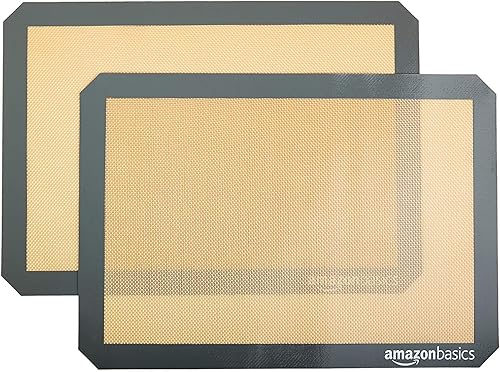
Amazon Basics Silicone Rectangular Baking Mat

Silicone baking mat vs parchment paper: which is better?
Silicone baking mats suit repeated use, while parchment paper suits fast cleanup and one-time lining. Neither option is best for every baking task.
A mat stays in your kitchen for repeated baking, roasting and food prep. Parchment is a disposable wood-pulp sheet that you place on a tray, use, then remove.
In some places, baking paper is another name for parchment paper.
Reusable silicone adds a washing step. Parchment creates more waste, but it can be the simpler choice for messy recipes, holiday batches or anyone who does not want to scrub a liner.
The surface also changes how you work. A flexible mat needs a tray for support, while a flat parchment sheet can be lifted with baked goods or discarded after cooling.
When should you use a silicone baking mat?
Use a silicone baking mat when you bake often and want one liner for repeated jobs. It makes the most sense when the mat fits your tray and the recipe stays within its heat rating.
The Amazon Basics Silicone Rectangular Baking Mat comes as a 2-pack, with each mat measuring 16.5 x 11.6 inches. It is reusable, non-stick, food safe, dishwasher safe and heat resistant up to 480°F.
Use the mat with a baking tray for support. Do not place it directly on an oven rack, and keep the oven within the stated 480°F limit.
For more on material and use considerations, see whether silicone baking mats are safe.
A reusable liner can be useful for cookies, roasted vegetables and other foods that would otherwise leave grease or stuck-on residue. It can also help when you want to avoid adding oil or cooking spray to the tray.
The best silicone baking mats come in different sizes and thicknesses, so measure your pans before choosing one. A mat that curls over the edge or leaves large gaps can be less useful than a smaller sheet that sits flat.
When is a silicone baking mat not the best fit?
A silicone mat may not suit you if you bake only a few times a year, have little room to wash or store it, or need a clean liner for several trays at once. One mat cannot line multiple pans during a large batch unless you reuse it between rounds.
Silicone can also be the wrong choice when the tray size is unusual. Measure the inside surface of the pan, then compare it with the mat dimensions rather than choosing by the word “half sheet” alone.
For tight storage, a small silicone baking mat may be easier to keep flat or roll away than a large work mat.
When should you use parchment paper?
Use parchment paper when you want a precut liner, simple release and nearly no cleanup. It is especially useful for batch baking, sticky foods and recipes where you want to lift the finished food from the tray.
The HIWARE 200 Pcs Parchment Paper Sheets measure 12 x 16 inches and fit half-sheet pans. They are 45gsm, unbleached wood pulp sheets that are oven and microwave safe to 450°F.
The 200-sheet pack suits frequent baking and cooking. Pull out a sheet, place it on the tray, add the food and remove the paper after the task.
Parchment can also separate baked goods or candies in a container, help keep frosting from smearing between layers and serve as a simple wrapping material. It is disposable, so you do not need to wash it after a greasy or sticky recipe.
The main trade-off is repeated replacement. If you bake every day, the ongoing need for fresh sheets may be less convenient than washing a silicone mat.
Is a silicone baking sheet better for half-sheet pans?
A 12 x 16 inch parchment sheet is the simpler half-sheet option when you want a precut disposable liner. A silicone baking sheet can work well too, but only when its exact dimensions fit the tray.
The HIWARE and SMARTAKE parchment sheets both measure 12 x 16 inches. That shared size makes them easy to compare for half-sheet baking, but check your pan's usable interior before placing an order.
The best silicone baking mats for half sheet pans are worth comparing when you want a reusable alternative. Look for a mat that sits inside the rim without folding or leaving too much exposed metal.
A parchment sheet can be trimmed if needed, although trimming removes some of the convenience of a precut format. For oven use, compare wax paper and parchment paper before choosing a liner.
Never allow paper to extend toward a heating element or touch an open flame.
Which option works better for dough and pastry?
A large silicone mat is better for rolling and shaping dough, while parchment paper is better for transferring or lining a baking tray. The right choice depends on whether the surface is part of your work area or only a pan liner.
The DANIA & DEAN 26 x 16 in Extra Thick Silicone Baking Mat is made for pastry and bread work. It has 0.7mm thickness, reinforced fiberglass, a non-slip bottom and measurement guides.
Its listed temperature range is -45°F to 450°F, and it is described as suitable for oven, microwave and freezer use. It is also dishwasher safe, so the same large surface can move from dough work to cleanup.
The large size is useful for pie crust, pizza dough, sourdough and other dough tasks. It may be too large for a small counter or baking tray, so measure both the work area and storage space first.
A parchment sheet does not replace that broad work surface. It is better after shaping, when you need a liner beneath dough or a way to move baked food from the tray.
How do the 2 parchment options compare?
Choose HIWARE for a half-sheet-focused parchment supply and SMARTAKE for broader disposable kitchen use. Both options provide 200 unbleached 12 x 16 inch sheets with a 450°F heat limit.
The HIWARE sheets are 45gsm and described as extra thick. That may suit jobs where you want to lift food from the tray using the paper, such as moving baked goods after cooking.
SMARTAKE emphasizes precut sheets that lay flat without cutting a curly roll. Its sheets are made from unbleached wood pulp and are described as non-stick, waterproof and oilproof.
Both options reduce measuring and cutting. The difference is mainly the stated paper construction and the way each product is positioned for daily use.
If you bake large batches, keep the box near the tray area. If you bake only occasionally, either pack may last a long time, but storing 200 sheets still takes more room than one rolled silicone mat.
Which liner gives the easiest cleanup?
Parchment gives the fastest cleanup, while dishwasher-safe silicone makes reusable cleanup more manageable. Choose parchment for food that leaves a heavy coating, and choose silicone when you want to keep using the same liner.
Remove parchment once the tray is cool enough to handle, then discard it according to your local waste rules. Do not assume every sheet can be composted just because it is made from wood pulp.
For silicone, let the mat cool before washing. Follow the product care instructions, and check our guide on whether silicone baking mats are dishwasher safe for a closer look at cleaning routines.
The Amazon Basics and DANIA & DEAN mats in this comparison are dishwasher safe. Hand washing may still be useful when you want to remove crumbs before loading the dishwasher or when the mat is too large to fit comfortably.
Avoid cutting directly on a silicone baking mat. A damaged surface may be harder to clean and less useful as a non-stick liner.
Which option has the better heat range?
The Amazon Basics mat has the highest stated heat limit here at 480°F. The DANIA & DEAN mat and both parchment options are rated to 450°F.
That 30°F difference matters only when your recipe needs temperatures above 450°F. Most routine baking and roasting does not sit in that narrow gap.
When a recipe needs more heat, the stated limit for the exact item in your hand should govern the choice. Do not borrow a higher rating from one product and apply it to another liner.
Heat resistance also needs to be weighed alongside support and placement. The Amazon Basics mat is meant to be used with a baking tray for support and should not sit directly on an oven rack.
That tray support keeps the flexible mat steady under food and helps it sit flat in the oven. The DANIA & DEAN mat carries a stated range from -45°F to 450°F for oven, microwave and freezer use.
That range suits dough work and cold storage as well as baking, but it still tops out at 450°F. The HIWARE parchment sheets are oven and microwave safe to 450°F.
Their 12 x 16 inch size is aimed at half-sheet pans, so pan fit and heat limit need to be checked together. The SMARTAKE parchment sheets also carry a 450°F limit.
They are made for baking, grilling, frying, steaming and microwave use within that stated limit. A higher limit does not make a liner better for every recipe.
A mat that is too small for the tray or a sheet that is too large for the pan can be less useful than a lower rated item that fits well. Parchment needs care around heat sources.
Keep a sheet flat on the tray and away from heating elements or an open flame. A sheet that stays inside the pan and under the food is easier to control.
Silicone needs care of a different kind. Let a mat cool before washing it, and follow the care notes for the specific mat you own.
Dishwasher safe does not mean care free. A large mat may need a rinse first so crumbs do not settle on the surface during the wash.
Neither material removes the need to watch the oven. Food can brown faster at the edges, and a liner can change how heat reaches the pan.
For food-contact materials and kitchen-use guidance, you can review the FDA food contact substances information alongside the care instructions for your specific item. The safest choice is the liner whose size, support needs and stated limit all match the recipe in front of you.
Which should you choose for your kitchen?
Pick silicone if you bake often, want a reusable liner and can wash and store it. Pick parchment if you want fast cleanup, multiple tray liners or a disposable sheet for sticky food.
Choose the Amazon Basics mat for everyday baking on smaller rectangular trays and a higher stated heat limit. Choose HIWARE when you want 200 thicker precut sheets sized for half-sheet pans.
Choose DANIA & DEAN when the main job is rolling pastry or bread dough on a large, guided, non-slip surface. Choose SMARTAKE when you want 200 disposable sheets for baking plus grilling, frying, steaming, microwave use and wrapping.
The best silicone baking mats and parchment sheets can both earn a place in one kitchen. Use a reusable mat for routine batches, then keep precut parchment for sticky recipes, large baking days and cleanup you want to finish quickly.
Frequently asked questions
Is a silicone baking mat better than parchment paper?
A silicone baking mat is better for repeated baking and less paper waste, while parchment paper is better for quick cleanup and recipes where you want to discard the liner. Choose based on pan fit, temperature, storage and whether washing a reusable mat is easier for your routine.
Can you use silicone baking mats instead of parchment paper?
Yes, a silicone baking mat can replace parchment paper for many baking, roasting and food prep tasks. Use the mat with a baking tray for support, follow its heat limit, and keep it off the oven rack unless the product instructions specifically allow otherwise.
Which is easier to clean, silicone mats or parchment paper?
Parchment paper is easier to clean up because you can remove and discard the sheet. Silicone mats reduce disposable waste but need washing after use; the Amazon Basics and DANIA & DEAN mats in this comparison are dishwasher safe.
Are silicone baking mats safe at high heat?
Silicone baking mats are safe only within their stated temperature range. The Amazon Basics mat is heat resistant to 480°F, while the DANIA & DEAN mat is rated from -45°F to 450°F.
Keep either one on a baking tray and follow its care instructions.
Do silicone baking mats make cookies spread?
A silicone baking mat can affect how dough contacts the pan, but cookie spread also depends on the recipe, dough temperature and oven conditions. Use the same pan and recipe when comparing a mat with parchment, and watch the first batch closely.