How to Check Silicone Baking Mats Made in USA
Check the package, product details, and manufacturer information for a clear country-of-origin statement. A US brand, US seller, or US shipping address does not prove that a silicone baking mat was made in the USA.
On this page (9 sections)
- What proves a silicone baking mat is made in the USA?
- How should you check the package and product details?
- Which wording should make you cautious?
- How do material and care details fit the origin check?
- Is parchment paper a useful alternative?
- What if you need a very large silicone work surface?
- What questions should you ask the brand?
- How should you use and clean a silicone mat after checking its origin?
- How do you choose among these options?
The reliable way to find silicone baking mats made in USA is to confirm a clear country-of-origin statement for the exact mat. A US brand, US seller, or US shipping address does not prove that manufacturing happened in the United States.
You need evidence that points to the finished mat itself, not to the company behind it or the warehouse that shipped it.
Start with the package, then compare the product details with the brand's own information. Look for the brand, product name, size, color, and model number so you are checking the same version you plan to buy.
If the country is missing or vague, treat the origin as unconfirmed rather than guessing from the brand name.
This check matters most when US manufacturing is a firm requirement for you. It also helps you separate a useful product detail from a marketing impression.
A mat can be food safe, reusable, and well sized for tray work while still leaving its origin unconfirmed.
Keep notes as you go, including where you found each statement and the exact wording. That record makes it easier to compare options and to ask a clear follow-up question later.
If a brand cannot identify where the finished mat was made, you can still judge the mat on size, heat limit, and care, but you should not call it US made.
What proves a silicone baking mat is made in the USA?
A direct statement naming the United States is the strongest evidence. Look for wording such as “Made in USA” or “Made in the United States” on the packaging, product label, or manufacturer information.
Do not treat “American brand,” “ships from the USA,” “designed in the USA,” or a US warehouse as the same claim. Those phrases can describe the company, design work, or shipping location without identifying where the silicone mat was manufactured.
The Federal Trade Commission explains that an unqualified Made in USA claim must meet its standard for being all or virtually all made in the United States. Read the FTC guidance on Made in USA claims when a brand uses that wording.
How should you check the package and product details?
Check the country-of-origin field before relying on a product description. Look at the outside packaging, sewn or printed label, and any manufacturer information that identifies the exact model.
Record the brand, product name, size, color, and model number. Country information can differ between versions, sizes, or production runs, so a general brand statement may not answer the question for the mat in your cart.
Search the exact product name with the phrase “made in USA.” Search results can reveal a manufacturer page, a retailer detail page, or a discussion that points you toward better evidence.
They are leads, not proof by themselves.
If you are comparing bakeware sets, apply the same check to each piece. A US-made pan in a set does not prove that every included item has the same origin.
Which wording should make you cautious?
Vague wording deserves a follow-up question. Phrases such as “proudly American,” “US company,” and “manufactured to US standards” do not identify the manufacturing country.
They may describe where a brand is based, how a product was designed, or the standard it was meant to meet.
“Imported” is also different from “made in USA.” It indicates that the item entered the country from elsewhere, but it may not identify the manufacturing location in enough detail for your decision. Ask where the finished baking mat was made, and whether that answer applies to the exact size and color.
A country flag or an American-style brand name is not enough. Check whether the statement refers to the finished baking mat, its silicone material, its packaging, or the company itself.
Only a direct statement about the finished mat answers the question you started with.
How do material and care details fit the origin check?
Country of origin and product performance are separate questions. After checking origin, compare food-safe wording, heat resistance, size, non-stick use, and cleaning instructions.
A mat should sit on a baking tray when the product instructions call for support. Do not place a silicone mat directly on an oven rack unless the instructions specifically allow it.
Is the Amazon Basics mat a useful comparison?
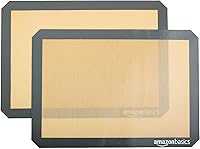
The Amazon Basics Silicone Rectangular Baking Mat is a 2-pack of food-safe, reusable, non-stick silicone mats. Each mat measures 16.5 x 11.6 inches, is heat resistant up to 480°F, and is dishwasher safe.
The product name and specifications identify the brand, material, dimensions, and care details. They do not mean the mats were made in the USA, so confirm country of origin separately if that requirement matters.
The rectangular shape suits standard tray work, roasting, and food preparation. Measure your baking sheets before ordering, because a mat's stated dimensions do not guarantee a fit for every pan.
For more material and care comparisons, see our guide to the best silicone baking mats. If dishwasher care is your main concern, read are silicone baking mats dishwasher safe before choosing a cleaning routine.
Is parchment paper a useful alternative?
Parchment paper can be a better choice when you want disposable sheets or a different material. For the trade-offs, see silicone baking mat versus parchment paper.
It does not answer the question of where a silicone baking mat was made, but it gives you another way to reduce sticking without buying a silicone liner.
Who may prefer SMARTAKE sheets?
SMARTAKE 200 Pcs Parchment Paper Baking Sheets are 12 x 16 inch rectangular sheets made from wood pulp. The package contains 200 sheets, and the sheets are non-stick and rated for temperatures up to 450°F.
Use parchment when the pan size and task suit a flat disposable sheet. Do not exceed the stated heat limit, and keep the sheets away from direct contact with heating elements.
This option is not a silicone baking mat and should not be described as one. Its value is the contrast: you can compare a reusable mat's origin and care with a disposable paper option's material, sheet count, and heat limit.
What if you need a very large silicone work surface?
A large pastry mat helps with dough and countertop work, but its size changes how you should check fit and care. Measure the counter area first, then confirm whether the mat's temperature range suits your intended use.
Who may prefer the Folksy Super Kitchen mat?
The Folksy Super Kitchen Non-slip Silicone Pastry Mat Extra measures 36 x 24 inches and is 0.7 mm thick. It is red, rectangular, made of silicone, and has a non-slip back described for pastry, dough rolling, pizza, pie crust, fondant, and countertop use.
Its stated temperature range is -30°F to 470°F. The large size can help with dough work, but it may be too wide for a small counter or difficult to store flat.
The product information does not guarantee US manufacturing. Check the exact package or ask Folksy Super Kitchen where the finished mat was made before treating it as a US-made option.
For a round work surface, compare the best round silicone baking mat. For mixer-area protection rather than baking, see the Best Stand Mixer Slide Mat For Kitchenaid Stand Mixer.
What questions should you ask the brand?
Ask for the manufacturing country of the exact model, not just the company's headquarters. Include the product name, size, color, and model number in your message.
Useful questions include:
- Where was the finished silicone baking mat manufactured?
- Does the answer apply to this exact size and color?
- Is the packaging marked with the country of origin?
- Has the manufacturing location changed between production runs?
- Are the silicone material and finished mat made in the same country?
Keep the reply with your purchase notes if country of origin is a firm requirement. If the answer only describes the brand or design location, ask again about the finished mat.
How should you use and clean a silicone mat after checking its origin?
Follow the mat's own temperature, support, and cleaning instructions. Origin does not replace safe use guidance.
Place the mat on a suitable baking tray when required, avoid direct oven-rack use when prohibited, and stay within the stated heat range. Let the mat cool before washing or folding it for storage.
For routine care, remove crumbs, wash with a suitable dishwashing method, and dry the mat fully before storing it. Our guide to the best way to clean silicone baking mats covers the cleaning decision in more detail.
How do you choose among these options?
Choose based on both origin evidence and the job you need the product to do. Pick the Amazon Basics mat if you want 2 reusable rectangular silicone mats with stated 16.5 x 11.6 inch dimensions and dishwasher care.
Choose SMARTAKE if disposable 12 x 16 inch parchment sheets fit your workflow better. Choose the Folksy Super Kitchen mat if a 36 x 24 inch surface suits dough rolling and countertop work.
For any of them, confirm the country of origin separately. If a brand cannot identify where the finished product was made, you can still compare its material and use, but you should not call it a silicone baking mat made in USA.
Frequently asked questions
How can you tell if a silicone baking mat is made in the USA?
Look for a clear country-of-origin statement on the package or product information, such as Made in USA or Made in the United States. A US brand name, American seller, warehouse location, or shipping address does not prove US manufacturing.
If the origin is unclear, contact the brand before buying.
Does food-safe silicone mean a mat is made in the USA?
No. Food-safe describes a material or intended food contact use, not the country where the mat was made.
Check the country-of-origin statement separately, then review the mat's size, heat limit, care instructions, and intended use.
Are silicone baking mats made in the USA better?
Not automatically. US manufacturing may matter to you for supply-chain, labor, or sourcing reasons, but origin alone does not guarantee better release, durability, heat resistance, or cleaning.
Compare the full material and care details with the work you do most often.
What should you do if a baking mat has no country-of-origin label?
Treat the origin as unconfirmed until the brand provides a clear answer. Save the product name and model details, ask where the mat was manufactured, and check whether the response applies to the exact size and version you plan to buy.