Springform Pan vs Cake Pan: Which Should You Use? (November 2026)
Choose a springform pan for cakes that cannot be turned out easily, and a fixed cake pan for firm batters and clean layer cakes. The right choice depends on release, batter texture, size and how you plan to serve the dessert.
On this page (9 sections)
- Springform pan vs cake pan: which is easier to use?
- Which pan suits cheesecake and delicate desserts?
- Which pan is better for layer cakes?
- When does a springform set make more sense?
- Are mini silicone molds a substitute for either pan?
- How does release differ between the 2 pan types?
- Which pan is easier to clean?
- What else should you consider before buying?
- Final verdict: springform pan or cake pan?
Choose a springform pan for cheesecake and delicate desserts, or choose a fixed cake pan for firm batters and tidy layers. Release method matters more than the name on the recipe.
A springform pan opens at the side and usually has a removable base. A fixed cake pan keeps its walls attached to the base.
You release a fixed pan cake by loosening the edges and turning it out. With a springform pan, the wall comes away and the cake can stay upright on its base.
That difference matters most for soft, chilled or delicate desserts. Cheesecake is the classic example, and mousse cake falls into the same group.
A firm butter cake or layered sponge is usually less fragile. Batter also matters before baking starts.
A fixed pan has no latch, seam or removable joint to manage while filling. A springform pan needs its base seated and buckle closed, and thin batter may find the seam.
Size matters too. A 9 inch springform suits a standard round cheesecake, while an 8 x 2 inch fixed pan suits round layers.
Diameter changes portion size, baking time and serving. The pan should match the recipe.
Material is a practical difference as well. Coated steel springform pans focus on non-stick release, while anodized aluminum fixed pans heat and cool quickly and handle higher temperatures.
Follow the care instructions for the exact pan you own. Storage also affects which pan you will reach for.
A fixed pan stacks with no parts to align. A springform pan needs its base and side kept together and its buckle checked.
Start with the recipe, then look at release, diameter and serving method.
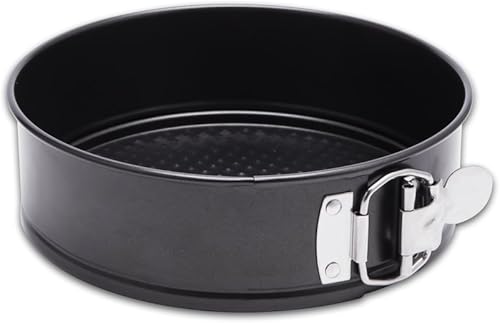 Best for standard cheesecakes
HIWARE 9 Inch Non-stick Cheesecake Pan Springform
 Best for firm layer cakes
Fat Daddio's Anodized Aluminum Round Cake Pans
Springform pan vs cake pan: which is easier to use?
A springform pan is easier when the cake must stay upright, while a fixed cake pan is simpler when the cake can be turned out. That difference makes springform pans especially useful for cheesecake, mousse and chilled desserts.
The HIWARE 9-inch springform pan has a spring buckle, removable bottom and non-stick coating. Those parts are designed to let you open the side and lift the cake away after baking.
The Fat Daddio's pans are fixed round cake pans in an 8 x 2-inch, 2-piece set. Their permanent sides give you a straightforward shape for round layered cakes, but you need a release method such as lining or greasing that suits your recipe.
For a wider range of diameters, the HIWARE 3-piece springform set includes 6, 8 and 10-inch pans. That makes it useful when your recipes vary in size or when you want different layers for one dessert.
Which pan suits cheesecake and delicate desserts?
Use a springform pan for cheesecake, mousse cake and desserts that are difficult to invert. The removable sides reduce the need to flip a soft cake onto a rack or plate.
A cheesecake often has a tender filling and a surface you want to keep intact. Opening the latch allows the wall to separate from the dessert, so you can serve it from the base or transfer it carefully.
The 9-inch HIWARE pan is a focused choice for standard round cheesecake recipes. Its steel construction, non-stick coating and oven-safe rating up to 450°F fit the needs of many baked dessert recipes.
A springform pan is not automatically leakproof for every batter. A very thin mixture may find its way through the seam, so check the recipe method and use a water-bath setup only when the recipe and pan instructions support it.
Our guide to how to use a springform cake pan covers setup, release and care steps that help protect soft cakes.
Which pan is better for layer cakes?
Choose fixed cake pans for firm layer cakes when you want straight sides and repeatable layers. A fixed pan has no latch or seam to manage during filling and baking.
The Fat Daddio's set includes 2 anodized aluminum pans measuring 8 x 2 inches. Since both pans have the same size, you can bake matching layers together instead of waiting for one pan to cool before starting the next layer.
Each pan has a 3.5-cup capacity. That is useful when a recipe is written for a smaller round layer, but you should still compare the recipe volume with the pan size before filling.
Anodized aluminum heats and cools quickly, and the pans are temperature rated up to 550°F. The set is also described for round tiered and layered cakes, deep-dish pizzas, pressure cookers, air fryers, toaster ovens and freezers.
Those uses do not remove the need to check the appliance's interior size. The pans measure 8 inches inside and have an overall diameter of 9 inches, so measure the space before using them in a small appliance.
For broader bakeware choices, see our guide to bakeware sets. It can help you compare matching pieces when one pan no longer covers your recipes.
When does a springform set make more sense?
Choose a springform set when you bake cakes in several diameters or need removable sides for more than one dessert style. A set gives you flexibility, but it also takes more storage space than one pan.
The HIWARE set includes 6, 8 and 10-inch round springform pans. You can use the smaller size for a compact dessert, the middle size for many everyday recipes and the larger size when you need a wider cake.
The set has a non-stick coating and stainless springform buckles. It is oven safe to 450°F, and hand washing is recommended.
Three sizes can also help when a recipe needs separate layers or when you want to scale the finished dessert by diameter. Keep the pans level while filling, and avoid overfilling because cake batter rises during baking.
If you want to compare single-pan options first, our guide to best springform baking pans focuses on removable-side designs for different baking needs.
Are mini silicone molds a substitute for either pan?
Mini molds are useful for individual desserts, but they do not replace a springform or fixed cake pan for a standard cake. Their small size changes both the portion and the baking time.
The O'CREME pack contains 25 reusable mini molds with an 11.5-fluid-ounce capacity. They are intended for flan, chocoflan, gelatin and other small desserts rather than large round layers.
The stated temperature range is -10°F to 375°F. That range allows the molds to move from baking to freezing within those limits, but it is lower than the oven rating of the steel and aluminum pans in this comparison.
The molds are made from PET and are designed to be washed and reused. Their small footprint can make portioning easier, but you still need a stable tray or surface for moving filled molds safely.
For a dessert that needs a removable ring and a full-size round base, compare best springform pans for ice cream cakes instead.
How does release differ between the 2 pan types?
Springform pans release by opening the side, while fixed pans release through preparation and careful turning. Pick the method that matches how fragile your finished cake will be.
With a springform pan, cool the cake as the recipe directs before unclipping the buckle. Letting the cake set first can reduce the chance of damaging the edge while the side is removed.
With a fixed cake pan, line or grease the pan according to the recipe. A thin edge tool can help loosen the cake, but avoid cutting into the pan surface or scraping aggressively.
Non-stick coating may reduce residue, but it does not make every cake release without preparation. Batter thickness, cooling time and the recipe's fat and sugar content all affect the result.
If you prefer a flexible material, see best silicone springform pans for another removable-side option. Check the temperature range and care instructions before changing materials.
Which pan is easier to clean?
A fixed pan has fewer moving parts, while a springform pan needs attention around its buckle, seam and removable base. Both types benefit from gentle cleaning and complete drying.
The HIWARE springform products recommend hand washing. Clean the base and side separately, and check the seam for crumbs or baked residue before storing the pieces together.
The Fat Daddio's pans also recommend hand washing. Their anodized aluminum construction is designed not to rust, peel or flake, but rough tools can still damage a pan's surface.
The O'CREME molds are reusable and should be washed by hand. Small cavities can hold residue, so rinse them soon after use and let them dry fully before stacking.
A fixed pan is simpler to clean because there is no latch to trap batter and no base to separate from a wall. Wash it with a soft sponge, rinse it well and dry it before putting it away so water does not sit on the surface.
A springform pan needs a little more care at the joints. Run your fingers along the seam after washing, clear any crumbs from the groove where the base meets the wall and make sure the buckle moves freely.
Storing the parts assembled can help keep the shape, but only when the pan is fully dry.
Non-stick and anodized surfaces both ask for gentle tools. Avoid steel wool and sharp utensils that scrape the coating or the aluminum, and do not stack pans in a way that knocks the edges.
Gentle cleaning protects release in the next bake as much as it protects the finish.
Avoid assuming that one care method works for every bakeware material. Follow the instructions for the exact pan, especially when a coating, buckle or flexible mold is involved.
What else should you consider before buying?
Choose by recipe, diameter and storage first, then compare material and temperature range. A pan that fits your cabinet but not your usual recipes will not solve the baking problem.
Measure your oven rack, storage shelf and any countertop appliance before ordering. The Fat Daddio's pans have an overall diameter of 9 inches even though their interior diameter is 8 inches.
Think about serving. A springform pan can reduce handling for a soft cake, while a fixed pan may give you cleaner control for layers that will be trimmed, filled and stacked.
Think about quantity too. One 9-inch springform is enough for a focused cheesecake routine, the 3-piece HIWARE set covers multiple diameters and the Fat Daddio's set supports 2 matching layers.
If you use a stand mixer for cake batter, our guides to the best stand mixer for cake baking and best stand mixer for cake decorating can help with the mixing and finishing parts of the process. For bread-focused bakeware, see how to use a perforated baguette pan.
Final verdict: springform pan or cake pan?
Pick a springform pan when release is the main problem, and pick a fixed cake pan when consistent layers and simple construction matter more. The choice follows the dessert, not a universal ranking.
Choose the HIWARE 9-inch springform for a standard cheesecake routine. Choose the Fat Daddio's 2-piece set for matching 8-inch layers, or the HIWARE 6, 8 and 10-inch set when recipes vary.
Choose the O'CREME molds only for individual flan, gelatin or mini desserts. For a standard cake, you need a springform or fixed round pan.
For cheesecake and mousse cake that should not be turned upside down, the 9-inch HIWARE springform is the direct fit. Its removable bottom and spring buckle let the side come away from the cake.
Its non-stick coating and 450°F rating suit many baked recipes. Hand washing is recommended, and thin batters need care at the seam.
For round layer cakes, the Fat Daddio's set has a clear advantage. Two matching 8 x 2 inch anodized aluminum pans let you bake both layers at once.
The fixed sides give a simple, straight shape for stacking. Each pan holds 3.5 cups, so check recipe volume before filling.
Fixed pans still need lining, greasing or another release method. The HIWARE 6, 8 and 10-inch set suits bakers whose needs change from recipe to recipe.
It gives springform release in three diameters for a compact dessert, an everyday cake and a wider bake. The trade-off is more storage space and the same hand washing and seam care as any springform pan.
The O'CREME 25-count molds are in a different category. They are for mini flan, chocoflan, gelatin and other individual desserts, with an 11.5 fluid ounce capacity.
Their temperature range is -10°F to 375°F, so they can move from baking to freezing within that range. They cannot replace a full-size pan for a standard round cake.
Use a springform when release is the risk, a fixed pan when layers need to match, and a set when diameter keeps changing. Match the pan to the recipe first, then to storage and washing.
Frequently asked questions
Is a springform pan better than a cake pan?
A springform pan is better for cheesecake, mousse cake and other desserts that are hard to turn out, while a fixed cake pan is better for firm cake batters and clean layers. Choose the springform when removable sides matter more than a tight one-piece seal.
Can you bake a regular cake in a springform pan?
Yes, you can bake many regular cakes in a springform pan, but batter thickness and pan sealing matter. Thin batter may leak through the seam, so use a recipe suited to the pan and follow the pan maker's care and setup guidance.
What is the main difference between a springform pan and a cake pan?
A springform pan has a latch and removable sides, while a fixed cake pan is one piece with permanent walls. The springform releases a delicate dessert without turning it upside down, but the fixed pan usually gives a simpler, tighter baking surface.
Are fixed cake pans better for layer cakes?
Fixed cake pans are often the easier choice for layer cakes because their straight, permanent sides support even layers and their one-piece design has no opening seam. A 2-piece set also lets you bake matching layers at the same time.
Can you use a springform pan for cheesecake?
Yes, cheesecake is one of the clearest uses for a springform pan. The removable sides let you lift the pan away from the cake instead of turning a soft or chilled dessert upside down, which can damage the surface.


