What Are Commercial Mixer Stands Called?
Commercial mixer stands are usually called mixer tables, mixer carts, mixer lifts, or equipment stands, depending on how they support the machine. A fixed table holds the mixer at working height, a cabinet lift hides it inside a base cabinet, and a rolling cart moves it between stations.
On this page (10 sections)
- What are commercial mixer stands called in shop listings?
- Why do commercial mixers need a dedicated stand?
- What is the difference between a mixer table and a rolling cart?
- What is a stand mixer cabinet lift and when does it help?
- What is the best stand mixer table for a permanent station?
- What are commercial mixer stands called when they are portable?
- What is a rolling kitchen cart used as a mixer stand?
- How do you choose the right type of mixer stand?
- What mistakes should you avoid when you shop for a mixer stand?
- Which stand type should you buy for a bakery or home kitchen?
Commercial mixer stands are usually called mixer tables, mixer carts, equipment stands, or cabinet lifts. You will also see stand mixer table, rolling mixer cart, and appliance lift.
A table gives a fixed, stable surface. A cart gives wheels and extra shelves, while a lift gives hidden storage inside a cabinet.
Choose based on weight, space, and how often you move the mixer.
What are commercial mixer stands called in shop listings?
Shops use mixer table, equipment stand, utility cart, and cabinet lift as the main names. Each describes a different support style.
A mixer table is a flat, fixed surface that lets you use the mixer without lifting it.
An equipment stand is broader and can mean a fixed table, a rolling cart, or a small work stand.
A mixer cart is a rolling stand with lockable wheels. You can move it between a sink, a bench, and storage.
A cabinet lift is a shelf inside a base cabinet that raises the mixer to counter level. It suits people who want the mixer hidden when not in use.
Why do commercial mixers need a dedicated stand?
A commercial mixer needs a dedicated stand because weight, vibration, and height affect safe use.
Check mixer weight first. The stand must carry the mixer plus bowl, ingredients, and attachments without wobbling.
Height should place the bowl rim where you can add ingredients and lift the bowl out without strain.
A heavy, low, wide stand resists movement better than a light folding stand. Locking wheels help only if they lock fully and the frame does not flex.
What is the difference between a mixer table and a rolling cart?
A mixer table is fixed and stable, while a rolling cart is mobile and flexible.
A fixed table does not roll when you pull the bowl or push attachments into place. It suits daily dough work or a small bakery where the machine never moves.
A rolling cart lets you move the mixer to a larger bench, then roll it back to storage. It suits shared kitchens and bakers with limited space.
Even with lockable wheels, a cart can shift more than a fixed table. Keep heavy bowls on the lowest tier to lower the center of gravity.
Which one suits a small kitchen best?
A rolling cart often suits a small kitchen best because you can park it in unused space and roll it out when you bake.
Measure the room before you decide. A cart needs space to turn and park, not just space to stand.
If your layout changes often, a cart is safer because it does not lock you into one spot.
What is a stand mixer cabinet lift and when does it help?
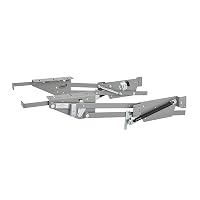
A cabinet lift is a spring-assisted shelf that raises a mixer from inside a base cabinet to counter height.
Our guide to What Is a Commercial Stand Mixer? explains how the machine differs from a home model. The stand choice depends on that size and weight.
A lift suits a kitchen with a standard base cabinet and limited counter space. The mixer stays hidden when not in use.
The Rev-A-Shelf Heavy-Duty Stand Mixer Lift for Kitchen has steel construction, soft-close movement, and three adjustable tension settings. It supports appliances up to 60 lb.
Check fit before you buy. This lift is designed for full-height base cabinets with 12 in to 21 in wide openings and 24 in cabinet depth.
The unit measures 20.63 in deep, 12 in wide, and 22.5 in high. Measure the inside of your cabinet, not just the door opening.
What is the best stand mixer table for a permanent station?
The best stand mixer table is heavy, fixed, and sized to the mixer with room for bowls.
Our roundup of the best stand mixer table options compares fixed tables, carts, and lifts for different kitchens.
A good table should have a wide top so the mixer footprint does not fill the whole surface.
You need room beside it for a bowl, a scale, and a spatula.
Frame material matters. Steel and thick wood resist vibration better than light metal tubing, and the legs should sit flat without rocking.
Keep attachments within reach on a lower shelf, side hooks, or a small drawer.
What are commercial mixer stands called when they are portable?
Portable stands are usually called portable equipment stands, folding stands, or dual tray stands. They are designed to move, set up fast, and store in a small space.
The Pyle Portable Dual Laptop Stand is an example, though it was built for laptops and sound equipment. Pyle says it has adjustable height, anti-slip prongs, and a steel build.
The stated load capacity is 33 lb, and the assembled size is 14.0 in by 26.4 in by 13.4 in. Use it only for lighter mixers well under that limit.
Use a portable stand only when the mixer is well under the weight limit. A commercial stand mixer will often exceed a 33 lb limit once you add a bowl and dough.
Check the mixer weight alone first, then add the bowl and ingredients.
Portable stands suit travel, events, or temporary workstations. They suit bakers who use a light mixer for small batches and need to pack it away after each use.
They do not suit daily heavy dough work.
What should you check on a portable stand before you buy?
Check weight limit, tray width, and lock strength before you use a portable stand for a mixer.
The tray must be wider than the mixer base in both directions. A mixer that overhangs the tray can tip when it vibrates.
Height adjustment must lock firmly. Test the lock by pressing down on the tray before you place the mixer on it.
What is a rolling kitchen cart used as a mixer stand?
A rolling kitchen cart is a three-tier utility cart that can hold a mixer on top and supplies below. It combines a stand, storage, and transport in one piece.
The ThreeHio Rolling Kitchen Microwave Cart is built as a three-tier cart with lockable wheels and four S-shaped hooks. It measures 23.62 in wide, 15.74 in deep, and 30 in high, with a metal frame and medium density fiberboard shelves.
The stated maximum weight recommendation is 210 lb.
This style suits bakers who change work areas. You can roll the mixer to a bench, lock the wheels, mix, then roll it to storage.
Lower shelves hold bowls, flour, sugar, or attachments, which keeps the top clear.
Hooks add storage for whisks, towels, or oven mitts. Keep heavy bowls low and centered so heavy items do not pull the cart off balance.
Check the top size against your mixer footprint before you decide.
How do you choose the right type of mixer stand?
Choose the stand type by weight first, then space, then how often you move.
Start with mixer weight. Add the bowl, ingredients, and the attachment you use most, and the stand limit must exceed that total.
Next, measure the space. For a lift, measure cabinet width, depth, and height.
For a table or cart, measure floor space, door width, and turning room.
Then think about daily habits. If you mix every day, a fixed table or lift will feel faster.
If you mix once a week, a cart or portable stand may be enough.
Our guide to best stand mixer cabinet lift styles can help if you want hidden storage. A lift is the only option that removes the mixer from view completely.
How do baking scales fit into a mixer stand setup?
Baking scales fit because accurate weighing is part of consistent mixing. A stand that leaves no room for a scale forces you to move bowls back and forth.
Our baking scales guide explains capacity, platform size, and readability. A compact scale that fits beside the mixer will make batch work faster.
Place the scale on the table or cart top, not on a lower shelf. You need a flat, stable surface for weighing flour and sugar, away from vibration during mixing.
What mistakes should you avoid when you shop for a mixer stand?
Avoid buying by name alone because the same name can mean different sizes and limits.
Do not assume a cart rated for a microwave will suit a commercial mixer. Check mixer weight against the cart limit and top size against the mixer base.
Do not skip the height check. Aim for a height that lets you lift the bowl straight up without twisting.
Do not ignore wheel locks on a cart. Lock all locking wheels and test the cart by pushing the top before you start.
Which stand type should you buy for a bakery or home kitchen?
For a bakery, choose a fixed table or a cabinet lift for daily heavy work. For a home kitchen, choose a cart if you move the mixer, or a lift if you want it hidden.
A bakery needs speed and stability. A fixed table keeps the mixer ready at all times, and a lift keeps it ready but hidden.
A home baker should think about storage space and frequency of use.
If the mixer lives on the counter, a table adds stability and shelf space. If the counter is small, a lift or cart frees up space when you are not baking.
If you plan to buy a Best Commercial Stand Mixer For A Bakery, match the stand to that model weight and size first.
Pick the type that fits your kitchen and mixer weight, then measure twice before you order.
Frequently asked questions
What are commercial mixer stands called?
They are sold as mixer tables, equipment stands, mixer carts, and cabinet lifts. The name tells you how the mixer is stored and moved, from a fixed work surface to a hidden lift or a rolling cart.
Measure the mixer and the space before you choose a type.
Is a mixer table the same as a mixer cart?
No. A mixer table is fixed in place and creates a stable work surface.
A mixer cart has wheels so you can move the mixer, lock it in place, and use lower shelves for bowls or tools.
Carts suit changing layouts, while tables suit one permanent station.
What is a cabinet lift for a stand mixer?
A cabinet lift is a spring-assisted shelf mounted inside a base cabinet. It lifts a stand mixer up to counter height for use, then lowers it back into the cabinet for storage.
Check cabinet width, depth, and weight limit before you buy.
Can a laptop stand hold a commercial mixer?
Some portable stands can hold smaller mixers or audio mixers, but you must check the weight limit and tray size. A commercial stand mixer is often far heavier than a laptop stand limit, so a mixer table, cart, or lift is usually the safer choice.