What Is a Wire Whisk Used for in Baking?
The main wire whisk use in baking is to blend, aerate, and smooth batters, egg mixtures, sauces, and glazes by hand. It breaks up lumps, mixes in air, and gives you control that a spoon or a powered mixer may not provide in a small bowl.
On this page (11 sections)
- How does a wire whisk use in baking help with dry ingredients?
- Which egg mixtures benefit most from a wire whisk?
- How do you use a whisk to aerate cream and egg whites?
- When is a wire whisk better than a spoon for batters?
- How does a whisk smooth sauces, glazes, and custards?
- What is the difference between a handheld whisk and a stand mixer whisk attachment?
- Which powered tools pair well with a manual wire whisk?
- How do you whisk with good technique and avoid common mistakes?
- How do you clean, dry, and store a wire whisk?
- Which tools should you pair with a wire whisk for cake baking?
- What is the best wire whisk use in baking for your kitchen?
The main wire whisk use in baking is to blend, aerate, and smooth batters, egg mixtures, sauces, and glazes by hand. It breaks up lumps, mixes in air, and gives you control that a spoon or a powered mixer may not provide in a small bowl.
A wire whisk works because its loops pull liquid and air through the mixture as you move your wrist. That action suits thin to medium mixtures where you want even blending without crushing delicate ingredients.
How does a wire whisk use in baking help with dry ingredients?
A wire whisk blends dry ingredients evenly before you add liquid. It spreads flour, baking powder, salt, and spices through a bowl so pockets of one ingredient do not remain.
This step matters for cakes, muffins, and quick breads. Even dry mixing helps the leavening spread out, which supports a more even rise.
Start with the dry ingredients in a clean, dry bowl. Whisk for about 30 seconds, then look for a uniform color with no streaks of flour or spice.
A whisk works better than a spoon here because the wires pass through the whole bowl. A spoon tends to push dry ingredients around the edges and can leave loose flour at the bottom.
Which egg mixtures benefit most from a wire whisk?
Egg mixtures benefit from a whisk because the wires add air and break the yolks into the whites. A few steady strokes create a smooth base for cakes, custards, quiches, and baked egg dishes.
For whole eggs, whisk until the color turns uniform and no clear streaks of yolk remain. You do not need a foam for most batters, and extra air can make the mixture leave the bowl too fast.
For egg whites, a clean whisk gives you control over the stage. You can stop at soft peaks or firm peaks based on how the tips hold their shape.
Keep the bowl steady with one hand and move the whisk in a figure-eight pattern. That pattern reaches the center and the sides, so less egg stays unbeaten at the edges.
How do you use a whisk to aerate cream and egg whites?
Aeration means adding air so a mixture becomes lighter and holds more volume. A wire whisk adds air by folding it into the liquid with each stroke through the bowl.
For heavy cream, whisk with larger, steady strokes and pause to check the texture. Stop when the cream holds soft peaks or firm peaks, since extra whisking can turn it grainy.
For egg whites, use a grease-free bowl and whisk because fat can stop the whites from foaming well. The wires need clean contact with the egg whites to build a stable foam.
A small amount needs only a handheld whisk. A larger amount, such as whites for a meringue, may call for powered help after the first foam forms.
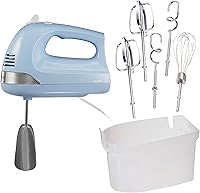
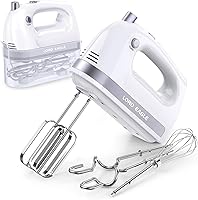
The Hamilton Beach 6-Speed Electric Hand Mixer includes a whisk for powered whipping.
When is a wire whisk better than a spoon for batters?
A wire whisk beats a spoon for thin batters, pourable mixtures, and sauces. The loops reach the bottom of the bowl and break up lumps that a spoon often misses.
Pancake, crepe, and muffin batters are good examples. The whisk blends flour into milk or eggs while keeping the small lumps that help the batter stay tender.
A spoon works better for thick dough. When the mixture resists the wires or climbs up the loops, switch tools rather than forcing the whisk.
Watch the texture as you mix. Thin batter should look smooth with a few small lumps, while a sauce should coat the back of a spoon with no streaks.
How does a whisk smooth sauces, glazes, and custards?
A wire whisk smooths hot mixtures because it keeps the liquid moving while it heats. That steady motion helps prevent lumps and reduces the chance of scorching at the bottom of the pan.
For a pan sauce, whisk the cornstarch slurry into the hot liquid in a thin stream. The whisk spreads the slurry before it settles, so the sauce thickens more evenly.
For custard, whisk eggs and sugar until the mixture lightens slightly, then add warm milk or cream in stages. Early whisking helps the eggs blend before heat reaches them.
For glazes, whisk powdered sugar with milk or lemon juice until streaks disappear. A smooth glaze spreads in a thin layer and sets with a clean finish.
What is the difference between a handheld whisk and a stand mixer whisk attachment?
A handheld wire whisk is a manual tool that you move through a bowl. A stand mixer whisk attachment is a powered tool that stays fixed to the mixer while the bowl or beater moves.
The handheld version suits small amounts and tasks where you need to feel the texture. It is easy to store, quick to rinse, and useful for one egg, a cup of cream, or a small pan of sauce.
The stand mixer version suits larger volume and longer whipping. It holds a steady speed, frees your hands, and builds foam on several egg whites without arm fatigue.
Our guide to What Is a Wire Whisk Attachment Used For? covers powered attachments in more detail. Read it before you buy a replacement, since fit varies by mixer model.
If you need a replacement part, check Best Replacement Wire Whisk For Kitchenaid for fit and care notes that apply to KitchenAid mixers.
Which powered tools pair well with a manual wire whisk?
A manual whisk handles the small jobs, while a hand mixer handles thick mixtures and larger batches. That pairing covers most baking without needing a large appliance for every task.
The KitchenAid 5 Ultra Power Speed Hand Mixer has 5 speeds and two Turbo Beater accessories. It can stir chunky ingredients at speed one and whip egg whites or heavy cream at speed five.
Choose the whisk first for sauces, small egg mixtures, and thin batters. Choose the hand mixer when the bowl holds a full batch of cookie dough or cake batter.
Our picks for best heavy duty electric hand mixers can help when you need more power for dense dough. They also show how speed options compare across models.
A hand mixer with dough hooks is another option for bread dough. See best hand mixers with dough hooks when your baking includes yeast dough that a whisk cannot handle.
For blending and pureeing, an immersion blender serves a different role. Read immersion blender vs hand mixer to see which tool fits soups, batters, and whipped mixtures in your kitchen.
How do you whisk with good technique and avoid common mistakes?
Good whisking starts with the right bowl shape. A bowl with sloped sides lets the wires reach the bottom and reduces splashes compared with a tall container.
Hold the bowl handle or steady the base with one hand. Move the whisk in a figure-eight or circular pattern that covers the center, the sides, and the bottom edge.
Change direction now and then to reach areas the first pattern missed. That small change helps break up lumps that hide near the bowl wall.
Avoid whisking too slowly for sauces or too fast for thin batters. Slow motion can let lumps settle, while wild motion can splash batter onto the counter.
Stop when the mixture looks uniform. Extra whisking can develop gluten in batter, deflate foam, or make a sauce cloudy, so check the texture often.
How do you clean, dry, and store a wire whisk?
Rinse a whisk under warm running water right after use. Wash it with dish soap and a soft brush, then rinse again until the water runs clear.
Shake off extra water and dry the whisk with a clean towel. Air drying works as well, as long as the wires do not stay damp for long periods.
Check the handle and the wire joints after washing. A loose handle or bent loop can snag food and make the whisk harder to clean.
Store the whisk where the loops will not bend. Hanging it by the handle or placing it in a tall utensil holder keeps the shape intact.
Which tools should you pair with a wire whisk for cake baking?
A wire whisk pairs well with tools that measure, mix, and finish a cake. Accurate measuring helps the whisk blend the right proportions, while finishing tools help you present the baked cake.
Accurate measuring starts with baking scales, which help you repeat a recipe with the same weights each time. Consistent weights make the texture from your whisking more predictable.
For cake finishing, the Kootek 35 Aluminum Cake Decorating Kit includes a non-slip turntable, 24 piping tips, two reusable pastry bags, spatulas, and scrapers. It suits bakers who want decorating tools after the batter is mixed and baked.
For a full set of cake tools, see best tools for baking cake. That guide covers pans, mixing tools, and finishing supplies in one place.
Rolling pins and other shaping tools also support baking. Our picks for best adjustable rolling pins for baking help when you need even thickness for pastry or cookies.
What is the best wire whisk use in baking for your kitchen?
The best wire whisk use in baking for most home bakers is small-batch blending and aeration. Use it for eggs, sauces, glazes, thin batters, and dry ingredients where you need control and speed.
Choose a handheld whisk when the amount is small and the mixture is thin. Add a hand mixer when the batch is large, thick, or needs sustained whipping.
That simple rule keeps the whisk useful in almost every baking session. It blends what a spoon misses, adds air where a mixer is overkill, and smooths sauces while they heat.
Frequently asked questions
What is a wire whisk used for in baking?
A wire whisk is used to blend dry and wet ingredients, break up lumps, aerate eggs or cream, and smooth sauces and glazes. Its looped wires move through liquid and light batter, so it mixes more evenly than a spoon while adding air that helps with light texture.
Can a wire whisk replace a stand mixer whisk attachment?
A handheld wire whisk can replace a stand mixer whisk for small amounts, such as one egg white or a cup of cream. For large batches, frequent whipping, or recipes that need steady high speed, a powered attachment saves time and arm strength.
When should you use a whisk instead of a hand mixer?
Use a whisk for small bowls, thin batters, sauces, and tasks where you need to feel when lumps disappear. Choose a hand mixer when the mixture is thick, the volume is large, or you need sustained speed for several minutes without fatigue.