How to Make Pasta Dough for a KitchenAid Pasta Press
Use a firm, smooth dough with enough moisture to bind but not enough to turn sticky. Mix flour and eggs, knead until elastic, rest the dough, then feed small pieces through the KitchenAid pasta press.
On this page (8 sections)
- What dough works best for a KitchenAid pasta press?
- How do you mix and knead the pasta dough?
- How long should pasta dough rest before pressing?
- How do you feed dough into a KitchenAid pasta press?
- What should you do if the dough jams?
- Should you use a roller or an extruder for this dough?
- How should you store and clean pasta dough?
- How do you choose between these pasta tools?
To make pasta dough for a KitchenAid pasta press, combine flour and eggs into a firm dough, knead it until smooth, rest it, and feed small pieces through the press. Extrusion dough should be cohesive and slightly firm, not soft or sticky like a dough meant for a roller.
A KitchenAid pasta press shapes dough through a die, so the dough texture matters more than a perfectly thin sheet. Start with a basic flour-and-egg mixture, add moisture slowly, and adjust with flour if the dough clings to your hands.
What dough works best for a KitchenAid pasta press?
The best dough is firm enough to cut into pieces and moist enough to hold together. A simple starting point is 2 cups flour and 2 large eggs, with a small amount of water added only if the dough will not bind.
You can use all-purpose flour for a straightforward home recipe. Semolina flour can add a more textured bite, but the key for a press is controlling hydration rather than using a complicated ingredient list.
Avoid adding all the water at once. Eggs vary in size, flour absorbs moisture differently, and a dough that starts too wet is harder to correct than one that needs a few drops of water.
How do you mix and knead the pasta dough?
Mix the flour and eggs until crumbly, then knead until the dough becomes smooth and even. The dough should gather into a ball instead of leaving wet patches on the work surface.
- Place the flour on a clean work surface or in a mixing bowl.
- Make a well and add the eggs.
- Pull flour into the eggs with a fork or sturdy spoon.
- Press the mixture together when loose crumbs begin to form.
- Knead for several minutes until the dough looks uniform.
- Add water by the teaspoon only if dry crumbs refuse to join.
Knead with the heel of your hand, then fold and turn the dough. If it feels sticky, dust the surface lightly with flour.
If it cracks and will not hold together, add a few drops of water and knead again.
For more detail on mixing methods, see Can You Make Pasta Dough in a Stand Mixer?.
How long should pasta dough rest before pressing?
Rest the covered dough before extrusion so the flour can absorb moisture and the dough can relax. Wrap it or cover it in a bowl, then leave it at room temperature for about 30 minutes.
After resting, press the dough with a finger. It should feel firm and smooth rather than wet.
If the surface feels tacky, work in a small amount of flour before dividing it.
Cut the dough into small pieces that can enter the press without forcing them. Smaller portions give you better control and make it easier to stop if the dough starts to clump.
How do you feed dough into a KitchenAid pasta press?
Feed small pieces steadily, using the press instructions for the attachment and die you have. Keep your hands clear of the opening, and do not push dough into the press with a utensil unless the attachment instructions specifically allow it.
Dust the cut pieces lightly if they feel sticky. Too much loose flour can dry the dough and make the finished pasta brittle, so use only enough to prevent sticking.
Let the extruded pasta emerge in a loose coil or in short lengths, depending on the shape you are making. Cut it cleanly, separate the strands, and keep them lightly floured until cooking.
For a broader guide to choosing equipment, compare a pasta maker machine. If you want a different automated workflow, see the best automatic pasta maker options.
What should you do if the dough jams?
Stop the machine and check the dough if it clumps, smears, or stops moving evenly. A jam usually points to dough that is too wet, pieces that are too large, or an attachment that needs cleaning.
Switch off and disconnect the attachment according to its instructions before clearing it. Remove the dough, work in a little flour, and let the mixture rest again if it feels soft.
Do not force a stuck piece through the press. Clean away residue with the attachment's approved tool, then restart with smaller portions.
Is an automatic pasta maker easier for extrusion?
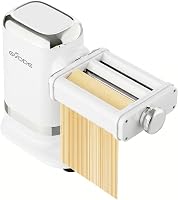
An automatic machine may suit you if you want mixing and extrusion in one appliance. The Philips 7000 Series Pasta Maker has 150W ProExtrude Technology, 8 discs, automatic operation, and capacity for up to 8 portions.
Its HomeID app includes step-by-step recipes, including vegan and gluten-free options. The machine also has a measuring cup and cleaning tool, while its parts are described as dishwasher-safe and non-stick.
The trade-off is a larger countertop appliance at 12.87 x 9.02 x 12.68 inches and 20 lb. Choose it when speed, portion size, and automatic mixing matter more than the manual process of a KitchenAid attachment.
Should you use a roller or an extruder for this dough?
Use a firmer dough for extrusion and a more easily rolled dough for flat sheets. A roller stretches dough into sheets, while an extruder pushes dough through a shaped opening.
The KitchenAid pasta press needs dough that can move through the die without becoming a wet paste. If you are making lasagna sheets or cut noodles with a roller, you may use a dough that is easier to flatten and pass through repeated settings.
The best pasta extruder machine guide can help if you are comparing dedicated extrusion appliances. For attachment-based methods, read How to Make Pasta Dough with a Stand Mixer Attachment?.
Who should choose a manual pasta roller instead?
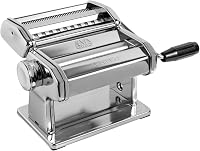
Choose a manual roller if you mainly want lasagna, fettuccine, or tagliolini and prefer to control thickness with a hand crank. The MARCATO Atlas150 Manual Pasta Maker Machine-LASAGNA, FETTUCCINE & TAGLIOLINI.
Made in Italy has 10 settings, 3 discs, and a manual operation mode.
The Atlas150 uses chrome steel and has a 4.8 mm maximum sheet thickness and a 0.8 mm minimum. It includes a black crank handle and pasta maker, measures 8 x 8 x 7 inches, and weighs 2.6 kg.
This machine is not a KitchenAid press, so it suits a different dough workflow. Use it when you want to roll and cut sheets, not when your main goal is short extruded shapes.
How should you store and clean pasta dough?
Keep unused dough covered, and clean the press only after disconnecting it and following its attachment instructions. Exposed dough dries quickly on the surface while remaining soft inside.
Use a clean, lightly floured tray for cut pasta. Separate pieces before they stick together, and cook them soon after shaping or dry them according to your chosen pasta method.
Never rinse a pasta attachment unless its instructions allow it. Dried dough is often easier to remove after it has hardened, but use the approved cleaning tool and avoid forcing residue into openings.
Is a basic pasta maker useful if you do not need extrusion?
A basic manual machine can be useful if you want adjustable thickness and two cutting widths. The Sailnovo 3-in-1 Pasta Maker with 9-Setting Pasta Roller & Cutters, Silver has 9 thickness settings, 2 width settings, and manual operation.
Its roller reaches a maximum sheet thickness of 3 mm and a minimum of 0.5 mm. The machine includes a clamp and English manual, and its dimensions are 11.81 x 7.09 x 9.45 inches.
Sailnovo says the blade attachment should not be washed in water or placed in a dishwasher. A brush or wooden stick is recommended for removing dough residue, so this model suits readers willing to handle cleanup carefully.
How do you choose between these pasta tools?
Choose the KitchenAid press when you want extruded shapes from a stand-mixer setup, an automatic machine when you want mixing and extrusion together, and a manual roller when you want flat sheets. The dough method should match the machine's job.
Pick the Philips 7000 Series Pasta Maker if automatic operation, 8 discs, and up to 8 portions fit your routine. Pick the Marcato Atlas150 if you want manual control over sheet thickness and classic cut pasta.
Pick the Sailnovo if you want a manual roller and cutter with 9 thickness settings and 2 width settings. For larger food-service needs, see How to Choose a Commercial Pasta Extruder.
The main rule for a KitchenAid pasta press recipe is simple: keep the dough firm, rest it before extrusion, and add moisture slowly. If you need a different appliance workflow, How to Use a Philips Pasta Maker explains an automatic approach.
Frequently asked questions
What dough is best for a KitchenAid pasta press?
A firm, smooth dough works best for a KitchenAid pasta press. It should hold together when squeezed without feeling wet or sticky.
Use flour and eggs as the base, add moisture slowly, knead until the dough is even, and rest it before cutting into small pieces for extrusion.
Why is my pasta dough too soft for a press?
Pasta dough is usually too soft when it contains too much liquid or has not been dusted with enough flour during handling. Add flour a little at a time, knead it through, and rest the dough again.
The finished dough should feel firm enough to cut cleanly.
Does pasta press dough need to rest?
Yes, resting gives the flour time to absorb moisture and helps the dough become easier to shape. Wrap the dough and let it rest before dividing it into small pieces.
If it feels tacky after resting, dust it lightly with flour before using the press.
Can you use regular pasta dough in a KitchenAid pasta press?
You can use a basic flour-and-egg pasta dough, but dough for extrusion should be firmer than dough intended for a rolling attachment. Keep the mixture cohesive and smooth, avoid excess liquid, and feed small portions so the press can push the dough through evenly.