How to Choose a Replacement Springform Pan Bottom
The right springform pan bottom replacement must match your existing ring's diameter and rim profile. Check the base shape, buckle clearance and material before you order.
On this page (13 sections)
- What should you check before buying a springform pan bottom replacement?
- How does the rim profile affect the fit?
- How do you measure a springform ring and bottom?
- Which replacement features help with cake release?
- Does material matter for a springform pan bottom?
- Should you replace only the bottom or the whole pan?
- How can you test the fit before baking?
- How should you use a springform pan with a removable bottom?
- How is a springform pan different from a cake pan?
- What should you check for silicone springform bottoms?
- Which springform size should you choose?
- What care helps a springform bottom last?
- What is the best decision rule for a replacement bottom?
The right springform pan bottom replacement matches your existing ring in diameter, rim profile and buckle clearance. Measure the ring and old base before buying, because a base that is close in size can still leak, wobble or prevent the latch from closing.
A springform pan works as a matched set. The removable bottom supports the batter, while the ring holds the sides in place until you release the buckle.
What should you check before buying a springform pan bottom replacement?
Check five points first: inside diameter, bottom edge, rim profile, buckle clearance and material. These details matter more than a similar-looking round shape.
Write down the measurements from your current pan before comparing replacements:
- Inside diameter of the springform ring
- Outside diameter of the old bottom
- Diameter across any raised lip or groove
- Height and shape of the bottom edge
- Distance between the bottom edge and the buckle
- Material and coating
- Oven temperature needed for your recipes
Measure across the center rather than along the rim. If the old bottom is warped, measure the ring separately and use the ring's inside diameter as your main reference.
The base should sit evenly inside the ring. A small mismatch can leave a path for thin batter, while a base that is too large may stop the ring from closing.
How does the rim profile affect the fit?
The rim profile controls how the bottom supports the ring. Some bases have a flat edge, while others use a raised lip, groove or rolled edge to hold the ring in position.
Look at the side of your old base. Note whether the edge turns upward, drops below the main surface or creates a channel around the perimeter.
The ring must rest on the part of the base designed to support it. If the rim is too low, the ring may slide or leave a gap.
If it is too high, the buckle may not close fully.
A replacement with the same diameter but a different edge shape is not necessarily compatible. Compare a side view, not only the number printed on the pan.
For broader buying advice, our bakeware sets guide explains how pan size, shape and material affect the tools you keep together.
How do you measure a springform ring and bottom?
Measure the ring first, then confirm the bottom against it. The ring's inside diameter gives you the clearest starting point, but it does not show every detail needed for a secure fit.
Remove the bottom from the ring and place both pieces on a flat surface. Use a ruler or measuring tape to record the following:
- Measure the inside width of the ring from one inner wall to the opposite inner wall.
- Measure the old bottom across the widest usable section.
- Check the width and height of the rim or lip.
- Measure the base thickness if the ring locks around a specific edge.
- Open and close the buckle while the bottom is inside the ring.
- Look for a gap between the base and the ring wall.
Do not measure only the outside width of the complete pan. The outside measurement includes the ring wall and may not tell you whether another base will sit inside it.
If the pan has a removable bottom with a pronounced edge, trace its outline on paper. This gives you a quick shape reference when comparing a replacement.
Which replacement features help with cake release?
A matching fit comes first, then choose a surface that suits your release and cleaning routine. Non-stick surfaces can reduce residue, while a bare aluminum surface offers a different baking response and care routine.
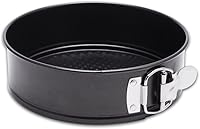
The HIWARE 9 Inch Non-stick Cheesecake Pan Springform is a close option for someone replacing an entire 9-inch springform pan rather than fitting a loose base to an unknown ring.
Its 9-inch size, round shape and removable bottom suit cheesecake, pie and cake recipes that are difficult to turn upside down. The non-stick coating is intended to help the cake release, while the brand recommends hand washing.
This is not automatically a universal replacement bottom. Compare its base and ring measurements with your existing pan before treating it as a match.
If your current ring is damaged as well as the bottom, replacing the complete pan may be simpler. Our guide to the best springform baking pans covers complete springform options.
Does material matter for a springform pan bottom?
Material affects heating, release and care, but it cannot correct a poor fit. Choose a bottom that matches the ring first, then compare the surface and cleaning instructions.
A steel bottom with non-stick coating can make delicate cakes easier to release. Use gentle utensils and hand washing if the care instructions call for it.
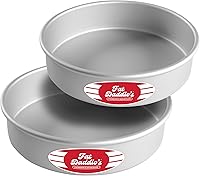
Anodized aluminum has a different surface and heating profile. Fat Daddio's Anodized Aluminum Round Cake Pans are not springform bottoms, but they show why a standard round pan should not be treated as a direct replacement without checking its shape and dimensions.
Each pan has a solid bottom, straight sides and a rolled rim. The set is made for round cakes, layered cakes and deep-dish pizzas, and the pans are hand wash recommended.
These pans may help if you need fixed-base cake pans for recipes that do not depend on a springform ring. They are not a direct springform replacement because the product is a set of round cake pans, not a removable springform bottom.
Should you replace only the bottom or the whole pan?
Replace only the bottom when the ring, buckle and side wall still fit correctly. Replace the whole pan when the ring is bent, the latch is unreliable or the old base has a coating problem.
A separate base makes sense when the existing ring is a useful size and remains square. Before ordering, check whether the brand sells a matching replacement and whether the base is identified for your exact model.
A complete pan is often easier to match because the ring and bottom are designed together. For another covered cake pan option, see cake pans with metal lids.
This also avoids combining parts with different rim profiles.
If you bake several sizes, a set can be more useful than one replacement. The HIWARE Springform Pan Set of 3 Non-stick includes 6-inch, 8-inch and 10-inch round pans.
The three sizes suit different cake volumes and can support multi-layer cake plans. The removable bottoms and spring buckles are designed for recipes such as cheesecake, mousse, quiche and coffee cake.
This set is a replacement for a complete springform setup, not a guaranteed loose-bottom match for an existing ring. Choose it when you want matched sizes rather than one replacement base.
How can you test the fit before baking?
Test the empty pan on a flat surface before adding batter. The ring should sit evenly, the buckle should close without force and the bottom should not rock.
Run your finger around the inside edge to find gaps. A narrow seam may be normal for some designs, but a visible opening or tilted ring is a warning sign for thin batter.
Close the buckle and lift the ring slightly by its side wall. The base should stay seated instead of dropping or shifting.
For an additional check, place a sheet of parchment inside the pan and add a small amount of water over a sink. This can reveal a poor seal without wasting batter, but it does not prove that the pan is leakproof with every recipe.
Dry the pan completely after the check. Do not bake with a base that moves, catches on the buckle or leaves an uneven wall.
How should you use a springform pan with a removable bottom?
Use the bottom flat-side down unless the pan's design indicates otherwise, then seat the ring evenly before closing the buckle. Line the base when the recipe benefits from easier release, but keep paper from interfering with the ring's fit.
For cheesecake and other thin batters, wrap the outside only if your recipe requires a water bath and the material is suitable for that use. Foil can help reduce water contact, but it cannot repair a base that does not fit the ring.
Avoid forcing the buckle over a mismatched bottom. Excess pressure can bend the ring or damage the latch.
Let the bake cool according to the recipe before releasing the ring. Opening the buckle too early can damage a soft cake even when the base fits correctly.
Our guide on how to use a springform cake pan covers setup, release and common baking situations in more detail.
How is a springform pan different from a cake pan?
A springform pan releases from the side, while a fixed cake pan usually requires you to turn the cake out or lift it after loosening the edges. That difference is why a springform bottom must work with a ring and buckle.
Springform pans suit cakes that are fragile, tall or difficult to invert. Cheesecake, mousse cake and some chilled desserts are common examples.
A fixed round cake pan can be a better choice for a cake that releases cleanly and does not need a removable side wall. It can also be easier to stack, grease and line for standard layer cakes.
The bottom of a fixed cake pan does not automatically match a springform ring. Compare the two designs before trying to combine them.
Read our springform pan vs cake pan comparison if you are deciding which style fits your recipes.
What should you check for silicone springform bottoms?
Check flexibility, support and ring fit before choosing silicone. A flexible base may release food easily, but it still needs firm support from the ring and a level baking surface.
Silicone is most useful when you want a flexible surface for release and storage. It should not be chosen only because it looks easy to clean.
Confirm the diameter and edge shape just as you would with steel or aluminum. A flexible base that is the wrong size can still allow batter to escape or make the ring unstable.
Place the filled pan on a rigid baking sheet if the flexible base makes carrying difficult. This helps support the pan while it moves to and from the oven.
Our best springform silicone pan guide can help you compare silicone designs with traditional springform construction.
Which springform size should you choose?
Choose the same diameter as your existing ring if you only need a replacement. If you are buying a new set, select the size that matches your recipe and serving plan rather than choosing a larger base for extra batter.
A 9-inch pan is a common choice for cheesecake recipes. The HIWARE 9-inch model has an 8-cup capacity and is shaped for round cake and pie use.
An 8-inch pan gives a smaller baking area, while a 10-inch pan gives more room for a larger cake. Do not swap sizes without adjusting the recipe, because batter depth affects baking time and the finished texture.
A set with 6-inch, 8-inch and 10-inch pans gives you more size choices, but it takes more storage space. It is useful when your recipes vary or you plan different cake layers.
For a focused comparison, see our guide to the best 9-inch springform pan for cheesecake.
What care helps a springform bottom last?
Hand wash the bottom when the care instructions recommend it, and avoid tools that can scratch a non-stick surface. Dry the rim and the underside before storing the pan.
Clean batter from the ring channel before it hardens. Dried residue can keep the base from seating evenly the next time you bake.
Store the bottom flat or with the ring open if that protects the coating and prevents pressure on the buckle. Do not stack heavy pans on a coated surface.
Inspect the rim after each use. A bent edge, peeling coating or buckle that no longer closes evenly is a reason to stop using the pan for liquid batter.
For mixer-based recipes, our guide to choosing the right stand mixer attachment for a recipe can help you prepare the batter before it goes into the pan. If you also bake bread, see our guide to the best replacement dough hook for KitchenAid.
What is the best decision rule for a replacement bottom?
Choose a matching replacement bottom when the ring is straight, the buckle works and the measurements agree. Choose a complete springform pan when the ring is bent, the model is unknown or the old base no longer seats securely.
Pick the 9-inch HIWARE pan when you need a complete non-stick springform setup for round cakes, cheesecake or pie-style baking. Pick the Fat Daddio's set when you want fixed-base aluminum pans for cakes and other recipes that do not need a springform ring.
Pick the 3-piece HIWARE set when you want 6-inch, 8-inch and 10-inch springform sizes for different recipes. In every case, measure the ring and compare the rim before ordering.
A replacement should fit without force, sit level and leave no obvious path for batter. If those checks fail, the safer choice is a complete pan designed as one matched set.
Frequently asked questions
How do I measure for a springform pan bottom replacement?
Measure the inside diameter of the existing ring, then check the bottom's outside edge and rim shape. The replacement must sit inside the ring without a gap or excessive movement.
Also compare the base thickness and any raised edge, groove or channel that holds the ring.
Can I use any round cake pan as a springform replacement bottom?
No. A round cake pan may have the wrong diameter, wall height or rim profile for your springform ring.
It also may not clear the buckle.
Use a standard cake pan only when its measurements and shape match the ring closely enough to support the wall and release mechanism.
Is a non-stick springform bottom better than an aluminum bottom?
A non-stick bottom can help release cakes and reduce residue, while aluminum offers a bare metal surface with fast, even heating. Your best choice depends on the ring fit, the recipe and your cleaning habits.
Match the base to the ring before choosing the coating or metal.
Can I use a replacement bottom in the oven?
Only use it within the temperature rating for that specific bottom and its coating or material. The ring, buckle and base should all be suitable for the recipe's heat.
Follow the care instructions, and avoid assuming that one springform pan's rating applies to another bottom.